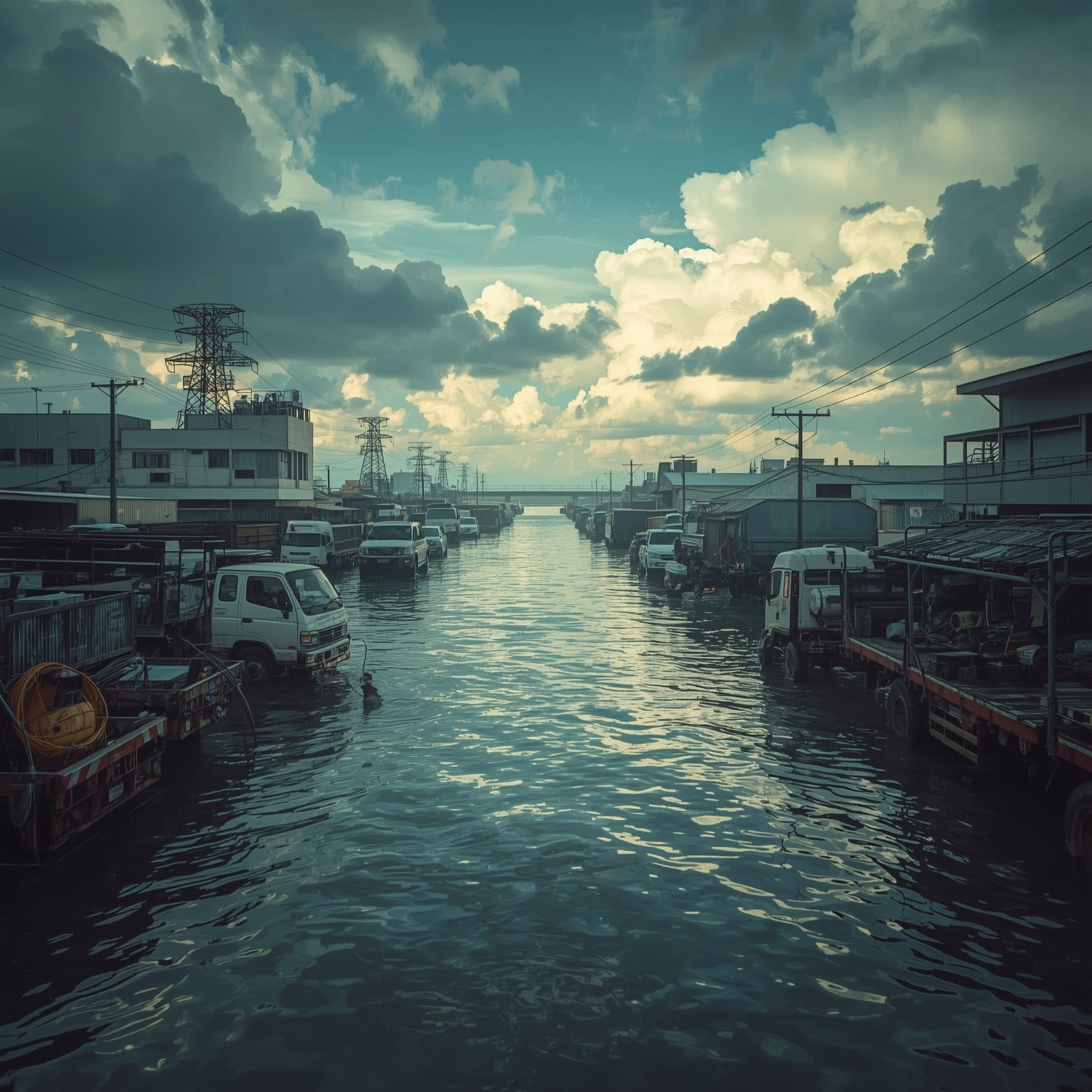
Southern Thailand is currently enduring an unprecedented natural disaster, as extensive and prolonged flooding has inundated much of the region, particularly the industrial hub of Hat Yai. These floods are far more than a local crisis—they have unleashed a wave of disruption that has reverberated across the nation’s most critical economic sectors. The deluge has brought large-scale devastation, not only claiming over 180 human lives but also crippling the intricate networks that sustain Thailand’s technological and automotive industries. Factories have been submerged, transportation routes rendered impassable, and key logistical centers left inoperative. As a result, the export of high-value components—vital parts destined for global electronics firms and automobile manufacturers—has ground to a sudden halt, creating severe bottlenecks in international supply flows.
The immediate repercussions of this catastrophic flooding are being felt across Asia’s manufacturing landscape. Thailand has long served as a regional anchor for semiconductor assembly, automotive parts production, and precision manufacturing. Yet with production lines now stalled and warehouses under water, importers and distributors worldwide are scrambling to adjust. In this moment of paralysis, emerging regional competitors such as Indonesia and Vietnam may find themselves positioned to temporarily absorb portions of the disrupted supply chain. Both nations possess growing industrial capabilities and have in recent years sought to attract businesses seeking diversified manufacturing bases. The present crisis may thus accelerate a shift that industry observers have long anticipated—one in which supply networks become more distributed and less dependent on any single national hub.
Beyond its immediate economic toll, the disaster underscores a deeper and more sobering truth about the vulnerabilities of global trade in an era defined by climate volatility. This event serves as a tangible reminder that complex production ecosystems, no matter how technologically advanced, remain acutely sensitive to environmental shocks. A single severe weather episode can unravel years of logistical optimization, expose hidden fragilities, and trigger ripple effects that extend far beyond national borders. The floods in southern Thailand are not only a humanitarian tragedy but also a dramatic illustration of the profound intersection between climate resilience and economic stability. As nations confront the growing realities of extreme weather patterns, the lessons drawn from Thailand’s experience may shape how industries and policymakers alike approach the future of global supply chain management.
Sourse: https://www.bloomberg.com/news/articles/2025-12-02/thailand-says-key-tech-car-parts-hub-paralyzed-by-record-floods