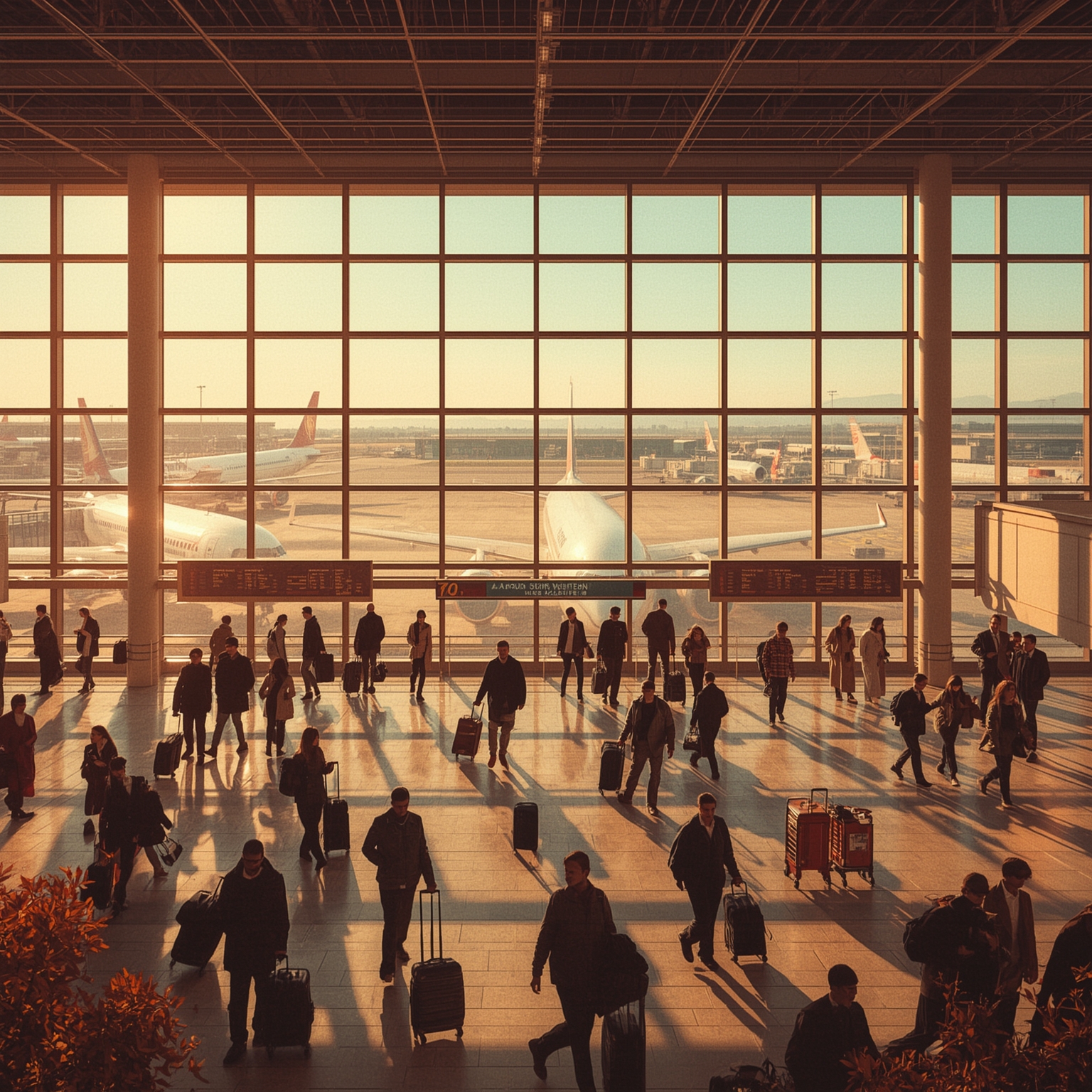
With Thanksgiving rapidly approaching, one can only hope that the only thing overstuffed this holiday season is the turkey on your dinner table—and not your already jam-packed travel itinerary. According to projections from Airlines for America, the principal trade association representing the nation’s leading commercial carriers, the upcoming holiday period is set to shatter previous records for domestic air travel. The organization estimates that from November 21 through December 1, an astonishing 31 million passengers will traverse airports across the United States. To put this figure into perspective, that equals roughly 2.8 million travelers per day navigating through airport check-in lines, undergoing rigorous security screenings, and competing for scarce seats in overcrowded lounges. Such unprecedented demand compels airlines to add approximately 45,000 extra seats to their daily capacities, particularly as the Sunday and Monday following Thanksgiving are forecast to be the busiest travel days of the entire period.
United Airlines, in its detailed holiday forecast shared with the media, anticipates accommodating an extraordinary 6.6 million passengers during the Thanksgiving travel rush—marking what the airline expects will be its most active Thanksgiving season on record. Among United’s most sought-after destinations are sunny Orlando, entertainment-filled Las Vegas, and historic Boston. Likewise, American Airlines has announced its ambitious plan to operate nearly 81,000 flights over the course of the holiday travel window. In an effort to meet surging demand, the carrier has even introduced additional late-night routes to key hubs such as Phoenix and Chicago.
Naturally, with more seats booked and aircraft pressed to capacity, the probability of delays or outright cancellations rises substantially. Although air traffic control facilities are once again fully staffed following a protracted government shutdown that previously curtailed operations, the system remains strained, operating with an estimated shortfall of around 3,000 controllers nationwide. On top of that, many control centers continue to rely on outdated technology systems that are ill-equipped to handle today’s surging air traffic. These deficiencies have already triggered significant disruptions at major airports like Newark and Washington, D.C., and the situation worsened dramatically during the shutdown itself.
Thanksgiving, perennially one of the busiest travel times in America, frequently exposes weak points in this intricate network. Bottlenecks can—and often do—form at critical junctures, cascading into chain reactions of delays across multiple hubs. This year, the primary concern isn’t only high passenger volume but also the threat of severe winter weather. Leading meteorological firm AccuWeather has issued warnings about the potential for powerful thunderstorms, snowfalls, and gusty winds to interfere with airline operations nationwide. Early in the week, for instance, the Dallas/Fort Worth region faced hundreds of delays as a line of thunderstorms swept through the area. The memory of 2024’s chaotic Thanksgiving week—when an intense snowstorm caused the cancellation or delay of thousands of flights—still lingers in the minds of travelers. Fortunately, last year’s Thanksgiving season was far less tumultuous, with minimal issues linked to overwhelming travel volume. Both airlines and passengers alike are hoping that this year’s travel week will follow suit, with operations running comparatively smoothly.
Nevertheless, even the most optimistic travelers should arm themselves with knowledge about their rights and available recourse should plans unravel unexpectedly. Being an informed passenger can make an enormous difference. One practical step is to opt in to automatic flight updates via text message or email; this ensures that you receive timely notifications if your flight is delayed or canceled. Should your flight be canceled entirely and you decide against rebooking with the same carrier, the airline is legally obligated to issue a full cash refund, not merely a voucher or travel credit.
Delays, however, are governed by somewhat different rules. A previously proposed regulation that would have required carriers to compensate passengers for lengthy delays was recently terminated under the Trump administration, leaving most travelers dependent on the goodwill of airlines or on the consumer protections offered by specific credit cards. Some major carriers have voluntarily pledged to provide accommodations such as hotel rooms, ground transportation, and meal vouchers during what are classified as ‘controllable’ overnight disruptions—those caused by issues like mechanical failures or crew shortages—according to guidelines published in the federal Airline Customer Service Dashboard. It is worth noting that among the major U.S. airlines, Frontier remains the only carrier that does not offer lodging in such cases, though it typically provides meals instead. Even in cases deemed ‘non-controllable,’ such as weather-related interruptions, asking politely for assistance can sometimes yield favorable results; the worst an airline can do is decline.
During widespread disruptions, contacting customer service can be exasperating, as phone lines tend to be overwhelmed and airport queues stretch on indefinitely. To save time, travelers are strongly encouraged to manage their bookings directly through the airline’s mobile app or website—tools that increasingly allow rebooking, cancellations, and seat adjustments in real time. For those who prefer less traditional communication, many airlines, such as Delta Air Lines, support texting or online chat functions where passengers can converse with an agent and even hold a virtual spot in line before reaching the airport counter.
For reference, the major carriers can be reached as follows: Alaska Airlines at 1-800-252-7522 or by texting 82008; Allegiant at 1-702-505-8888; American Airlines at 1-800-433-7300; Avelo at 1-346-616-9500; Breeze via text at 501-273-3931 (no phone hotline available); Delta at 1-800-221-1212; Frontier primarily through online chat or email; JetBlue at 1-800-538-2583; Southwest at 1-800-435-9792; Spirit at 1-855-728-3555; Sun Country at 1-651-905-2737; and United Airlines at 1-800-864-8331.
Another critical layer of protection lies in travel insurance, which can cushion financial losses caused by cancellations or substantial delays. Many premium travel credit cards—such as the Chase Sapphire Reserve and the American Express Platinum—include built-in coverage that reimburses travelers for essential expenses like hotel stays, meals, and transportation costs incurred during qualifying travel disruptions. Typically, weather-related interruptions are covered events, provided that the flight was originally purchased using the qualifying credit card. For those whose cards do not carry such benefits, purchasing a separate trip insurance policy before departure can be a wise decision. These standalone policies can help reclaim expenses tied to non-refundable bookings, such as prepaid accommodations or cruise reservations. However, these must be secured before any looming threat or known disruption arises—once a delay or storm is publicly forecast, most insurers will no longer issue new coverage.
In short, while the 2024 Thanksgiving travel season promises to be one for the record books, preparation and awareness can ensure that the journey—however crowded or unpredictable—remains manageable. By staying informed, monitoring flight updates proactively, and understanding your rights as a passenger, you can turn what might otherwise be a stressful experience into a smoother, more controlled adventure, ensuring that the only thing overflowing this Thanksgiving is your sense of gratitude, not your travel frustration.
Sourse: https://www.businessinsider.com/heres-what-to-do-if-flight-gets-delayed-or-canceled-2025-11