If you are among the millions of Americans who currently find themselves unemployed and actively pursuing new opportunities, you are likely aware that the national job market has become increasingly challenging and highly competitive. According to recent data released by the Bureau of Labor Statistics, the situation reached a notable turning point in August, when the total number of U.S. job seekers officially surpassed the number of available job openings for the first time since April 2021. This development signals a significant shift in labor dynamics, reflecting an environment in which more individuals are competing for fewer roles. The change coincides with a series of large-scale layoffs that have swept through several of the nation’s most prominent corporations, including technology giants like Amazon and Meta, as well as major industrial employers such as General Motors. This wave of downsizing has contributed to greater uncertainty for workers across numerous sectors.
For many Americans who have recently lost their jobs, it is easy to become demoralized and anxious about the future. Yet, despite the discouraging trends, there is still reason to hold on to hope. A comprehensive analysis conducted by WalletHub has identified specific regions across the United States where employment prospects remain relatively strong. By comparing the best and worst cities and states for active job hunters, the study reveals which locations may currently offer the most favorable conditions for finding stable and satisfying employment, as well as where individuals may face the greatest difficulties.
To assess where job seekers stand the best chance of securing, maintaining, and genuinely enjoying their work, WalletHub conducted a detailed evaluation of all 50 states using an impressive set of 34 metrics. These indicators were carefully chosen to reflect both the underlying strength of each local job market and the broader economic well-being of its residents. The comparison included an array of critical factors such as employment growth rates, median annual household income, average commuting times, and overall job security. The study even took into account emerging concerns about automation and the potential for artificial intelligence to displace human workers in the future — a rapidly evolving issue that many job seekers must consider when evaluating career longevity and stability.
Interestingly, WalletHub’s findings revealed clear geographic patterns in employment opportunity. Many of the states offering the most robust job markets are concentrated in the New England region, the Upper Midwest, and the Great Plains — areas traditionally associated with strong local economies and high-quality labor conditions. Texas stood out as the only Southern state to appear among the top performers, highlighting its enduring reputation for business expansion and workforce innovation. Despite the diversity among these regions — from cutting-edge technology industries in Massachusetts to agriculturally driven economies in the Dakotas — they share critical strengths that underpin their success: consistently low unemployment rates, steady job growth, and a supportive environment for business development that encourages both employers and employees to thrive.
As WalletHub analyst Chip Lupo explained, the states that rank highest in employment potential tend to provide residents not only with accessible job opportunities but also with greater security once those positions are obtained. Furthermore, companies operating within these states are more likely to offer compensation packages and employment benefits that remain competitive by national standards. In short, a favorable job market is not merely about the quantity of available positions but also about quality, long-term stability, and conditions that allow professionals to build sustainable careers.
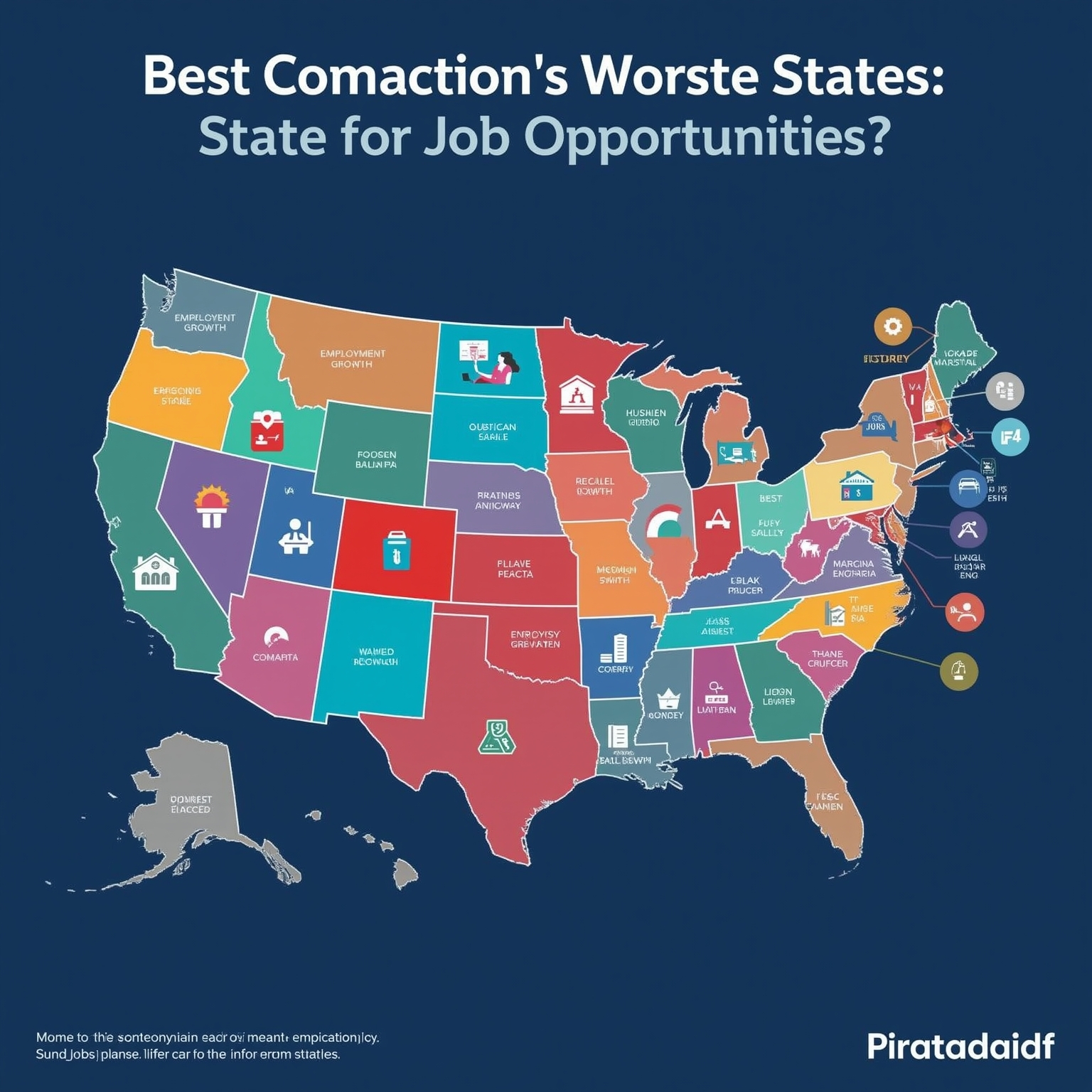
The study also highlights significant differences across the country by presenting two contrasting lists: the ten best states for job prospects and the ten most challenging ones. Business Insider supplemented WalletHub’s analysis with additional data, providing median home sale prices from Redfin (as of September) and 2024 median household income figures compiled by the Missouri Census Data Center’s ACS Profiles. This combination of employment and housing data offers a more holistic view of economic conditions, allowing job seekers to weigh the potential for career advancement against the cost of living in each state.
Among the top performers is Massachusetts, which stands as the number one state for overall job quality. It offers a median household income exceeding $104,000 and a median home sale price of approximately $639,000. Close behind are Connecticut, Minnesota, Vermont, New Hampshire, South Dakota, Texas, North Dakota, Maine, and Rhode Island — each recognized for a strong labor market and a healthy economic climate. These states collectively demonstrate that even though their industries range from technology and finance to agriculture and manufacturing, the underlying factors that sustain their labor markets remain consistent: economic vitality, accessible employment, and supportive state policies.
Conversely, the analysis identified the ten states currently struggling the most to provide favorable job opportunities. West Virginia ranked at the very bottom, with Louisiana, Kentucky, Alaska, Oregon, North Carolina, Pennsylvania, Montana, Indiana, and Oklahoma also among the least advantageous environments for workers. In many of these states, lower median incomes, weaker job growth, or less stable economic conditions contribute to the difficulty faced by residents in securing long-term employment. For example, while Alaska and Oregon both feature relatively high median household incomes compared to the national average, their broader economic rankings are weighed down by industry volatility and high living costs. Similarly, states like West Virginia and Louisiana contend with structural challenges such as limited job diversification and slower economic expansion.
Ultimately, WalletHub’s detailed assessment paints a nuanced picture of the American employment landscape as of 2025. It suggests that while some regions continue to demonstrate economic resilience and a welcoming environment for both job seekers and employers, others are struggling to adapt to shifting market demands and technological disruption. For unemployed individuals considering relocation or those merely exploring where their professional prospects might be brightest, these findings provide invaluable guidance. They emphasize the importance of not just seeking any job but choosing a location that aligns with long-term financial security, work-life balance, and professional growth potential.
Sourse: https://www.businessinsider.com/best-worst-states-for-jobs-2025


