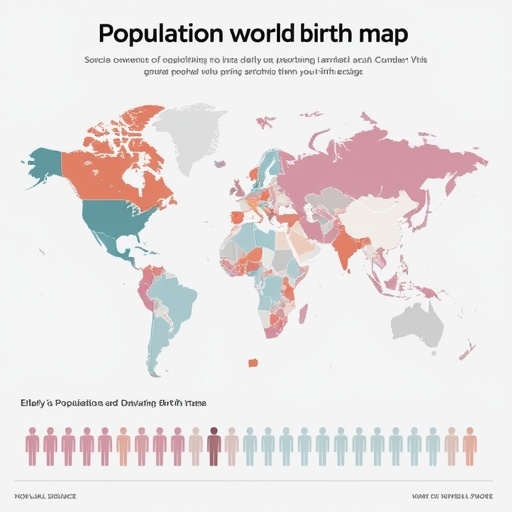
Over the last several decades, one of the most profound and far-reaching demographic transformations in modern history has quietly reshaped the global population: the world’s birth rate has declined by more than half since the 1960s. This remarkable shift is not simply a statistical curiosity—it reflects a complex interplay of economic, cultural, educational, and technological factors that are influencing how societies across continents grow, age, and plan for the future.
During the mid-20th century, rapid population growth defined many parts of the world; families commonly welcomed multiple children, and high fertility rates were seen as both a social expectation and an economic necessity. However, as nations developed and urbanized, the dynamics underlying family size began to evolve dramatically. Increased access to education—particularly for women—alongside greater participation in the workforce, rising living costs, and improved access to reproductive healthcare have all contributed to smaller family units and changing societal norms around parenthood.
Today, this shift has created a world of contrast. In certain nations—predominantly those with younger populations and developing economies—birth rates remain high, reflecting traditions of larger families and limited access to family planning. Countries such as Niger, Angola, and the Democratic Republic of the Congo continue to experience rapid population growth, fueled by youthful demographics and cultural priorities that favor larger households. These regions, often located in Sub-Saharan Africa, stand in stark contrast to many industrialized countries, where population growth is slowing or even reversing.
In contrast, much of Europe, East Asia, and parts of North America are witnessing historic lows in fertility. Places like Japan, South Korea, Italy, and Germany are grappling with the long-term consequences of sustained low birth rates, including aging populations, shrinking labor forces, and shifting economic dependencies. The combination of career-focused lifestyles, delayed marriage, and increasing economic pressures—ranging from housing costs to childcare expenses—has led many couples to have fewer children or forgo parenthood altogether.
These diverging trends have profound implications for the future. Nations with high birth rates face challenges of resource distribution, educational infrastructure, and employment growth to meet the demands of expanding populations. Conversely, countries with slowing or negative population growth must confront the looming issue of demographic imbalance: fewer young people supporting larger elderly populations, which can strain public pension systems, healthcare sectors, and social services.
Understanding where the world’s population is growing and where it is contracting is essential for shaping responsible global policies. It affects everything from economic planning and migration patterns to environmental sustainability. The top 10 countries with the highest birth rates highlight regions of energetic growth and untapped potential, while the countries with the lowest rates reveal the socioeconomic complexities of advanced development and evolving cultural expectations.
In a century defined by technological connectivity and global awareness, this demographic divergence offers both challenges and opportunities. For businesses, it signals where future markets and workforces are emerging. For policymakers, it underscores the need for long-term strategies that balance population dynamics with social equity. And for societies, it prompts reflection on how cultural values and personal choices continue to influence the collective future of humanity.
The story of changing birth rates is, ultimately, a story of progress, adaptation, and diversity—a reminder that while the world grows at different speeds, the shared goal remains the same: building sustainable, thriving communities for generations to come.
Sourse: https://www.businessinsider.com/countries-birth-rates-ranked