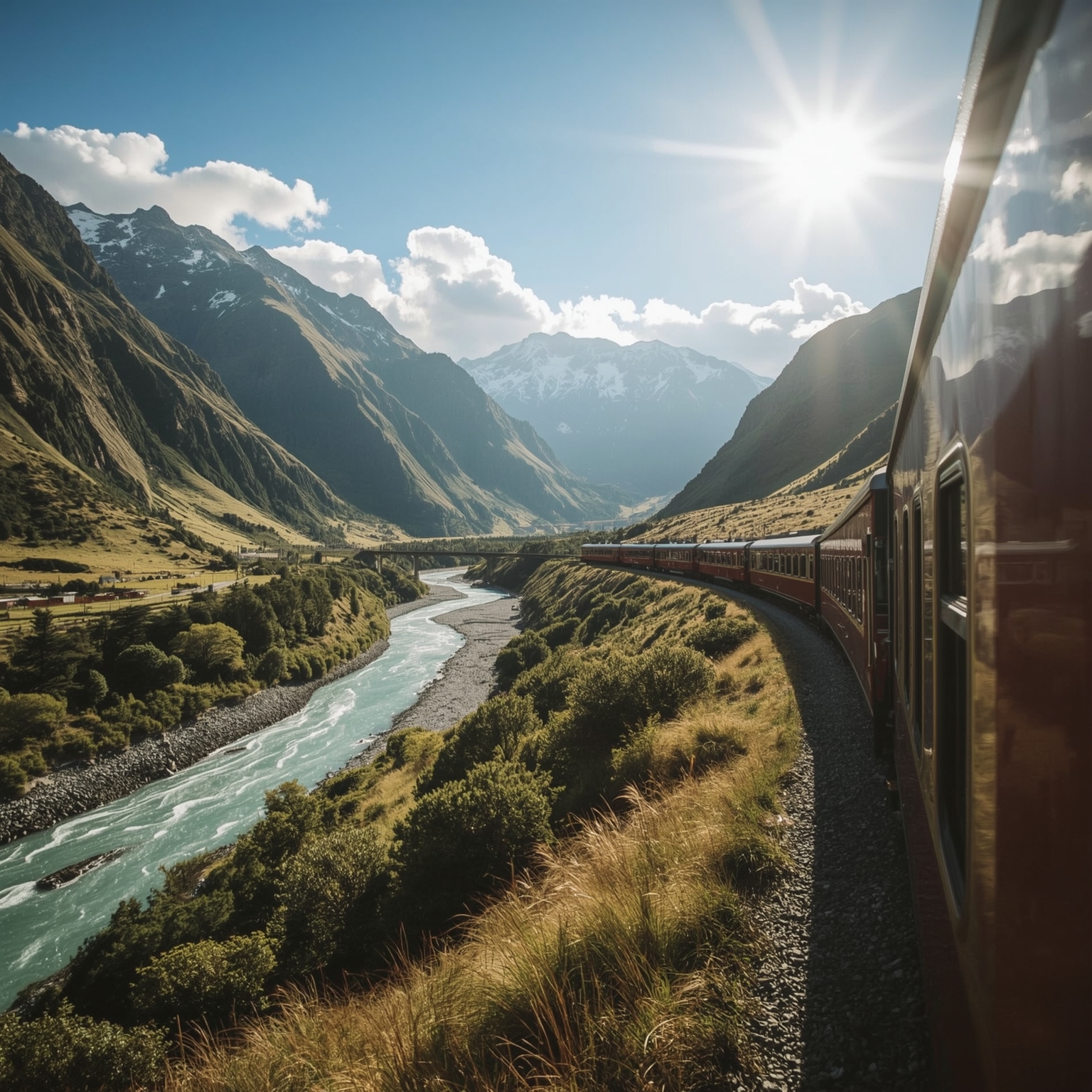
During a six-week exploration of both New Zealand’s North and South Islands, my curiosity and extensive research consistently led me to the nation’s celebrated rail journeys—routes that have achieved an almost mythic status among travelers for their extraordinary natural beauty. Among the three principal lines operated by Great Journeys New Zealand—the Northern Explorer between Auckland and Wellington, the Coastal Pacific connecting Picton and Christchurch, and the TranzAlpine that traverses the spine of the Southern Alps—the latter stood out as perhaps the most spectacular. To make the most of an unexpectedly free day in Christchurch, I decided to splurge on a $320 round-trip ticket aboard the TranzAlpine, eager to discover whether its reputation for breathtaking panoramas truly held up to the hype.
The check-in process at Christchurch Railway Station was effortless, partly because I had traveled light, unburdened by luggage like many of my fellow passengers who seemed prepared for more extended journeys. As my early-morning Uber pulled away from the hostel at 7:30 a.m.—a ten-minute, eight-dollar ride—I noticed travelers hauling full suitcases, suggesting they might continue farther down the South Island’s rugged west coast after disembarking in Greymouth. That particular adventure had tempted me as well, yet I ultimately decided against extending my itinerary.
Before boarding, I attempted an upgrade to the exclusive Scenic Plus Experience, which promised access to a private observation carriage, refined local dishes paired with regional wines, and real-time commentary from onboard experts. Unfortunately, every seat in that premium class was already sold out. My assigned place, instead, was at a compact four-seat table facing backward, which heightened my mild social anxiety and left me wishing I could be oriented in the direction of travel.
The train departed Christchurch just after 8:15 a.m., gliding quietly through the outskirts of the city. Within minutes, I relocated to the dining carriage which, at that early hour, was blissfully uncrowded. I ordered several beverages over the next hour merely to justify my continued presence there rather than at my assigned seat. The freedom to roam between carriages turned out to be one of the journey’s greatest advantages, allowing me to sample views from both sides of the train. Although advance bookings didn’t allow passengers to select a preferred side, I had read that traveling west from Christchurch generally offered better vistas on the right—an insight that proved useful as I shifted around in search of the best photo opportunities.
My ticket included pre-purchased meals—a breakfast and dinner combination that appeared economical on paper but turned out otherwise. Bound by a ketogenic diet during the trip, I selected a low-carb breakfast of black cherry, pear, and vanilla chia-seed compote alongside a long black coffee. Only later did I realize that buying the items separately would have been cheaper, costing about thirty-six cents less than the package. Next time, I vowed, I would forget the diet altogether and indulge freely in a buttery ham-and-cheese croissant to better enjoy the experience.
The journey’s initial portion proved surprisingly mundane: a landscape dominated by industrial yards, suburban neighborhoods, and flat farmland that hardly justified the train’s legendary reputation. It was not until we approached the town of Springfield—approximately forty miles from Christchurch—that the scenery began to metamorphose into the sweeping grandeur typically associated with the Southern Alps. As the elevation increased, the plains yielded to dramatic mountains, winding rivers, and skies of crystalline blue.
Despite these natural wonders, photographing the landscape through glass proved frustrating. The windows reflected light glare, marring many of my best shots. The open-air viewing carriage eliminated this problem entirely but introduced a new challenge: the bone-chilling alpine air. Though I lingered only a few minutes before retreating to the warmth of the dining car, I returned armed with a cup of hot tea—purchased for $2.34—to help me endure another stint outdoors. The bitter cold somehow made the crisp vistas even more vivid.
Inside, each carriage featured screens displaying our current location, altitude, and interesting snippets about points of interest. I appreciated this self-contained source of information since it spared my phone battery from the train’s companion infotainment app. Around midmorning, the train made a brief scheduled stop at Arthur’s Pass National Park. The ten minutes allotted allowed just enough time for passengers to pose in front of the park’s iconic sign amid gusting winds and clamoring crowds. There was, regrettably, no opportunity to explore the trails or surrounding village.
Once we resumed the ascent, I found myself once again in the dining car, grabbing a second coffee after explaining to the staff that breakfast hadn’t justified its pre-paid cost. They graciously obliged the substitution, and I also purchased a small pack of salted peanuts—a $2.35 keto-friendly snack—to tide me over until our arrival. As the train rolled westward, the countryside opened into powerful displays of natural beauty: glacial river valleys, vast golden grasslands, and the occasional distant waterfall. The sheer range of scenery ensured my camera’s shutter seldom rested.
By early afternoon, we descended to the coastal town of Greymouth, arriving punctually at 1:15 p.m. Passengers with round-trip tickets were instructed to disembark and enjoy about an hour of free time before reboarding. I wandered quietly through the compact downtown, noting the subdued atmosphere typical of a gray Monday afternoon. A few art-covered walls and boutique shops hinted at Greymouth’s creative side, yet the streets were largely empty. Reluctant to stray too far lest I miss the return departure, I stayed close to the station and admired the tranquil river running through town.
At precisely 2:15 p.m., the train pulled back into the platform. As I photographed its polished exterior against the cloudy sky, I felt a flicker of ambivalence. I had begun to suspect that the return leg might feel redundant, given that it retraced the exact same tracks. Still, upon reboarding, fortune smiled on me: my new seat faced forward and was located next to an empty seat, making the ride immediately more comfortable.
Unexpectedly, rain began to fall soon after departure, and the scenery transformed profoundly. The silvery mist softened the contours of mountains and forests, lending the landscape an almost cinematic melancholy. Having already absorbed the details on the outbound leg, I was now able to appreciate the journey for its shifting moods rather than sheer novelty. The drizzle, though obscuring distant views, created reflections and textures that felt strangely meditative.
This time, I chose my pre-purchased dinner more shrewdly: a tender beef-cheek entrée paired with a quarter bottle of Brancott Estate sauvignon blanc. Priced together around $22, the combination struck a satisfying balance of warmth and richness that harmonized beautifully with the damp weather outside. The gentle hum of the carriage, the aroma of red wine, and the rhythmic sway of the train gave the meal an unexpected elegance.
As the afternoon waned, sunlight began to peek hesitantly through the clouds, casting a golden hue across the rolling plains. The final hour toward Christchurch was, in many ways, the most visually rewarding of all—golden hour painted the landscape with warm orange tones, illuminating river valleys and fields like living brushstrokes. Near the Waimakariri River Gorge, the turquoise waters shimmered beneath the lowering sun, creating what might have been my single favorite moment of the entire trip. I stood on the viewing platform until twilight forced us back to our seats as the train entered a succession of tunnels.
By the time the TranzAlpine reached Christchurch, just after 7 p.m., darkness had fully fallen over the city. Within half an hour, I was back in my hostel, warming up after a nearly twelve-hour excursion that had encompassed dramatic highs and anticlimactic lows alike. Though the train undeniably lived up to its promise of sublime mountain vistas and impeccable organization, the round-trip format felt excessive. The wonder of the outbound leg gave way to familiarity on the return, making me wish I had ended my journey in Greymouth and explored onward by car or bus.
In retrospect, while the $320 TranzAlpine round trip offered moments of genuine enchantment, its value seemed better realized as a one-way passage—perhaps linking with a road trip down the wild West Coast for a richer sense of discovery and autonomy. For travelers seeking both beauty and flexibility, I would recommend taking the train in a single direction, or even skipping it in favor of self-driving the route, where every turn of the wheel invites unexpected encounters with New Zealand’s astonishing landscapes.
Sourse: https://www.businessinsider.com/most-scenic-train-ride-tranzalpine-train-review-photos-new-zealand-2025-11


