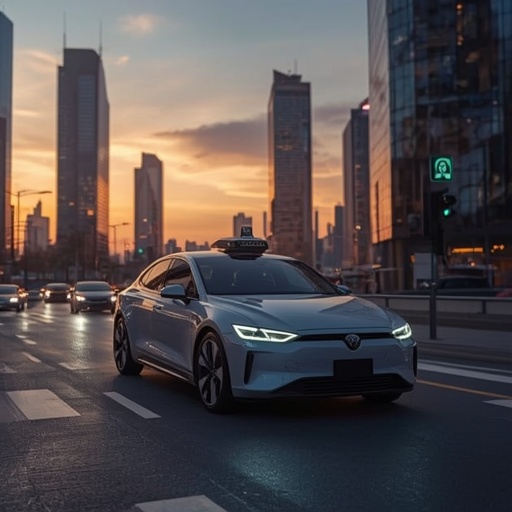
In recent years, the dawn of autonomous mobility has accelerated at an unprecedented pace, ushering in a transformative era in which robotaxis — self-driving, AI-powered vehicles designed to transport passengers without human drivers — have become emblematic of technological progress. Yet, as these sleek, sensor-laden cars glide quietly through city streets and testing zones, a complex interplay unfolds between innovation, governance, and ethical responsibility. While engineers and data scientists continue refining the sophisticated algorithms that enable these vehicles to perceive their surroundings and react with millisecond precision, regulatory bodies across the world are grappling with the equally intricate challenge of crafting sound, adaptive frameworks to ensure public safety, accountability, and fairness.
The race to regulate robotaxis is not merely a matter of catching up with technology — it is a defining contest over the very future of urban transportation. Governments, municipalities, and international agencies find themselves walking a delicate tightrope: how to foster innovation and investment while preventing premature deployment that might compromise public trust. This balancing act reflects a fundamental truth about disruptive industries — progress and prudence must coexist. For instance, while autonomous systems promise the elimination of human error, they simultaneously provoke new questions about liability, cybersecurity, and moral decision-making in split-second scenarios. Who bears responsibility when an algorithm makes the wrong call? Should regulatory approval rely on statistical safety thresholds or on absolute ethical guarantees?
Beyond the technical and legal dimensions, the societal implications of this shift are profound. Robotaxis embody more than just technological ingenuity; they represent the reimagining of mobility itself — an opportunity to make transportation more efficient, equitable, and environmentally friendly. Cities could potentially experience reduced congestion and emissions, while individuals with disabilities or those without access to private vehicles may gain unprecedented mobility independence. Yet, these advantages depend on robust oversight, transparent algorithms, and inclusive policies that address data privacy and urban equity.
The conversation, therefore, extends far beyond the mechanics of machine learning or vehicular design. It touches on public psychology, trust in automation, and the willingness of citizens to share roads with intelligent machines. To cultivate this trust, policymakers must not only ensure compliance and safety but also communicate the rationale behind their frameworks in a manner that promotes clarity and confidence. A patchwork of inconsistent or reactive rules could stifle innovation just as swiftly as unrestrained experimentation might endanger communities.
Ultimately, the trajectory of robotaxi development underscores a deeper narrative — one where technology and human governance must evolve symbiotically. The future of mobility will not be defined solely by how efficiently vehicles navigate traffic, but by how wisely societies navigate the moral and civic terrain of automation. In this evolving landscape, collaboration among legislators, engineers, ethicists, and citizens will determine whether the promise of autonomous transportation becomes a revolution of progress or a cautionary tale of haste. The age of the robotaxi is not simply approaching; it is already reshaping how we think, move, and define responsibility in the age of intelligent machines.
Sourse: https://techcrunch.com/2026/07/19/techcrunch-mobility-the-battle-over-robotaxi-rules/