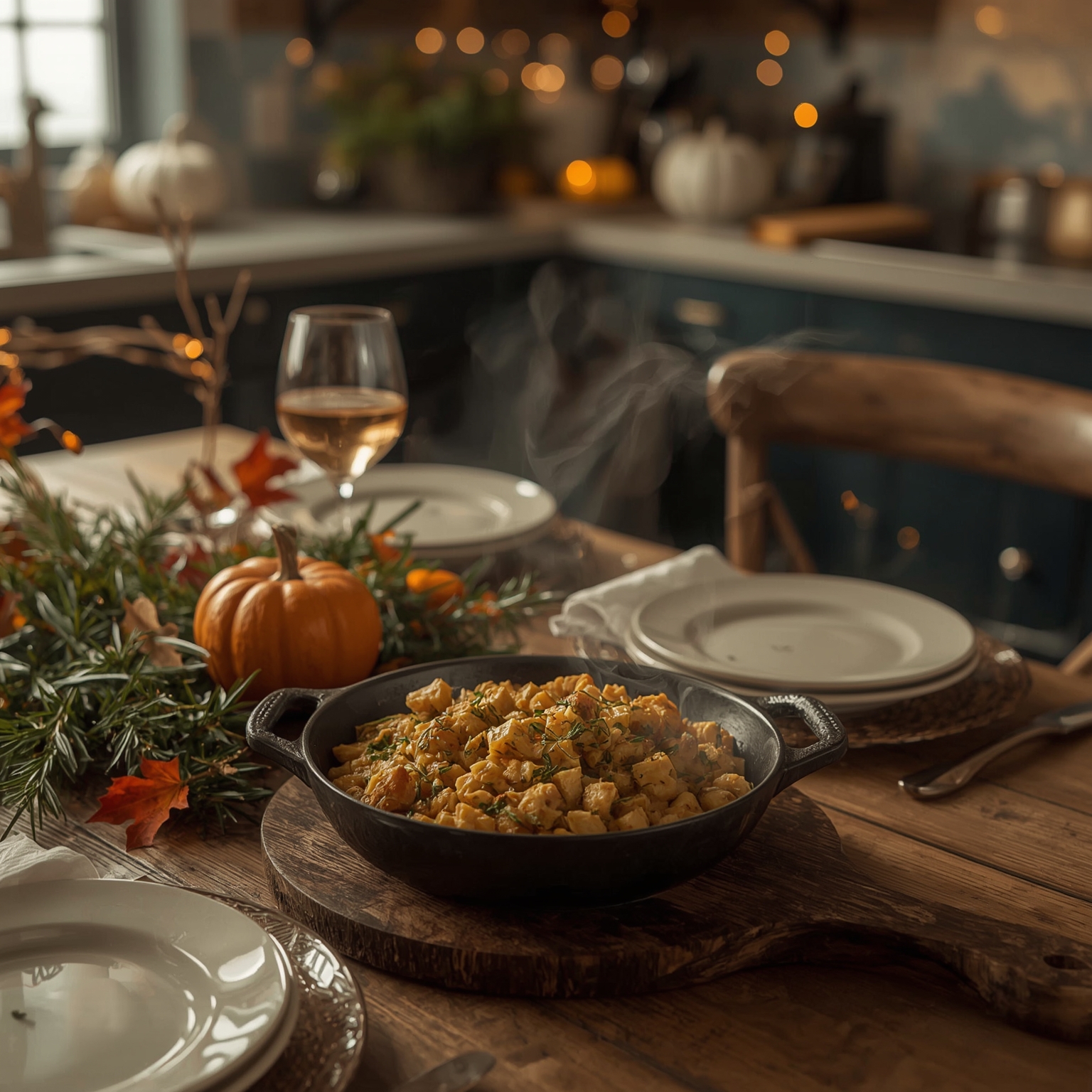
For countless households, the Thanksgiving table feels incomplete without a generous helping of stuffing — the quintessential side dish that has become as essential to the holiday as the turkey itself. Yet, despite its comforting reputation, the variety of possible recipes, bread choices, and preparation techniques can make this beloved dish feel daunting, even for experienced home cooks. Wanting to discover which method might yield the most satisfying results, I decided to explore and test several versions from culinary icons — Ina Garten, Paula Deen, Ree Drummond, and Sunny Anderson — each offering a distinct interpretation of this festive staple. What followed was a flavorful journey through herbs, textures, and regional nuances, ultimately revealing both the strengths and shortcomings of each approach.
Ina Garten’s take on stuffing is rooted in simplicity and freshness. Her herb-and-apple variation emphasizes quality ingredients and refined flavors. Unlike other recipes that rely on multiple types of bread to achieve depth and texture, Garten’s calls for just one — crusty baguettes — which conveniently reduces complexity during preparation. This streamlined ingredient list appealed to me immediately. I appreciated her inclusion of aromatic herbs such as rosemary and sage, though I was initially uncertain about combining sweet apples and crunchy almonds with the savory backbone of onions and celery. Recognizing the recipe’s generous yield, I prudently halved the quantities.
The preparation itself was refreshingly straightforward. While the cubed baguette slices toasted in a 300-degree-Fahrenheit oven, I simultaneously sautéed onions, celery, and apples in butter, along with the fresh herbs, allowing their aromas to mingle into a fragrant medley. The vegetables softened beautifully after roughly ten minutes, at which point I poured everything — along with a measured amount of vegetable stock — over the toasted bread cubes. Tradition dictates that this stuffing should be cooked inside the turkey for about two and a half hours at 350 degrees Fahrenheit, but since I wasn’t roasting a bird, I baked the mixture separately in a shallow dish for about an hour. When removed from the oven, the stuffing had developed a crisp, golden crust, contrasted against an interior that leaned toward sogginess. Next time, I would use slightly less broth to prevent excess moisture. Flavor-wise, the rosemary was vivid and delightful, and the apples lent a mild, balancing sweetness, but the almonds contributed an intrusive crunch that disrupted the dish’s otherwise harmonious texture. By omitting the nuts, the rustic baguette crust could rightfully shine as the primary source of crispness.
Paula Deen’s recipe, true to her signature Southern comfort-food style, leans unapologetically into richness. It begins with an entire stick of butter and a hearty combination of three starches — cornbread, saltine crackers, and white sandwich bread. While intriguing, this union of different carb sources felt potentially risky, as each absorbs liquid differently. I baked a dense, savory cornbread from scratch per Deen’s instructions and dried out the white bread in the oven before proceeding. Once my onions and celery were tender from their buttery sauté, I mixed all the prepared elements in a bowl and began adding vegetable broth. Even after just five cups, the mixture looked overly saturated, so I stopped well short of the recipe’s suggested seven cups. Unfortunately, the result still required draining excess liquid before stirring in five eggs to bind it all together. The stuffing baked for about an hour, ultimately reaching a soft golden top but without achieving true crispness. The flavor was rich and comforting — buttery and distinctly Southern — yet the interior consistency disappointed me; it was heavy and mushy, the crackers disintegrating into paste. Although the flavor carried promise, I’d reduce the broth substantially next time and perhaps increase the bread proportion to remedy the texture.
Ree Drummond’s version, characteristic of her hearty and family-friendly cooking style, embraces abundance. It requires three distinct types of bread, including a homemade cornbread base. Conveniently, I was able to reuse the same cornbread prepared for Deen’s version. Drummond’s recipe also highlights the liberal use of herbs, especially parsley, which gives the dish visual vibrancy and a lively, fresh note. Although the recipe originally suggested drying the breads out over a day or two, I expedited the process by toasting them in the oven for fifteen minutes at 300 degrees Fahrenheit, which yielded excellent texture. The remaining steps mirrored the methods of the previous trials: sautéing vegetables in butter, combining them with broth, and carefully ladling the seasoned liquid over the dried bread cubes until they reached my preferred consistency. I particularly appreciated this step, as it allowed precise control over moisture absorption and prevented oversaturation. After baking for about forty minutes — slightly longer than the instructions suggested — the stuffing emerged with a beautifully browned surface. The texture proved balanced, the crisp top providing a pleasing contrast to a subtly moist interior. My only critique concerned the celery, which dominated the flavor profile. A lighter hand with this ingredient would better showcase the dish’s combination of buttery bread, herbs, and savory vegetables.
Sunny Anderson’s recipe presented a welcome change of pace — quick, intuitive, and flexible, designed for efficiency without sacrificing freshness. Her approach smartly builds upon a store-bought boxed stuffing mix, which she enhances with sautéed vegetables, fresh herbs, and broth to mimic the richness and depth of a completely homemade version. Because I wasn’t eating meat, I substituted vegetable broth for turkey stock and skipped the thyme for personal preference. Anderson also provides four optional flavor pairings: sausage with bell peppers, oysters with hard-boiled eggs, walnuts with apples, and fennel bulb with dried apricots. The final option intrigued me most, offering a delicate balance of sweetness and aromatics, so I chose that combination.
Preparation required little effort beyond chopping. After mincing garlic and finely dicing onion, celery, fennel, sage, and dried apricots, I sautéed the mixture in butter with salt and pepper until aromatic and slightly tender. I then combined it with the boxed stuffing mix and broth, pressing the blend evenly into a dish for baking. Covered with foil, the stuffing baked for forty-five minutes at 350 degrees Fahrenheit, followed by fifteen minutes uncovered at 400, allowing the top to turn irresistibly crisp and bronzed. The result delighted me — the exterior maintained a satisfying crunch, while the center was soft, cohesive, and creamy. The sautéed vegetables contributed robust, savory complexity without overwhelming the palate, and the apricots imparted delicate bursts of mild sweetness that melted against the seasoned bread. Despite relying on a pre-packaged foundation, the final dish tasted handcrafted, nuanced, and memorable.
After testing all four chefs’ creations, Sunny Anderson’s stood out as my clear favorite. Its balance of convenience and unexpected sophistication captured everything desirable in a modern Thanksgiving side: minimal effort, manageable ingredients, and deeply rewarding flavor. The combination of fennel and apricot proved surprisingly elegant, enhancing the dish while maintaining a traditional, holiday comfort. Ina Garten’s herb-laden stuffing, with its interplay of rosemary and apple, came in a close second, needing only slight adjustments to remove the almonds and reduce the broth. Paula Deen’s offering, though rich and buttery, would benefit from rebalanced moisture and fewer crackers. Ree Drummond’s recipe, imbued with homestyle heartiness, worked well overall but could achieve greater harmony with less celery and slightly reduced broth. In the end, each recipe had distinct strengths, and all would merit revisiting with minor refinements.
This exploration initially appeared on November 19, 2020, and was later updated on November 25, 2025, reaffirming that great stuffing — whether crafted by celebrity chefs or simplified with a boxed mix — lies not in complexity, but in thoughtful balance between flavor, texture, and tradition.
Sourse: https://www.businessinsider.com/best-stuffing-recipe-chef-how-to-make-photos


