Starbucks may have ignited the modern obsession with premium beverages, but the contest for America’s daily drink ritual is evolving into an entirely new chapter—one that is poised to reshape the fast-food landscape as competitors move aggressively into territory once ruled almost exclusively by coffeehouse culture. Today, two of the nation’s most recognizable quick-service brands, Taco Bell and Chick-fil-A, are charting bold strategic paths with the debut of their own beverage-focused offshoots: Taco Bell’s Live Más Café and Chick-fil-A’s Daybright. Each concept seeks to seize upon consumers’ swelling fascination with vibrant, highly customizable drinks that serve not only as moments of refreshment but also as visual statements, crafted expressly for the camera-ready, social media–driven generation.
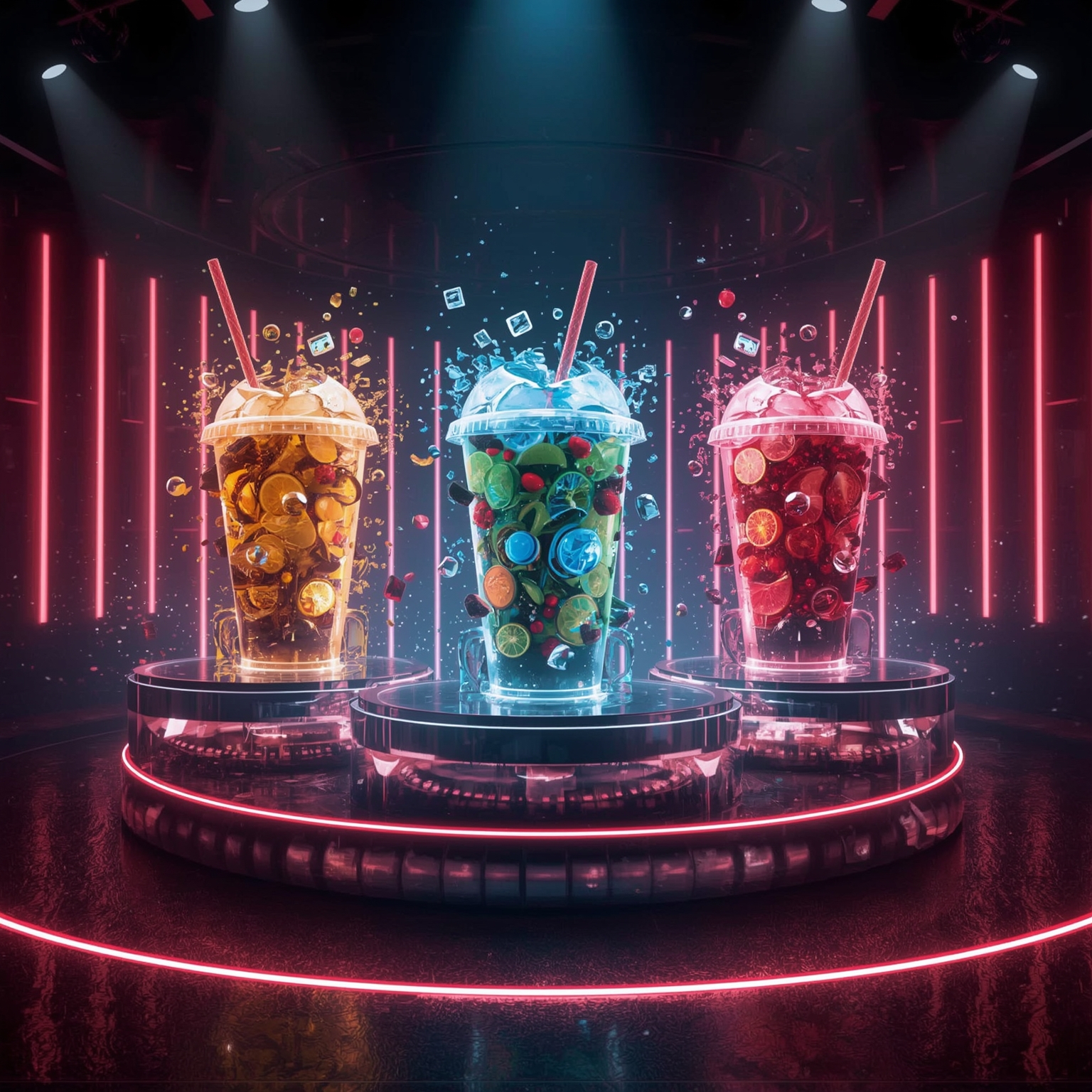
Unlike standard fast-food offerings, the menus at these new café-style ventures emphasize imaginative drink creations over traditional meals. Patrons will encounter intricately layered sodas and juices crowned with whipped toppings, jeweled with real fruit mix-ins, and carefully blended into an array of specialty coffees and icy concoctions. Although the food component remains deliberately limited, the emphasis on texture, aesthetic appeal, and personalization is unmistakable—reflecting how younger consumers increasingly treat their beverages as lifestyle accessories rather than mere thirst quenchers.
Chick-fil-A’s inaugural Daybright location is slated to open later this year in Atlanta, a city long associated with experimentation in hospitality and dining trends. Meanwhile, Taco Bell’s ambitions are strikingly expansive: the company expects its Live Más Café concept to generate $5 billion in beverage sales by 2030. Reinforcing this growth trajectory, Taco Bell plans to establish thirty new café locations across Southern California and Texas by the fall of 2025, strengthening its foothold in regions that blend youthful demographics with a strong café culture. As of now, five Live Más Café locations are already serving customers in California, offering early insight into how the concept might scale nationwide. A Taco Bell spokesperson told Business Insider that Live Más Café emerged from internal research highlighting how younger audiences, particularly members of Generation Z, perceive beverages as central to their everyday rituals. Reflecting this mindset, the chain has trained a specialized team of “Bellristas” whose craft extends far beyond conventional coffee service to include a wide spectrum of creative liquid expressions. Chick-fil-A, by contrast, has not publicly commented on its strategy, leaving speculation to swirl around what the Daybright brand might contribute to the fast-food beverage arms race.
These expansions illuminate a significant shift already underway within the quick-service dining industry—an intensifying push to monetize America’s thirst for customizable, visually striking drinks. Titans across the fast-food and fast-casual spectrum, from Panda Express to KFC and Burger King, are recalibrating their business models to introduce new beverage programs that appeal explicitly to a generation drawn to chilled, colorful, and endlessly remixable options.
At the core of this renewed competition lies a formidable question: can any of these challengers dethrone Starbucks, the long-standing powerhouse that effectively built a $100 billion beverage empire on ritualized coffee culture? Yet even Starbucks’ dominance is showing signs of strain. While smaller upstarts like Dutch Bros have gained ground by offering speed, novelty, and affordability, Starbucks recently reported its sixth consecutive quarter of declining same-store sales. By comparison, Dutch Bros saw a 4.7% increase in same-store sales in early 2025, with its revenue surging 28% year-over-year during the second quarter—momentum that underscores how consumers are embracing alternatives that deliver value alongside creativity.
If Taco Bell’s and Chick-fil-A’s experiments succeed, their photogenic drink menus could lure away the younger, cost-sensitive segment Starbucks once held so firmly. As Michael Della Penna, chief strategy officer at InMarket, told Business Insider, these smaller, drink-centered environments give customers a place to relax, socialize, or work—offering the café experience without the premium price tag. It’s an emerging business model that redefines what “value” means in a beverage context.
Meanwhile, Starbucks faces its own challenge of recalibration. The brand has occasionally struggled to define its value proposition amid the rising costs of coffee beans and global inflation pressures. Under CEO Brian Niccol’s relatively new tenure, the company launched its “Back to Starbucks” initiative to rekindle both cultural relevance and consumer loyalty. Though early traction is visible, investors remain cautious, waiting to see whether the company’s strategic turnaround can match the boldness of the challengers now circling its core market.
History offers a cautionary tale for anyone daring to confront Starbucks directly. McDonald’s attempted a similar venture with its standalone drink concept, CosMc’s, which initially drew optimistic comparisons to Starbucks but shut down after roughly eighteen months of test operations. Asit Sharma, an analyst for The Motley Fool, noted that despite CosMc’s closure, McDonald’s has a long-standing ability to pivot quickly, learning from each experiment. In Sharma’s view, these brewing beverage battles are precisely the sort of competitive catalyst that keeps a dominant player like Starbucks sharp and evolving. “Every brand that holds market power needs worthy challenges to remain relevant,” he observed, describing the rivalry as both invigorating and strategically necessary.
Nevertheless, it would be premature to assume that Starbucks is ceding its throne. The company continues to innovate assertively, launching imaginative products such as protein-infused cold foams and orchestrating pop-culture collaborations that keep it embedded within generational conversations—from limited-edition releases to celebrity-hosted experiences. A Starbucks spokesperson told Business Insider that the brand’s perceived customer value scores are currently near two-year highs, with notable gains among Gen Z and millennial consumers, who collectively represent more than half of its customer base.
Della Penna emphasized that it would be unwise to underestimate Starbucks’ adaptability. The company possesses an established infrastructure capable of scaling new beverage experiments almost instantly—a competitive edge that allows it to adopt and refine the most popular features emerging from rivals like Live Más Café or Daybright. However, Sharma cautioned that this very flexibility could become a liability if Starbucks is tempted to pursue overly complex drink formulas in categories that dilute its identity. Starbucks historically excels at systematic innovation but can stumble when pushing into excessive intricacy, where operational simplicity meets consumer expectation.
Ultimately, the defining question remains unresolved: can these emerging contenders capture the elusive “secret sauce” that has allowed Starbucks to dominate for decades, or will the coffee giant’s institutional depth and brand loyalty continue to shield it from displacement? The fight for America’s beverage identity is intensifying, and while Starbucks retains its advantage, the foam on its crown is beginning to quiver under the pressure of change.
Sourse: https://www.businessinsider.com/starbucks-taco-bell-chick-fil-a-beverage-strategy-2025-10