The Enola Gay stands today not merely as an artifact of engineering brilliance but as a profoundly evocative symbol of one of humanity’s most significant and sobering historical moments. Once an instrument of technological innovation and strategic power, this Boeing B-29 Superfortress played a decisive role in bringing an era of global conflict to its devastating conclusion when it delivered the atomic bomb to Hiroshima during the final stages of World War II. Now carefully restored and preserved within a museum setting, it occupies a place of both reverence and reflection, bridging the fragile boundary between human progress and moral contemplation.
Visitors encountering the Enola Gay today are often struck by its contrasting meanings. On one hand, it represents the extraordinary achievements of twentieth-century aviation—an example of mechanical precision, aerodynamic mastery, and the boundless curiosity that fuels human advancement. Its sleek metallic surfaces and intricate technical components reveal the ingenuity of the engineers and pilots who sought to push the limits of what flight could accomplish. On the other hand, its historical role connects it inextricably to the immense suffering, loss, and devastation that followed its mission. Thus, its presence within a museum transforms it from a triumph of engineering into a vessel of memory—an object that compels visitors to confront the ethical complexities of warfare, scientific progress, and responsibility toward future generations.
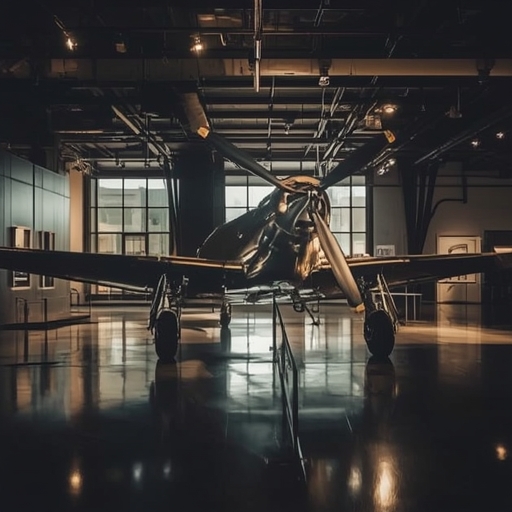
The museum setting itself deepens this dual narrative. Within the calm atmosphere of the exhibition hall, illuminated by carefully controlled light that glances gently off the plane’s metallic frame, the aircraft appears almost timeless—suspended between past and present. Informational plaques, photographs, and archival footage guide viewers through the broader context of the Second World War, allowing them to grasp the enormity of the global conflict and the pivotal role the Enola Gay played in shaping the trajectory of human history. Each visitor interprets this encounter differently: for some, it evokes reverence for the courage of those who served; for others, sorrow and empathy for the countless lives torn apart by the weapon it delivered. Yet for all, it underscores the enduring necessity of peace and remembrance.
As an artifact, the Enola Gay continues to provoke dialogue rather than provide simple answers. It is not only a historical exhibit but also a catalyst for moral reflection, inviting all who stand before it to question how technological mastery and ethical responsibility can, and must, coexist. In preserving this plane, curators and historians have ensured that its story—complex, uncomfortable, yet profoundly important—remains accessible to future generations. The aircraft endures not as a relic frozen in time, but as a dynamic testament to the human capacity for both creation and destruction, innovation and introspection.
Ultimately, the Enola Gay’s legacy transcends the metallic structure resting within the museum walls. It embodies the continuous endeavor to learn from history—to transform remembrance into wisdom, and tragedy into resolve for a more conscientious future. In its silent presence, we are reminded that the true purpose of preservation lies not merely in honoring past accomplishments, but in ensuring that the lessons of history continue to illuminate the path toward peace and humanity’s shared responsibility for the world it shapes.
Sourse: https://www.businessinsider.com/world-war-ii-planes-museum-b-29-enola-gay-2026-2