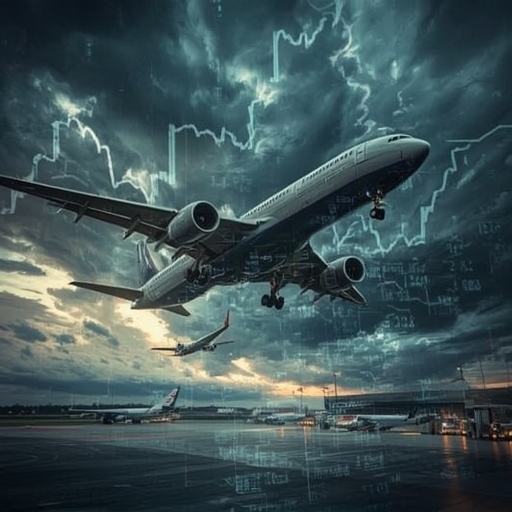
The aviation industry is confronting one of its most destabilizing challenges in decades: the dramatic and sustained escalation of fuel prices. Once a predictable component of operational expenses, fuel has now become the single most volatile and influential factor determining airline performance, profitability, and even survival. The consequences of this shift extend from the world’s largest carriers to the smallest regional operators, reshaping every aspect of how airlines plan, compete, and evolve.
For major international airlines, rising fuel costs have already begun to erode financial cushions that once insulated them from sudden market shocks. Even established carriers with diversified fleets and sophisticated hedging strategies are recalibrating routes, cutting non-essential services, and renegotiating supplier contracts simply to remain profitable. The turbulence is felt not only across accounting spreadsheets but also in passenger experiences—manifesting in higher ticket prices, streamlined amenities, and a renewed emphasis on fuel-efficient aircraft investments.
However, the challenge is far more existential for low-cost and budget carriers. Built upon the foundation of thin margins, rapid turnaround times, and efficiency-driven business models, these airlines are now navigating treacherous skies. The price of fuel can no longer be managed through operational tightening alone. Carriers that previously thrived by offering affordable access to air travel are now facing the grim reality that sustaining low fares while covering surging costs is untenable. The collapse of one competitor serves as a somber warning to others: survival will depend not only on cost management but also on strategic adaptation and innovation.
Industry analysts suggest that these conditions may prompt an era of consolidation and transformation. Smaller airlines could merge or form alliances to share resources and mitigate volatility, while larger ones may seek to modernize fleets with next-generation, fuel-efficient aircraft. Meanwhile, sustainability has emerged as more than a marketing objective—it has become a financial imperative. Biofuels, sustainable aviation fuel (SAF), and carbon-offset programs are gaining momentum as airlines race to reduce both environmental impact and dependency on traditional fossil energy.
Ultimately, the current fuel-price crisis represents more than a financial squeeze—it is a test of endurance, adaptability, and foresight. The skies, once symbols of limitless possibility, now mirror the constraints of an industry grappling with global economic pressures and environmental accountability. The question that remains is not simply who will survive, but who will redefine flight in an era where every drop of fuel counts and every decision determines altitude.
Sourse: https://www.wsj.com/business/airlines/iran-war-airline-impact-flight-costs-310c8cc7?mod=pls_whats_news_us_business_f


