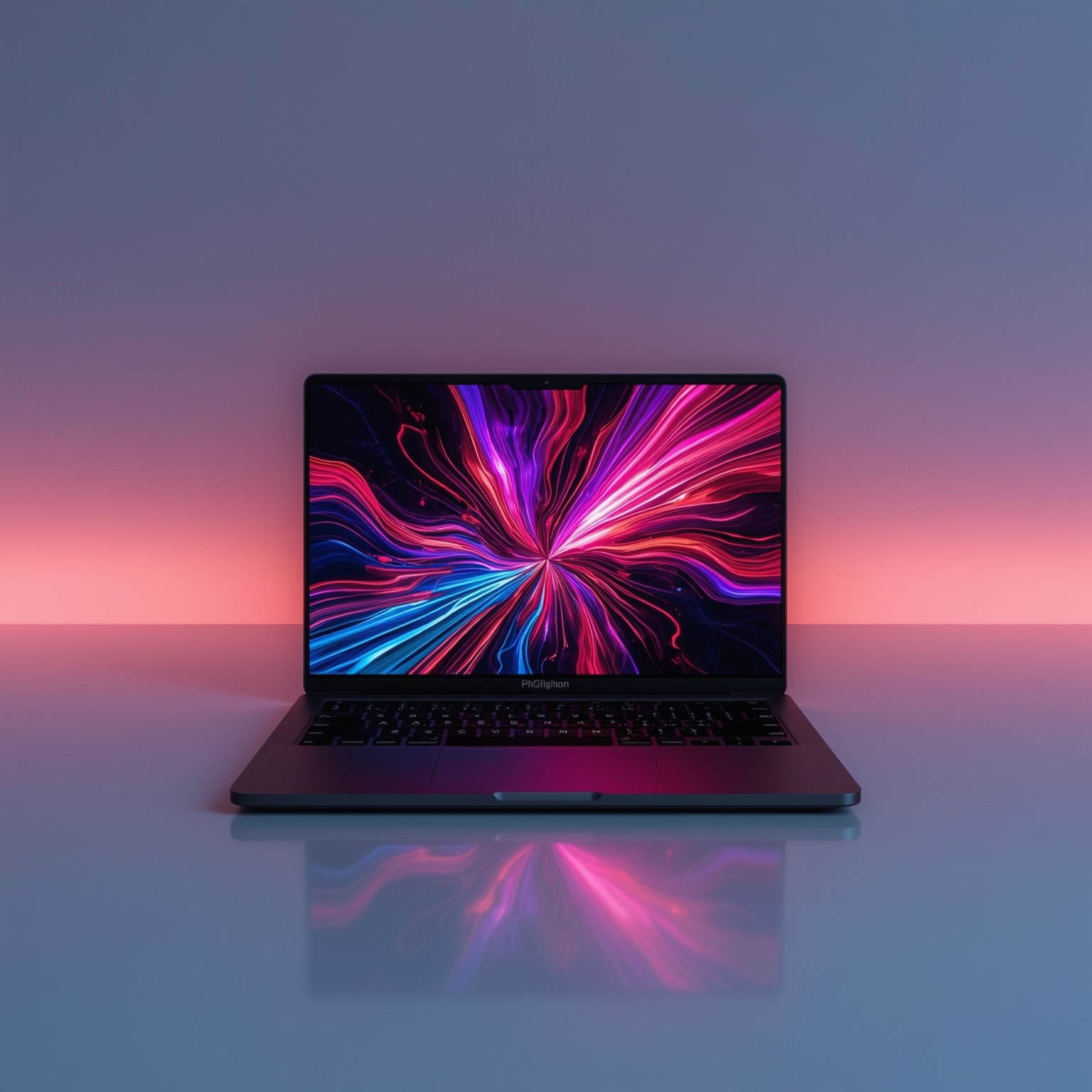
Lenovo’s Yoga Pro 9i Aura Edition represents a striking convergence of precision engineering and artistic design, setting a new benchmark for premium Windows laptops aimed at professionals, designers, and modern creators. Priced at $1,949, this machine doesn’t merely justify its cost with high-performance hardware—it captivates from the moment its lid is lifted. The centerpiece, a breathtaking tandem OLED display, immediately commands attention, flooding the senses with extraordinary clarity, vivid colors, and brightness that can soar to an astonishing 1,000 nits. This panel’s tandem OLED technology, still rare among contemporary Windows devices, ensures a display experience that feels silky-smooth, almost tactile in its fidelity, and so luminous that even the deepest shadows retain subtle gradients and depth.
For those exploring creative or multimedia work, the Yoga Pro 9i Aura Edition’s visual fidelity transforms everyday interaction into something altogether more cinematic. Even the model without the tandem OLED—equipped instead with a still-outstanding 2.8K OLED screen paired with the Nvidia GeForce RTX 5050 GPU—delivers a remarkably fluid 120Hz refresh rate, robust HDR 1000 True Black contrast, and complete DCI-P3 color reproduction. The difference between this and the full tandem model with the RTX 5060 is subtle—experienced eyes may notice slightly less vibrancy in certain tonal highlights, but the overall display quality remains exemplary, easily outperforming most laptops in a comparable price class. The sleek glass finish reinforces an impression of refined craftsmanship, further amplifying its allure as a companion for both work and recreation.
Beyond its visual appeal, the Yoga Pro 9i Aura Edition defines itself through well-balanced power and flexibility. With 32GB of LPDDR5X memory seamlessly soldered for stability, and a spacious 1TB M.2 PCIe Gen 4 SSD ensuring swift data access, the system is primed for complex workflows. At its heart lies Intel’s Core Ultra 9 285H processor from the Arrow Lake family, consisting of sixteen cores that juggle intensive tasks with astonishing efficiency—making this slim-profile laptop not merely portable, but formidable. For video editors working in DaVinci Resolve, animators rendering scenes, or photographers fine-tuning color accuracy in Adobe Lightroom, it demonstrates consistency, responsiveness, and endurance across varied professional demands.
While its gaming aptitude does not define its identity, the machine remains capable of tackling modern titles with ease. The Nvidia RTX 5050 or 5060 GPU provides ample horsepower to generate immersive, high-fidelity visuals. Nevertheless, during marathon gaming sessions, users may note thermals creeping upward—proof that this ultrathin form favors versatility over heavy-duty endurance. The fans, dutiful though occasionally intrusive, awaken frequently to manage internal temperatures, and during CPU- or GPU-intensive sessions, their whirring becomes noticeable even across a room. Fortunately, while audible, the system surface never becomes uncomfortably hot to the touch, balancing thermal control with ergonomic consideration.
Physically, the laptop’s minimalist gray-on-gray design exudes a quiet professionalism rather than flamboyant aesthetic experimentation. The subtle finish has a practical advantage: it resists fingerprints and maintains a sleek, composed look even after long hours of travel or use in collaborative environments. Its full-sized keyboard feels tactile and substantial, featuring well-calibrated 1.5mm key travel and a confident click that inspires continuous typing. Although one might wish for a modern haptic trackpad to complete the premium experience—an increasingly common feature among premium creative machines—the current one performs reliably, if lacking that nuanced feedback creatives are beginning to expect at this price tier. Its slightly off-center alignment may distract a keen observer, yet overall it maintains responsiveness and smoothness.
Despite its neutrality in design language, the Yoga Pro 9i 16-inch maintains a feeling of well-considered craftsmanship: there’s minimal flex in the chassis, barely perceptible wobble in the hinge, and an evenly distributed 4.4-pound weight that assures stability and portability. At just 0.76 inches thick, it’s impressively lightweight for a system housing powerful components, making it an appealing choice for professionals who move fluidly between offices, studios, and travel environments. Connectivity options, often overlooked in thin laptops, remain abundant. The left side hosts the charger, HDMI 2.1 output, dual Thunderbolt 4 ports with 40Gbps bandwidth (each supporting charging), and a standard audio jack. On the opposite edge are two USB-A ports rated for 5Gbps and an SD card reader—crucial for photographers and digital artists. Yet one caveat arises: the power button, placed near the top right corner, is disconcertingly easy to press unintentionally, particularly when connecting the charger.
For all its sophistication, battery performance is where some expectations need recalibration. The array of high-performance components naturally demands energy in generous measure. Although the device ships with a smaller 170W charging brick compared with the previous generation, users engaged in heavy multitasking or GPU-intensive workloads may find that this power level barely sustains the system at full performance. Some users have reported requiring a separate 230W charger to maintain charge equilibrium during extended, demanding sessions. During typical office or browsing use, however, the included adapter works adequately, though those relying solely on third-party USB-C chargers may experience inconsistent results. In practical terms, everyday productivity lasted just over six hours before the need to reconnect to power—a figure expectedly shorter under more strenuous creative or gaming activities, particularly with the more power-hungry tandem OLED display engaged.
When evaluating performance, the Yoga Pro 9i Aura Edition excels as an agile, well-rounded companion capable of operating in diverse contexts—from professional-grade content creation to moderate gaming leisure. Video editing workflows in CapCut or intensive rendering within animation platforms felt smooth, fast, and precise, with only minimal latency when scrubbing through large, uncompressed files. Compared to Lenovo’s own Legion Pro 7i—a gaming-oriented cousin commanding a higher price—the Yoga Pro 9i trades specialized cooling and RGB-heavy flamboyance for a thinner chassis, quieter aesthetics, superior display quality, and broad versatility. The tradeoff pays off handsomely for users valuing portability and display excellence over sheer gaming endurance.
In summary, Lenovo’s Yoga Pro 9i Aura Edition emerges as a thoughtfully crafted laptop that seamlessly bridges creativity, performance, and elegance. It is a superb option for designers, visual editors, or hybrid professionals seeking a machine that can pivot fluidly between productivity, artistic creation, and entertainment without compromise. While its battery life remains modest and its fans occasionally assertive, the immersive OLED experience, robust internals, and refined design together justify its roughly $2,000 cost. For those seeking maximum visual brilliance, upgrading to the tandem OLED model is an indulgence worth considering—provided one accepts its appetite for power. Conversely, users valuing greater endurance for everyday productivity will find the standard OLED configuration an attractive balance. Ultimately, the Yoga Pro 9i Aura Edition stands as a premium, portable workstation for creators who demand both form and functionality in a single, stunning package.
Sourse: https://www.zdnet.com/article/i-found-a-windows-pc-with-a-tandem-oled-and-cant-go-back-to-graphic-design-on-anything-else/