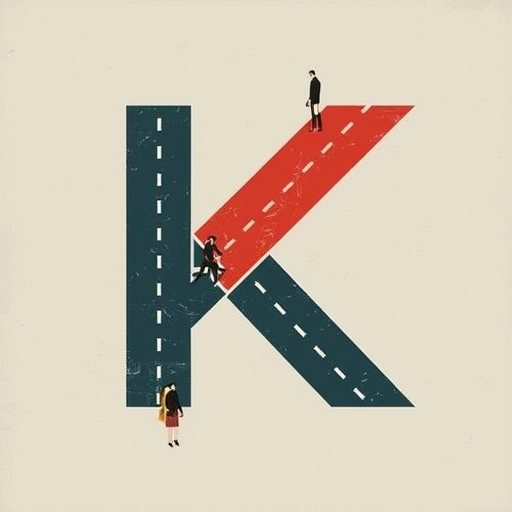
The so-called K-shaped economy, a term coined to capture the diverging fortunes emerging after major economic disruptions, has evolved beyond a temporary recovery pattern — it now represents a persistent structural divide. On one side of this figurative ‘K,’ individuals and families with substantial disposable income continue to elevate their lifestyles, investing heavily in premium travel experiences, luxury goods, and exclusive entertainment. Their confidence in personal financial stability fuels discretionary consumption, which in turn sustains high-end sectors of the economy that thrive on robust demand. On the opposite side, however, a growing segment of the population faces tightening constraints, where financial anxieties dictate everyday choices. For these households, the rising cost of living translates into strict prioritization: grocery budgets shrink, dining out becomes an infrequent indulgence, and even essential utilities require careful balancing against stagnant wages and inflationary pressures. This stark contrast reveals more than just different consumption preferences — it underscores how economic inequality has deepened into a lived reality visible across social, professional, and geographic boundaries.
The psychological and cultural repercussions of this bifurcation are equally important. While affluent consumers perceive economic stability and even optimism, those in lower or middle income brackets increasingly report exhaustion, uncertainty, and disillusionment. Within workplaces, this tension manifests in morale gaps and productivity discrepancies, as employees’ financial stress subtly erodes engagement and long-term ambition. For business leaders and policymakers, these diverging trends carry significant strategic implications: corporate growth models reliant on broad-based consumer confidence may falter if large portions of the population reduce spending out of necessity. Similarly, the very notion of shared prosperity — a principle long associated with economic health — becomes more abstract when one half of society experiences abundance while the other approaches austerity.
Understanding the K-shaped economy therefore requires acknowledging both its human and systemic dimensions. It is not simply a matter of uneven recovery but a reconfiguration of opportunity itself. As inflation reshapes purchasing power and access to capital favors those already advantaged, the pathway toward financial security grows narrower for many. The resulting economic landscape resembles two diverging trajectories: one ascending toward expanded wealth and experiential consumption, and the other descending into persistent budgeting and deferred aspirations. Addressing such imbalance demands more than short-term stimulus or surface-level optimism — it calls for rethinking how policies, workplaces, and social frameworks distribute opportunity. In this widening economy, the contrast between luxury and necessity is no longer a metaphor but a measure of inequality’s reach, one that challenges the foundations of sustainable growth and collective well-being.
Sourse: https://www.businessinsider.com/k-shaped-economy-spending-jobs-income-credit-2026-3