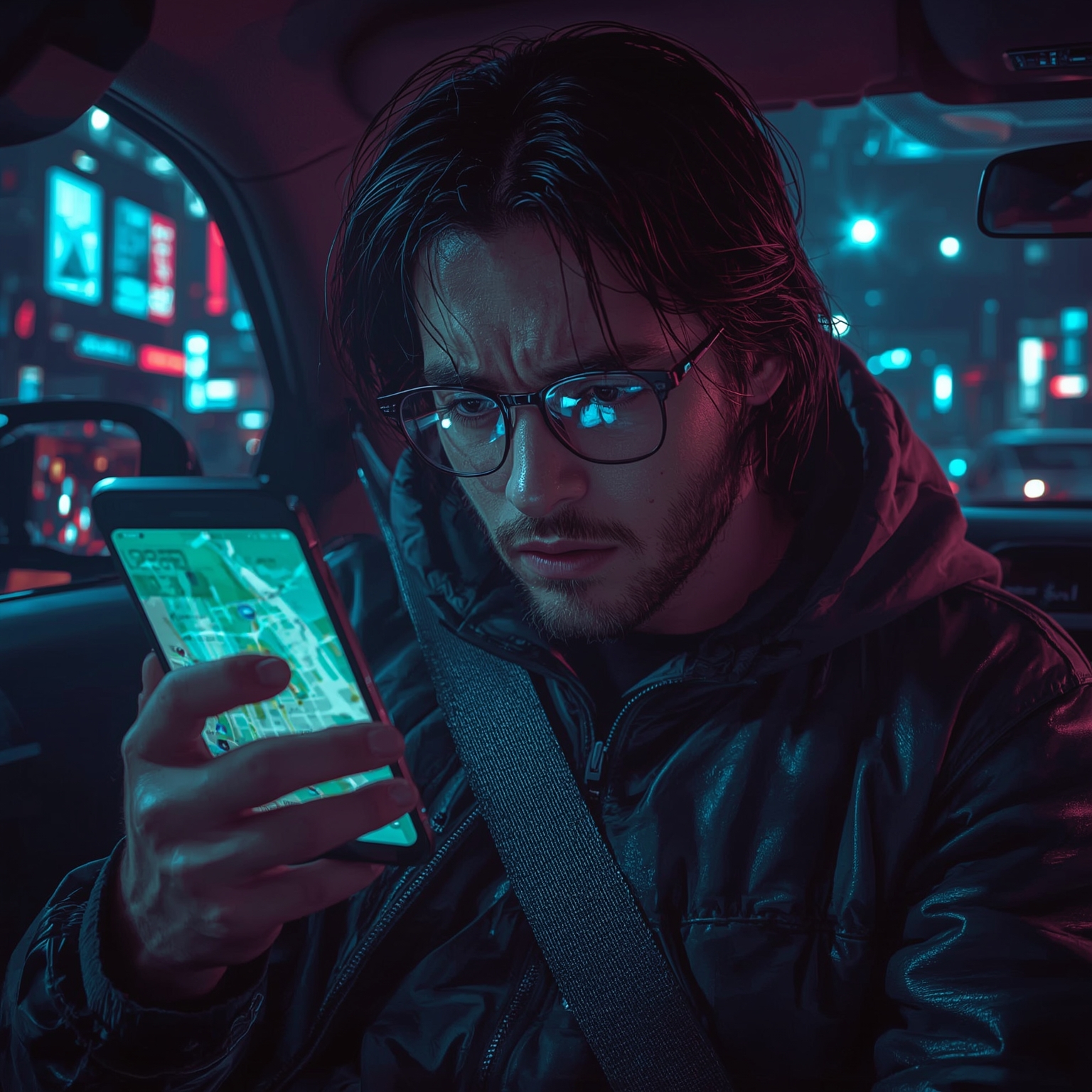
Uber has recently intensified its efforts to combat fraudulent activities on its platform, specifically targeting drivers accused of manipulating their GPS data. While the company maintains that these measures are essential to maintaining the integrity, safety, and dependability of its ridesharing and delivery services, the crackdown has had profound consequences for some gig workers who have found their accounts suddenly deactivated.
One such driver, Andre, experienced this firsthand in July when he received a suspension notice from Uber informing him that his driving privileges had been revoked. The company alleged that he had falsified his GPS coordinates, effectively misrepresenting his location while using the app. Andre, however, was puzzled and genuinely bewildered by the accusation. He insisted that he had never engaged in such conduct and lacked even the technical knowledge required to intentionally manipulate GPS signals. Speaking to Business Insider, he confessed his frustration and disbelief, explaining that he had no idea what the company’s allegation even meant.
An Uber spokesperson emphasized that the decision to prevent a driver from accessing the platform is never taken lightly. According to the company, such actions are only undertaken when absolutely necessary in order to preserve the platform’s safe and reliable functionality. Nevertheless, this explanation has not eased the concerns of gig workers like Andre, many of whom rely on the income from rides or deliveries as their primary or supplemental livelihood.
For years, rideshare and delivery workers have raised complaints about the lack of transparency surrounding account deactivations on platforms such as Uber and Instacart. Drivers frequently report being locked out of their accounts with either minimal justification or none at all, leaving them suddenly unable to earn income. Now, Uber’s sharpened focus on rooting out fraudulent activity through geolocation has meant that even individuals who claim innocence, like Andre, are being caught in the dragnet.
The type of fraud Uber is targeting typically involves spoofing GPS data in order to secure rides or delivery requests that are more profitable or more convenient. Some gig workers use applications designed to falsify their physical location, appearing closer to passengers, restaurants, or delivery drop-offs than they actually are. In addition, fraud sometimes involves the use of accounts that are registered under names other than those of the actual drivers, posing both integrity and security issues. However, drivers point out that GPS-based systems are not flawless. Errors in cellular transmission, interference in built-up urban landscapes, and technical glitches can all cause inaccurate readings, potentially leading to false accusations of deceit.
Andre recounted how he had discovered other drivers in similar predicaments when he visited Uber’s Greenlight Hub in Los Angeles, a facility established to support drivers. Beyond in-person encounters, he also saw online discussions — particularly on Reddit forums dedicated to Uber drivers — where people shared screenshots of deactivation emails citing GPS manipulation as the reason for losing access to the platform. These digital communities revealed that his experience, while distressing, was far from isolated.
Because his appeal to Uber was unsuccessful, Andre eventually turned to Lyft as an alternative source of income, although he admitted it had not fully compensated for the financial loss of being disconnected from Uber. Determined to fight the decision, he planned to pursue arbitration, the required method of dispute resolution outlined by Uber for drivers contesting such matters.
When reflecting on how Uber’s system might have mistakenly flagged his activity, Andre acknowledged a possible explanation: the inherent imprecision of GPS technology. While driving in Los Angeles, he recalled an incident during which his phone’s location temporarily failed to update while he traveled through a tunnel. At one point, his phone erroneously displayed his location as the Crypto.com Arena, although in reality he was elsewhere. Once his device reconnected, the app corrected his location in Little Tokyo, giving the appearance of a sudden two-mile jump. This abrupt discrepancy, Andre speculated, may have triggered Uber’s fraud-detection algorithms, which could have interpreted the leap as intentional GPS spoofing.
Unfortunately, despite his insistence that this was merely a technological hiccup, Andre’s account has remained deactivated, significantly impacting his ability to pay essential bills such as rent and basic living expenses. He is not alone. Another California-based Uber driver reported receiving a similar notification in July, accusing him of tampering with his GPS. This driver, who primarily focused on food deliveries through Uber Eats, explained that he often noticed inaccuracies within the app itself. He described being physically present inside restaurants while the Uber system inexplicably recorded him as being half a mile away from the actual pickup point.
In defense of its position, Uber reiterated that it responds to reports indicating fraudulent behavior or actions violating its Community Guidelines. The company explained that its reviews rely on more than a single data source, with analyses incorporating signals such as GPS data and nearby cellphone towers in order to triangulate the most probable location of a driver.
Sergio Avedian, a part-time rideshare driver in Los Angeles and a senior contributor to *The Rideshare Guy*, a blog and YouTube channel dedicated to gig-economy issues, interpreted the recent wave of deactivations as evidence of Uber’s stronger stance against GPS fraud. Several years ago, Avedian observed that apps enabling location falsification were widespread among drivers, though their use has been declining more recently as Uber has stepped up enforcement efforts.
For Andre, however, the entire experience has been unsettling on a deeper level. He likened the process to living under a ‘dystopian’ regime, one where decisions that profoundly affect his livelihood are made not by human beings but by automated systems driven by artificial intelligence. To him, the sense of being judged and punished by algorithms rather than real people underlines the precarious nature of working in the gig economy.
This incident highlights a broader dilemma faced by companies like Uber: the tension between safeguarding the platform against genuine fraud and ensuring fairness toward individual workers who may be wrongfully penalized due to imperfect technology. For many drivers who depend on these platforms as a vital source of income, the consequences of a mistaken deactivation can be devastating.
Sourse: https://www.businessinsider.com/uber-cracks-down-on-driver-gps-locations-deactivating-accounts-2025-9