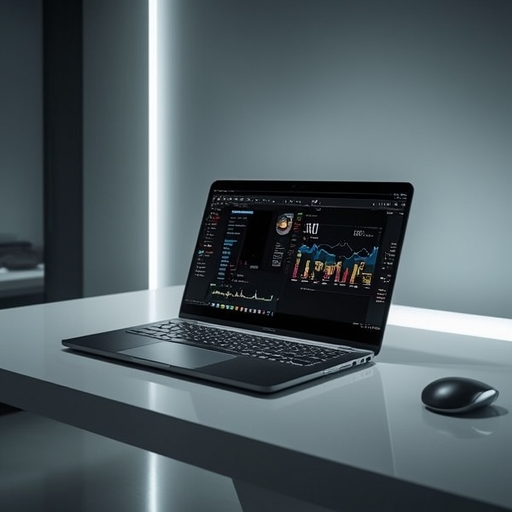
The Lenovo ThinkPad P1 (Gen 8) epitomizes the intersection of raw computing performance, portability, and professional craftsmanship that has long defined the ThinkPad legacy. At a starting price of $4,169 for the model equipped with a tandem OLED display and 32GB of memory, this machine immediately signals its position as a no-compromise workstation intended for professionals who prioritize power, precision, and build quality above all else. It represents not just another laptop release, but an evolution of Lenovo’s engineering ethos — one that unites cutting-edge technology, future-proof design, and a degree of durability that appeals to enterprise users and creative professionals alike.
Lenovo’s ThinkPad P series has always been tailored for specialized fields such as engineering, graphic design, architecture, and digital content creation — domains that demand uncompromising reliability and computational strength. The eighth-generation ThinkPad P1 continues this legacy as the flagship of Lenovo’s mobile workstation lineup. It comes equipped with up to an Intel Core Ultra 9 255H processor paired with Nvidia’s RTX PRO 2000 GPU, reinforcing its identity as a true powerhouse in a deceptively compact shell. The machine remains faithful to the iconic ThinkPad aesthetic — matte black, minimalist lines, and a focus on function over flair — yet introduces refined modern touches that subtly elevate its premium appeal.
One of the most remarkable aspects of this generation is the balance Lenovo strikes between immense hardware capability and surprising portability. Weighing approximately 4.06 pounds and measuring only 0.39 inches thick, the ThinkPad P1 Gen 8 delivers workstation-caliber power in a form factor that borders on the ultrabook category. This combination makes it particularly attractive to professionals who frequently travel but cannot compromise on performance. The inclusion of LPCAMM2 memory technology strengthens its future-ready profile by enabling straightforward upgrades and repairs, ensuring the machine remains relevant as demands evolve. Connectivity options further enhance versatility: a generous set of ports ensures compatibility with a wide range of peripherals and professional tools.
The visual experience, anchored by a bright and vivid 16-inch tandem OLED display, stands out as one of the device’s defining features. With a 3.2K resolution, HDR peak brightness reaching up to 1500 nits, and full DCI-P3 color accuracy, this screen is tailored for creative professionals who rely on precise color representation for tasks such as photo editing, video production, or digital illustration. The variable 120Hz refresh rate translates to smoother animations and more natural on-screen motion, whether working with moving graphics or simply scrolling through productivity applications. Complementing the display is a finely tuned haptic trackpad and a responsive six-row keyboard, both contributing to a tactile and satisfying user interface that underscores Lenovo’s attention to ergonomic excellence. The 5MP webcam, fingerprint reader, and full array of enterprise-grade ports — including Thunderbolt 5 and HDMI outputs — push the device firmly into the professional realm.
The ThinkPad P1’s physical design remains intentionally restrained, staying true to the ThinkPad tradition of understated sophistication rather than chasing the ultra-thin, flashy aesthetic trends favored by many competitors. Its matte black chassis exudes professionalism, and the keyboard experience — responsive yet soft, with ideal key travel and tactile feedback — exemplifies why ThinkPads continue to earn the loyalty of typing connoisseurs. For users who favor quiet dependability over ostentatious design experiments, this familiar exterior will feel like home.
Beyond surface impressions, the P1’s technical execution demonstrates engineering maturity. The integration of up to 64GB of dual-channel LPCAMM2 memory exemplifies Lenovo’s commitment to balancing performance and sustainability; this modular, upgradeable form of low-power memory combines the efficiency of LPDDR technology with the flexibility of replaceable modules. This characteristic extends the machine’s operational lifespan and positions it as a forward-thinking choice in a market often dominated by devices with soldered, non-upgradeable components.
Performance-wise, the Intel Core Ultra 7 and Ultra 9 processors, featuring up to 16 cores and 5.1GHz peak speeds, effortlessly handle heavy workloads ranging from AI-assisted rendering to data modeling. The accompanying Nvidia RTX PRO Blackwell-generation graphics unit ensures professional-level acceleration for rendering, 3D modeling, and AI computations, establishing the P1 as a formidable workstation even among desktop-class alternatives. While the hardware can generate noticeable heat during sustained heavy use, Lenovo’s advanced liquid metal cooling system mitigates thermal buildup effectively, directing hot air away through rear ventilation and maintaining consistent performance under load. Consequently, although the fans occasionally engage even during light web browsing, the tradeoff results in superior heat management that prolongs component longevity.
Battery life, predictably, varies based on workload intensity and performance mode, yet the 90Wh battery manages a full workday of typical productivity tasks in balanced mode — an impressive feat for such formidable hardware. During demanding creative sessions, users can expect approximately three to five hours of runtime, which remains competitive for a laptop in its performance class.
From an enterprise standpoint, the ThinkPad P1 Gen 8 encompasses nearly every feature a professional audience might demand: excellent webcam quality for conference calls, biometric security via a fingerprint sensor, a Kensington lock slot for physical theft prevention, and extensive wireless options including Wi-Fi 7 and Bluetooth 5.4. Together, these culminate in a device that is not only powerful but also secure, connected, and versatile enough for multidisciplinary teams across design studios, engineering firms, and corporate environments.
While its price tag places it firmly in the premium category — potentially inviting comparisons with other high-end machines such as Apple’s MacBook Pro with the M4 Pro Max chip — Lenovo’s offering stands out for its modularity, Windows flexibility, and proven ThinkPad dependability. For IT departments or creative professionals equipping teams that require powerful rendering capabilities in a portable form, it’s difficult to find a more complete and resilient solution. Its careful balance between raw strength, portability, and long-term serviceability earned it ZDNET’s Editor’s Choice award, highlighting its success in merging classic ThinkPad reliability with modern advancements in design and modular engineering.
In essence, the Lenovo ThinkPad P1 Gen 8 is not merely a laptop but a mobile studio and engineering platform in one. It represents the culmination of decades of iterative refinement — an embodiment of Lenovo’s disciplined approach to professional computing, focused on longevity, performance, and user experience rather than on superficial reinvention. For those who understand and appreciate the ThinkPad ethos, its appeal is immediate and enduring: a timeless tool that rewards practicality and discipline with uncompromising capability.
Sourse: https://www.zdnet.com/article/lenovo-thinkpad-p1-gen-8-laptop-review/