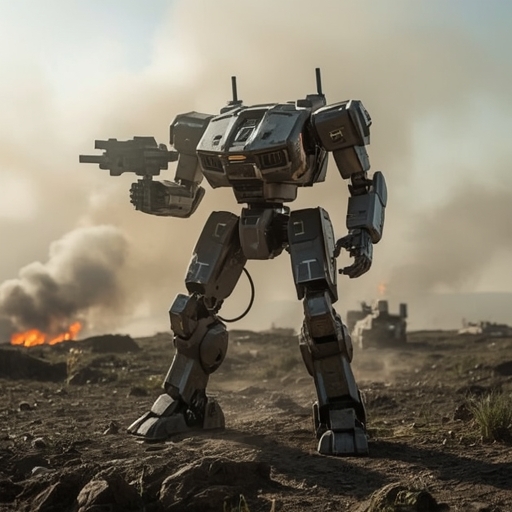
In the ever-evolving theater of modern warfare, a remarkable story of technological endurance and human ingenuity has emerged from Ukraine’s ongoing conflict. A single autonomous ground robot, developed to augment front-line combat units, reportedly managed to hold its defensive position for a staggering forty-five consecutive days. This lone mechanical combatant not only resisted enemy advances but also provided consistent support to its human counterparts, symbolizing a new frontier in the integration of robotics into military operations.
This achievement exemplifies the fusion of courage and innovation, demonstrating how artificial intelligence and automated systems can withstand the relentless pressures of conflict. Unlike traditional military machinery that relies heavily on human control and maintenance, this robot operated with impressive autonomy, executing defensive maneuvers, maintaining surveillance, and reinforcing strategic points without continuous human input. Its prolonged resilience under sustained duress reflects years of progress in energy efficiency, adaptive algorithms, and adaptive mobility technologies.
For Ukrainian forces, the robot’s performance stands as a testament to perseverance under adversity. It not only underscores the military’s capacity for creative problem-solving amidst logistical and technological challenges but also embodies a broader shift in the philosophy of modern defense. The fusion of AI-driven decision-making with battlefield pragmatism reveals how emerging technologies can serve as force multipliers, protecting human lives while enhancing operational efficiency.
Beyond the immediate tactical success, this episode highlights profound implications for future defense strategies worldwide. By enduring in combat for over six weeks without relief, the machine demonstrated the potential for autonomous systems to perform sustained missions that would exhaust even the most experienced human soldiers. Such breakthroughs hint at a future where intelligent robotics could dominate static defense lines, conduct reconnaissance missions in hostile environments, or serve as first responders in high-risk zones.
Ultimately, this story is more than a chronicle of technological triumph; it is a reflection of humanity’s unyielding drive to innovate even in moments of existential crisis. The lone robot, standing steadfast against continuous assault, has become a symbol not only of Ukrainian resilience but also of the broader transformation redefining the nature of warfare itself. The future of defense, once the realm of science fiction, has now arrived on the battlefield—and it carries both awe-inspiring promise and sobering ethical questions for the generations to come.
Sourse: https://www.businessinsider.com/ukraine-unit-ground-drone-devdroid-tw-fought-russians-45-days-2026-1