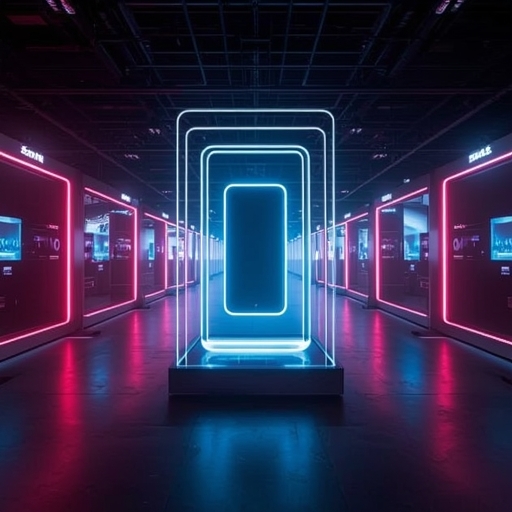
The spectacle of CES 2026, the world’s most influential technology showcase, has taken an unexpectedly dramatic twist this year—not because of a breathtaking product reveal, but because of what hasn’t appeared at all. The industry’s most talked‑about rumor, a supposedly revolutionary new smartphone, remains conspicuously absent from the exhibition floor. Its non‑appearance has fueled waves of speculation across media outlets and social platforms, transforming a mere rumor into a full‑blown phenomenon of suspense and curiosity.
For months leading up to CES, whispers spread through digital corridors promising a device that would redefine mobile innovation: sleeker design, transformative user experience, even speculative features that challenged the limits of imagination. Yet as the event’s labyrinth of booths glowed with holographic displays and bold innovation statements, the highly anticipated product never materialized. In its silence, it has managed to command more attention than many of the show’s actual unveilings.
This paradox underscores a fascinating dynamic unique to the modern tech landscape—sometimes absence itself becomes a strategic narrative. In an era when expectations are meticulously orchestrated through social media teasers, leaks, and influencer campaigns, withholding a product can spark far more intrigue than unveiling it on stage. Such a move may signal deliberate timing, an internal shift in strategy, or a calculated effort to sustain public fascination while perfecting the final result. Whatever the truth, the decision intertwines marketing psychology with technological ambition.
Exhibitors and analysts alike have begun to interpret this void as emblematic of a broader trend. The market has reached a point where expectation management is almost as critical as innovation itself. Each passing day of CES 2026, attendees revisit the same question—why introduce the unknown too soon when speculation can maintain the brand’s mystique? The phenomenon illustrates how anticipation, when nurtured correctly, becomes a powerful narrative instrument that keeps both the media cycle and consumer imagination in continual motion.
Beyond its immediate impact, the “missing smartphone” serves as a mirror reflecting contemporary culture’s relationship with technology. Our collective fascination reveals not only hunger for the next breakthrough but also impatience with the rhythm of progress. As engineers and designers quietly work behind the scenes, audiences craft stories of their own—stories about corporate secrecy, creative perfectionism, or even technological limits. Perhaps, in some subtle way, this non‑appearance tells us more about innovation’s modern pacing than any dazzling keynote could.
Ultimately, CES 2026 will be remembered as much for this absence as for the gadgets that lit up the convention halls. It will stand as a reminder that in the digital age, mystery can be as magnetic as revelation. Whether the elusive phone finally debuts later this year or fades into legend, its shadow has already reshaped the conversation around technological storytelling, reminding us that innovation is as much about anticipation as it is about arrival.
Sourse: https://www.theverge.com/tech/859023/i-cant-find-the-trump-phone-at-americans-largest-tech-show