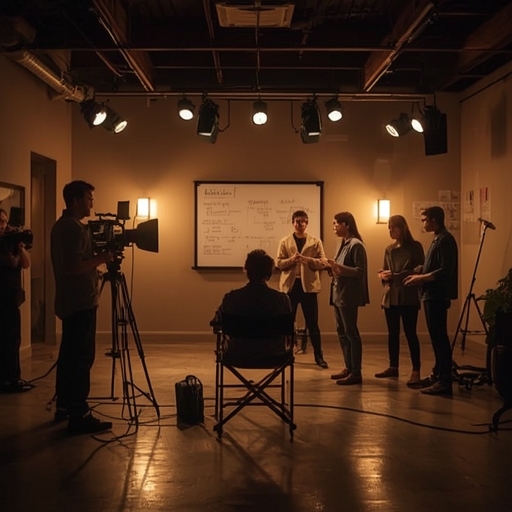
This first-person narrative draws upon an extensive conversation with Dennis Maguire, a seasoned filmmaker who served as Rob Reiner’s first assistant director during the reshoots of “Stand By Me” and throughout the principal photography of “Misery.” The exchange has been thoughtfully edited and refined to provide clarity and coherence. Tragedy struck recently when Rob Reiner and his wife, Michele Singer Reiner, were discovered dead in their Los Angeles residence, leaving behind an enduring legacy that continues to deeply affect those who knew and admired them.
From the beginning, it was clear that Rob embodied a rare blend of charisma and humility. He genuinely liked people, and they, in turn, were drawn to his warmth and infectious enthusiasm. Life, for Rob, was not merely a sequence of professional milestones but an experience to be savored, shared, and generously enriched by giving back to others. Although he was born into what many might call Hollywood royalty — being the son of the legendary actor, comedian, writer, and director Carl Reiner — he never exhibited a trace of arrogance or self-importance. To those who worked with him, he stood as an example of authenticity. He was approachable and grounded, the kind of man whose genuine spirit resonated through every interaction.
Physically, Rob was a large, expansive presence — gregarious, expressive, and irresistibly engaging. His sense of humor illuminated the set, his laughter punctuated by sharp wit and impeccable timing. Beyond his comedic brilliance, he possessed a richly analytical mind and an unquenchable curiosity that allowed him to hold conversations on virtually any topic. A passionate baseball aficionado, he could discuss the game with the same insight and energy that he brought to directing. He was, in every respect, both intellectually and socially dynamic.
My first collaboration with Rob occurred briefly during the reshoots for “Stand By Me,” where I assisted him for a week, but our most substantial partnership unfolded later in 1990 on “Misery,” a period that stretched across seven or eight demanding yet rewarding months. In the years preceding his passing, our encounters became infrequent. Occasionally, I would see Rob and Michele at their home in Malibu Colony, and we would engage in casual yet heartfelt conversations that reminded me of his enduring kindness.
When the devastating news of their deaths spread, several of my colleagues from the “Misery” production and I found ourselves overwhelmed with grief. We began reaching out to one another through texts, calls, and emails, sharing memories and seeking solace in collective mourning. That first night, I found sleep impossible; my thoughts raced endlessly, filled with vivid recollections of our time together. The sense of loss was profound — it was not merely the passing of a talented director, but of a deeply good human being. The tragedy felt incomprehensible.
Professionally, Rob was everything one could hope for in a director — skilled, confident, and deeply collaborative. Unlike many filmmakers who keep their vision locked away behind quiet introspection, Rob possessed the ability to articulate precisely what he wanted from his cast and crew. His communication was clear, direct, and enthusiastic, qualities that fostered both trust and respect. Yet, despite his strong sense of vision, he listened. He valued the creative input of others and made it known that he welcomed ideas from anyone invested in the film’s success. As an assistant director, I experienced this firsthand. On several occasions, I approached him privately to suggest minor changes or adjustments in a scene. Rather than dismissing these comments, Rob considered them carefully and, in more than one instance, integrated them into the final cut. His gratitude and acknowledgment of others’ contributions created a working environment defined by mutual respect.
Another defining trait of Rob’s directing style was his efficiency. Whereas some directors might labor over dozens of takes in search of elusive perfection, Rob possessed a serene confidence in his instincts. Once he felt that a scene had achieved its intended emotional and visual impact, he immediately moved on. This decisiveness not only propelled production forward but also kept the energy on set alive and focused.
His respect extended beyond the technical aspects of filmmaking. Rob understood the emotional and physical limits of those around him. The entertainment industry is notorious for its punishing hours — I have worked days stretching as long as twenty-two hours, twice dozing off behind the wheel while driving home. Rob, however, resisted that grueling convention. He insisted on maintaining what we jokingly called “civilized” days, usually ten or eleven hours, ensuring that his cast and crew had enough time to rest, recharge, and return to their families. This humane approach fostered loyalty and made the work environment both healthier and happier.
Rob’s empathy and integrity also permeated his relationships beyond the set. In an industry often characterized by fleeting marriages and personal upheaval, his thirty-five-year partnership with Michele stood as a rare example of enduring devotion. Their marriage was a reflection of balance, mutual regard, and shared values — qualities that amplified one another’s strengths and spoke to the way Rob treated all people, both personally and professionally.
Our connection extended into our shared heritage. Both our fathers were prominent figures in Hollywood, and that shared lineage gave us plenty to discuss. We would often talk about father-son relationships, drawing comparisons between our respective experiences. Rob revered his father, Carl Reiner, whose towering influence in film and comedy set an aspirational standard. Similarly, my father, Charles H. Maguire, had built a remarkable career as a film executive, producer, and assistant director, contributing to projects such as “On the Waterfront” and “Patriot Games.” When I had the chance to collaborate with him on set, it reminded me of the generational threads that quietly connect Hollywood families — threads Rob and I both understood and cherished.
Rob’s affection for cinema extended far beyond the films he made; he was an admirer and custodian of Hollywood’s history. As a third-generation industry professional, I shared his fondness for the lore of old Hollywood. On the set of “Misery,” actress Lauren Bacall would often entertain us with captivating anecdotes from the golden era. I vividly remember one afternoon when she was mid-story — the crew had already completed the lighting setup — and Rob hesitated, torn between staying on schedule and honoring the moment. He turned to me, asking, “Should we interrupt her?” I half-joked that I wanted to hear the end of her tale as much as he did. When he worried aloud about the schedule, I reminded him that, as the director and producer, he was the one who decided how to spend the day. With that soft smile of his, he nodded, understanding that sometimes, preserving a good story was more important than chasing the clock.
One of the most enduring lessons I learned from Rob came during a shoot in snowy Lake Tahoe. The weather had turned against us, and our snow machines malfunctioned, leaving us unable to finish the day’s work. As we trudged back toward the car, I confessed to him that I felt as though I’d let him down — that I hadn’t delivered what was expected. Rob stopped in his tracks, looked me directly in the eye, and spoke with a gentle authority that I’ve never forgotten: “Dennis, I know you care. Don’t worry about that. It’s out of your control and out of mine. We do our best, and when external forces like weather intervene, it isn’t our failure.” That moment distilled his philosophy — an acceptance that mastery lies not in controlling every variable, but in responding to challenges with grace and perspective.
Decades later, that snowy walk remains imprinted in my memory, a quiet moment of mentorship that transcended the immediate frustration of lost shooting time. Rob’s words comforted me then, and they continue to guide me now. He represented the best of what a filmmaker — and a human being — could be: compassionate, principled, and deeply committed to doing right by others.
Looking back, I am profoundly grateful that I had the opportunity to learn from and work beside him. Rob Reiner was far more than a celebrated director. He was a teacher, a collaborator, and a true friend — someone whose influence endures not only in the films he made, but in the countless lives he touched both on and off set.
Sourse: https://www.businessinsider.com/rob-reiner-misery-stand-by-me-assistant-director-dennis-maguire-2025-12