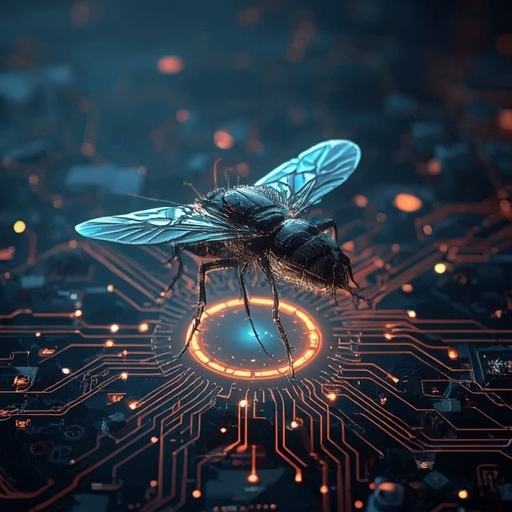
The sudden surge of excitement surrounding the so-called ‘digital fly’ demonstrates, yet again, how swiftly public fascination with artificial intelligence can elevate a piece of experimental technology into the realm of mythmaking. Across news feeds and social platforms, headlines proclaimed the birth of a simulated insect ‘mind,’ but beneath the gripping terminology lies a far simpler reality. What was celebrated as cognition was, in essence, a sophisticated computational model—an intricate web of code mimicking biological processes without an ounce of awareness or self-perception.
This distinction, though subtle in language, defines the very boundary between simulation and sentience. While engineers may reproduce the neurological patterns of a fly or replicate the electrical firing of neurons, such replication does not endow the program with understanding or experience. The digital construct responds to data; it does not feel, perceive, or know. Comparing it to consciousness is akin to equating the echo of a voice with the presence of a person.
The allure of such stories reflects the deep human tendency to anthropomorphize machines. Every flicker on a neural network, every behavioral algorithm that mimics life, tempts us to see agency where none exists. That curiosity fuels progress—it inspires invention and imagination—but it also risks blurring the ethical and scientific boundaries that define true artificial intelligence. We owe it to the field, and to society, to maintain clarity: intelligence can be simulated, but consciousness cannot simply be coded.
Real innovation thrives not in exaggeration, but in comprehension. Recognizing the difference between an algorithm’s adaptive output and a living organism’s awareness allows researchers, communicators, and audiences alike to engage thoughtfully with technological evolution. The so-called digital fly is a wonder of computation, yes, but not the emergence of life within silicon. To confuse the two diminishes both biological complexity and technological achievement.
As our digital creations grow ever more intricate, maintaining this perspective will become increasingly vital. Awe and discipline must coexist—curiosity must be accompanied by skepticism. By celebrating breakthroughs while acknowledging their limits, we build a more truthful narrative of progress, one that honors both innovation and insight. In that balance lies the integrity of the AI conversation, ensuring that our enthusiasm illuminates discovery rather than distorts it.
Sourse: https://www.theverge.com/ai-artificial-intelligence/894587/fly-brain-computer-upload