When countless discussions about artificial intelligence drift toward apocalyptic scenarios involving hyper-intelligent machines turning against humanity, it becomes easy to overlook a subtler yet possibly more pervasive danger—the gradual infiltration of dull, inefficient, and uninspired technology into our everyday professional and personal routines. The true peril may not lie in machines that rise up in a science-fiction-style revolt, but rather in systems that quietly erode the quality of human work and experience, replacing skilled labor with lifeless automation that neither delights nor genuinely enhances productivity. Instead of ushering in a dazzling new era of human–machine collaboration, this kind of uninspired AI threatens to generate frustration, inefficiency, and psychological weariness on a massive scale.
Consider the paradox that emerges when technological progress results in tools that appear advanced yet function poorly, slowing down workflows, introducing needless complexity, and diminishing human agency instead of expanding it. This is disruption devoid of direction—a form of innovation that upends traditional ways of working but offers no coherent improvement in return. The outcome is an environment where workers feel displaced rather than empowered, managers struggle to maintain coherence across increasingly fragmented systems, and individuals experience an ever-deepening sense of cognitive fatigue stemming from poorly integrated automation.
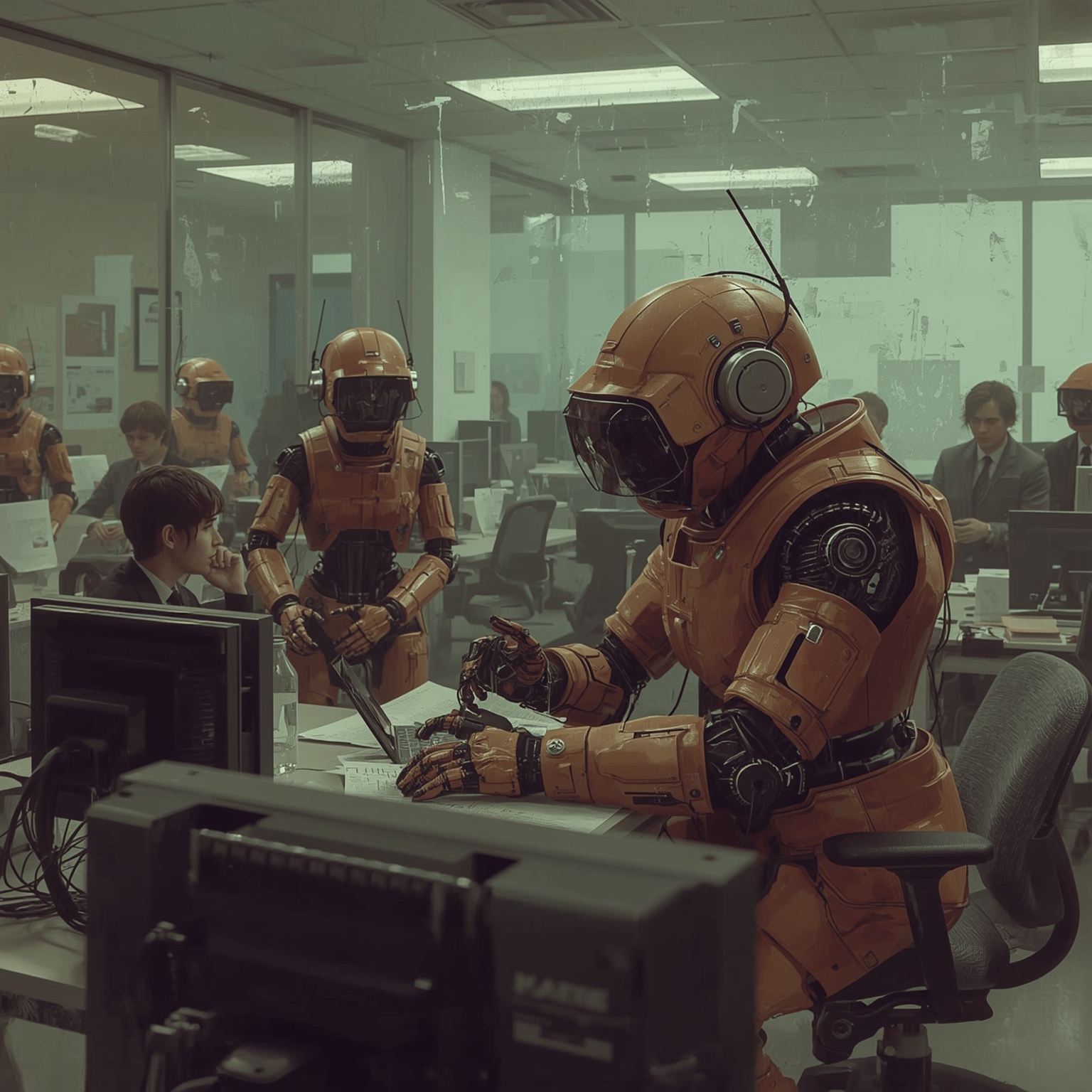
The irony of this moment in technological history is profound. After decades of imagining an AI future characterized by extraordinary breakthroughs and limitless potential, our greatest challenge may instead prove to be one of mediocrity at scale—an era dominated not by omnipotent superintelligence but by tools that are simply competent enough to replace us without truly understanding or assisting us. A Nobel laureate recently emphasized that the real threat is not malicious intent from machines but the creeping expansion of systems that standardize mediocrity and amplify inefficiency under the guise of progress. If implemented without thoughtful design and ethical foresight, such systems can quietly erode not only productivity but also satisfaction, creativity, and the sense of purpose that defines meaningful human work.
Therefore, the imperative for researchers, engineers, and policymakers is not merely to prevent catastrophic outcomes, but to cultivate a vision of artificial intelligence that elevates human potential. This involves designing AI that supports rather than supplants human creativity, that streamlines rather than complicates our daily tasks, and that restores rather than undermines our confidence in technology. The conversation must shift from preventing a fantastical apocalypse toward eliminating the slow decay of efficiency and inspiration caused by poorly conceived automation. Only then can we construct a technological landscape that truly empowers humanity instead of exhausting it.
Sourse: https://www.bloomberg.com/news/articles/2025-10-10/will-ai-usher-in-an-economic-boom-or-just-a-lot-of-mediocre-automation