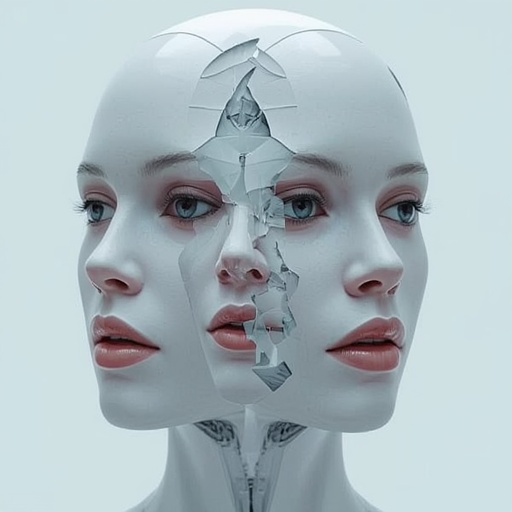
In a world increasingly defined by digital influence, the notion of beauty has begun to intersect profoundly with artificial intelligence. Across social media platforms and virtual design tools, people are now turning to AI-driven systems to generate the ‘perfect face’—a flawless hybrid of symmetry, proportion, and aesthetic harmony. These computer-created ideals are often strikingly convincing, embodying a blend of artistic precision and algorithmic ingenuity. Yet, according to plastic surgeons and medical professionals, such visions of perfection remain entirely unattainable within the boundaries of human anatomy. Our biological structures, limited by bone density, skin elasticity, and genetic variance, cannot replicate the seamless exactness that AI can simulate on a screen.
This pursuit of artificial perfection reveals more than just a fascination with technology; it exposes the evolving relationship between self-image and machine learning. Advanced generative models—trained on millions of digitally enhanced photographs—create composite faces that exaggerate the most statistically appealing human features: eyes subtly widened, skin uniformly luminous, and facial angles adjusted to meet algorithmic ideals of attractiveness. The result is an aesthetic standard that feels universal yet alien, familiar yet physiologically impossible. When patients bring these algorithmic renderings to their surgeons, they are not merely requesting cosmetic adjustments; they are, consciously or not, confronting the boundaries of what it means to be human.
For plastic surgeons, these encounters have become both a technical and philosophical challenge. Many report that patients arrive with AI-generated portraits that reflect a synthetic ideal—mimicking perfection rather than individuality. Surgeons are placed in the complex role of mediators between digital fantasy and anatomical reality, explaining delicately that no human tissue can reproduce algorithmic smoothness or the inhuman precision of AI-generated symmetry. In doing so, they must balance empathy with ethics, guiding individuals toward enhancements that preserve authenticity instead of pursuing digital illusions.
This phenomenon illuminates a broader cultural paradox: as artificial intelligence refines its capacity to simulate beauty, the definition of authenticity becomes increasingly precious. In a society that constantly filters, edits, and reimagines faces, genuine imperfection acquires a new moral and emotional value. Real skin texture, asymmetry, and expression—once considered flaws—emerge as reminders of identity and uniqueness in an age dominated by simulated aesthetics. The human face, with its stories, traces of time, and subtle irregularities, stands as a testament to reality in a virtual landscape.
Ultimately, the rise of AI faces is not simply about technology reshaping beauty standards; it is a mirror reflecting our collective insecurities, aspirations, and longing for acceptance. As tools of artificial creation expand the boundaries of what can be imagined, they simultaneously challenge our comfort with what is real. The future of beauty may very well depend on our ability to integrate technological innovation with emotional authenticity—embracing enhancement without erasing humanity. In this balance between algorithmic imagination and human truth, authenticity may indeed become the rarest and most coveted form of beauty.
Sourse: https://www.businessinsider.com/ai-generated-images-chatgpt-reshape-plastic-surgery-beauty-expectations-2026-5


