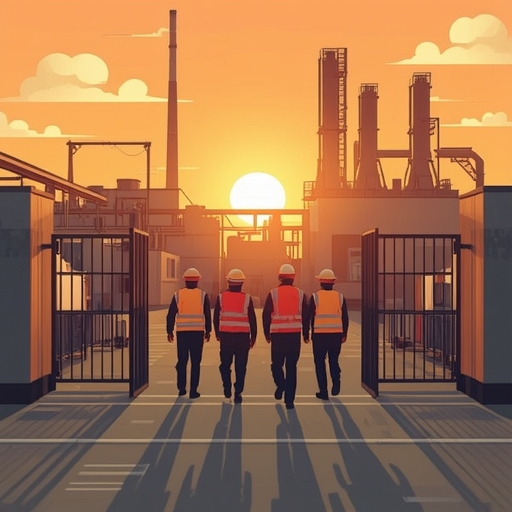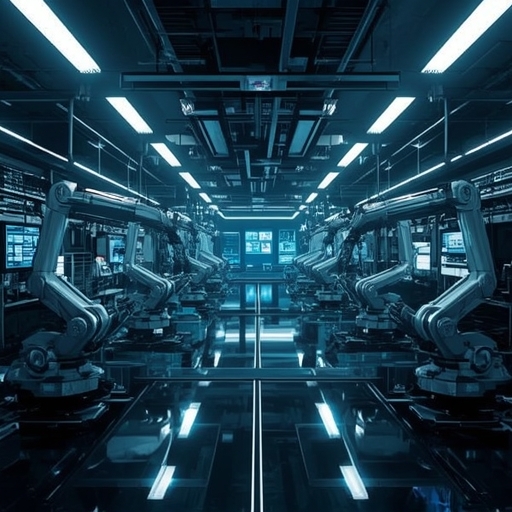
The rise of the so‑called ‘dark factory’ marks one of the most profound shifts in the history of industrial production. This emerging concept refers to a highly advanced manufacturing environment that operates entirely through artificial intelligence, robotics, and interconnected digital systems—continuing its work around the clock, without pause, and without the need for human presence on the shop floor. These facilities are literally dark because they require no lighting or human comfort, symbolizing both the incredible efficiency of machine autonomy and the unsettling distance it creates between people and production.
At its core, the dark factory embodies the ultimate potential of automation: a seamless synthesis of intelligent algorithms, precision robotics, and data‑driven insight. Machines communicate directly with one another, making complex adjustments in real time based on sensor feedback, predictive analytics, and cloud‑based coordination. Such systems are designed for optimal output, ensuring that production lines remain active twenty‑four hours a day, every day of the year. The economic allure is undeniable—reduced costs, minimized errors, and absolute operational consistency all promise to revolutionize the way industries manufacture goods.
Yet this technological marvel also brings forth a set of new questions, both ethical and strategic. What happens to the traditional workforce when the lights go out and the machines run themselves? While some argue that human labor will simply evolve toward higher‑level oversight and creative roles, others foresee significant displacement unless organizations invest heavily in reskilling initiatives. Leadership must therefore balance innovation with social responsibility, recognizing that the transformation toward full automation demands careful planning, governance, and foresight.
Beyond the economic implications, dark factories also provoke reflection on the nature of human value in an increasingly automated world. Efficiency, precision, and endurance are machine virtues—but creativity, empathy, and adaptability remain inherently human strengths. To thrive in this new era, businesses and societies alike will need to cultivate collaboration between people and technology rather than perceiving them as opposing forces.
Ultimately, the ‘dark factory’ stands as both a marvel of engineering progress and a catalyst for global dialogue about what the next industrial revolution truly means. It challenges us to imagine not only how production can become smarter, faster, and more sustainable, but also how humanity can maintain purpose and agency within an environment run entirely by intelligent machines. The darkness, then, is not merely the absence of light—it is an open space in which we must decide how far we are willing to let automation redefine the human role in industry and innovation.
Sourse: https://www.businessinsider.com/simon-willison-dark-factory-ai-2026-4