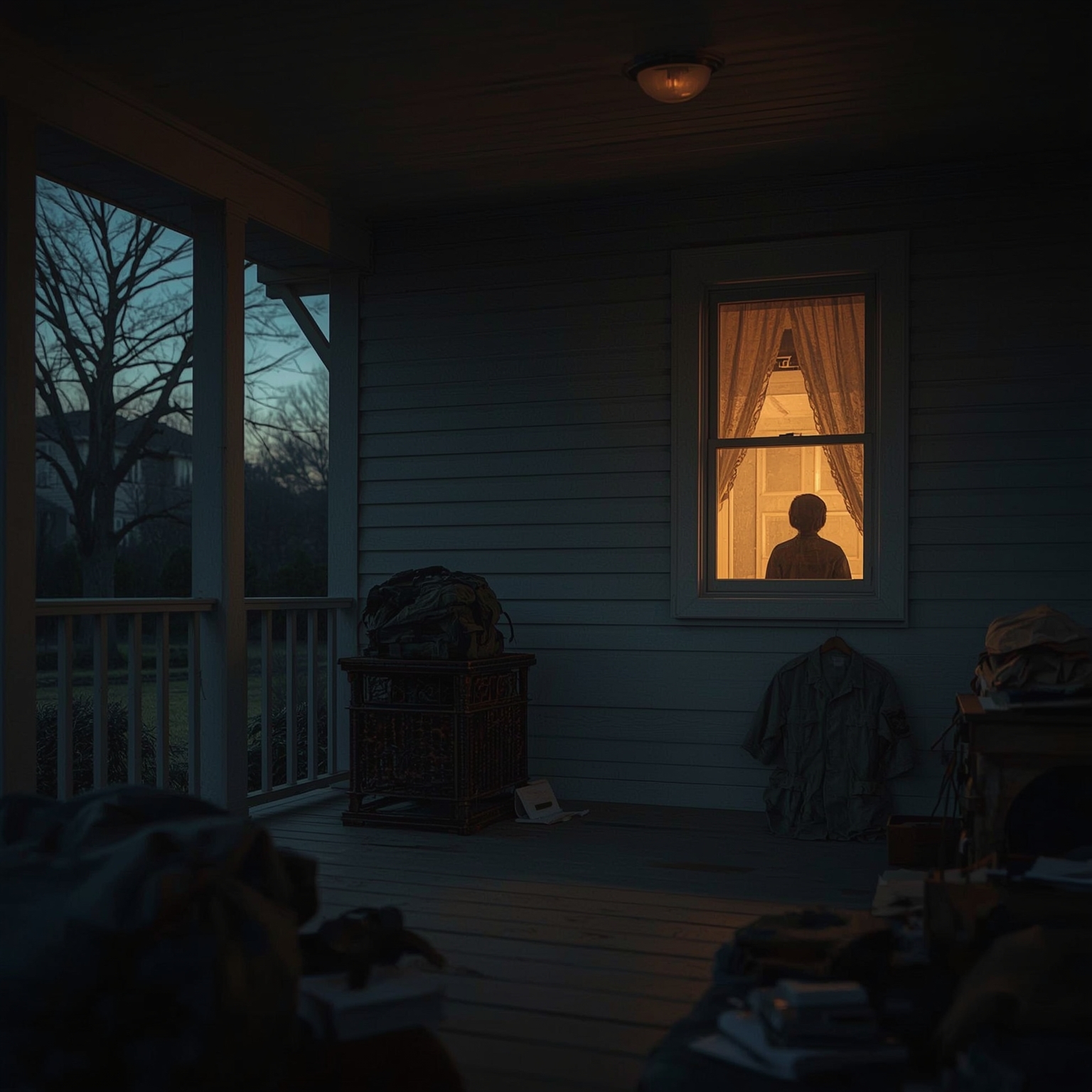
If those married to members of the military community were ever to assemble a compendium of phrases best left unsaid, one remark would undoubtedly occupy a prominent place near the top: “You knew what you were getting into.” This familiar expression, though often uttered casually or even with sympathetic intent, fails to grasp a crucial truth—that no amount of preparation, research, or secondhand knowledge can truly equip someone for the unpredictable realities of military life until they are immersed in it entirely. One might pour over memoirs detailing deployments, diligently follow nightly news reports, or listen to countless stories from seasoned spouses who have endured repeated separations and relocations. Yet even so, these sources only outline the structure, not the emotional architecture, of such a life. Understanding the procedural side—the logistics involved when a partner becomes a service member—is not at all the same as comprehending the profound emotional responses it provokes, the unexpected disruptions to personal rhythms, and the far-reaching ripple effects it creates within a marriage and family.
Even those who spent their childhoods as so-called “military brats,” who grew up amid constant moves, uniformed ceremonies, and the ever-present possibility of deployment, discover a new world entirely when they take on the role of spouse. Experience as a child in such an environment offers a limited preview, not a blueprint, for what it feels like to shoulder responsibility as the adult left behind — raising children, managing households, and maintaining stability when one’s partner is halfway across the globe. The shift from innocent observer to participant changes everything.
When my husband, Tristan, decided to enlist in the Navy, I believed I had at least a faint idea of what lay ahead. Yet I quickly realized I had underestimated the magnitude of what that commitment entailed. I hadn’t remotely grasped the scale of sacrifice that would soon define our lives, nor the specific emotional toll that would accompany it. What I expected—perhaps loneliness, perhaps the challenge of establishing friendships in a transient community—was only the most superficial layer. The true weight came later, when six short months after our son Grady was born, Tristan received orders deploying him to Iraq. We had exactly three weeks to prepare for what would become a six-month separation—a window of time that felt paradoxically too brief for all that needed to be done, yet agonizingly long when measured against our dread of goodbye.
During those hurried weeks, our home transformed into a staging area, each corner an intersection between practicality and grief. The checklist that guided our days was full of cold, formal necessities: drafting legal documents such as wills, granting powers of attorney, and ensuring every financial contingency was covered. Yet behind each of these tasks loomed the haunting subtext that gave them meaning — the possibility of death. We spoke of things no pair of twenty-eight-year-olds should ever have to discuss in such earnest detail: burial preferences, treasured possessions, and even Tristan’s wish that I find happiness again if the worst occurred — that I might remarry someday to provide Grady with a fatherly presence. These conversations, so much more suited to couples with decades of life behind them, felt jarringly premature, forcing us to contemplate mortality at a time when our lives should have been dominated by the joyful chaos of new parenthood.
And yet, the most painful preparations were not sealed in official documents, but captured through quiet, intimate acts meant to preserve connection. Tristan began filming short videos for our infant son — sequences of him performing simple rituals of daily life, like shaving or tying a tie, as well as reading beloved bedtime stories such as *Goodnight Moon* and *Guess How Much I Love You*. We called those recordings “Daddy TV,” a phrase that masked the gravity of their intent with a sense of domestic sweetness. For Grady, these videos were designed to be a bridge spanning the months of absence; for me, they became an archive of love and courage disguised as normalcy, fragments of Tristan’s presence we could hold onto just in case that presence was taken from us forever.
Standing there, watching my husband kneel beside our son on the living room floor, their laughter mingling as they built towers of colored blocks, I was overwhelmed by a tangle of emotions too complex to name. Outwardly, these moments appeared ordinary — a father playing with his child, a family sharing bedtime in cozy unity. But beneath the surface, I knew we were rehearsing a separation, imprinting memories that would later serve as emotional lifelines. The ordinariness of these scenes, set against the looming uncertainty, made them almost unbearably poignant.
In the days leading up to his departure, I found myself suspended between pride and fury. I admired Tristan’s dedication and selflessness, the courage that had compelled him to serve his country. Yet rage and fear nipped constantly at the edges of my composure. Every heartbeat between his announcement and the moment he boarded that plane pulsed with anxiety and grief. I was terrified not only for his physical safety but for the psychological scars the war might carve into him if he returned at all. Helplessness has a way of seeking a culprit, and I cycled through a catalogue of blame: the president who ordered the invasion, the Navy that welcomed him into its ranks, the commanding officer who signed the deployment papers, and, yes, even Tristan himself — for volunteering in the first place.
As the realization sank in, it became clear that my ordeal was to be largely solitary. Because Tristan’s deployment qualified him as an individual augmentee—assigned temporarily to join another command rather than deploying with his own—I was left without the fellowship that typically binds military spouses together. There was no built-in network of partners experiencing the same countdown, no circle of friends to share meals, tears, or child care duties with. I had always envisioned that if such a day ever came, I would face it surrounded by other women enduring the same trial — partners bonded through shared sacrifice, supporting one another through the unpredictable currents of absence. Yet this time, that imagined community did not exist. Tristan was departing on his own, and I would endure the long months of separation entirely alone, navigating the twin landscapes of motherhood and fear without a guiding hand.
Conventional wisdom among military spouses held that the period before a deployment could be just as emotionally grueling as the deployment itself. I learned quickly how true that was. Those weeks weren’t the tender, cinematic stretches often portrayed in fiction — full of heightened romance and meaningful looks exchanged before parting. They were practical, tense, and raw. Promises of safety or reunion felt hollow, perilous even, when neither of us could guarantee they would be kept. Though I tried to project calm strength — to show Tristan that I was the capable, independent military wife he believed me to be — inwardly, the weight of that performance hollowed me out. I wanted him to board that plane confident that home would remain steady, that he could focus on his mission free from worry. But each attempt at composure chipped away at me until, privately, I began to unravel.
I clung to an image of resilience, determined to embody the archetype of the unshakable spouse who could endure separation with grace and efficiency. Yet, beneath that hardened surface, I was soft with fear, brittle with exhaustion, and desperate for reciprocity — for someone to hold space for my grief, to acknowledge the quiet heroism required just to remain standing when deployment stripped away the comforting presence of partnership. I was supporting my husband, steadfast in my love and loyalty, but the question that echoed through every sleepless night lingered, unanswered: while I was standing strong for him, who, exactly, was standing strong for me?
Sourse: https://www.businessinsider.com/deployment-military-spouse-support-heather-sweeney-excerpt-2025-10


