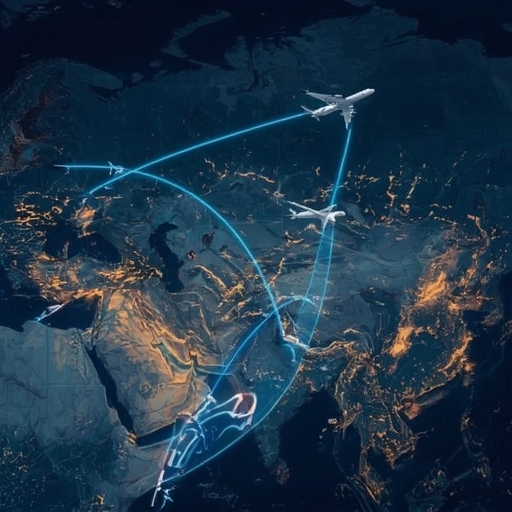
Global aviation is entering a period of remarkable constraint and complexity. In the immediate aftermath of the recent military strikes on Iranian territory, airlines and private carriers alike began urgently reconfiguring their international routes to circumvent zones of potential conflict. The Caucasus region—traditionally serving as an alternate transit corridor between Europe, the Middle East, and Asia—experienced a noticeable increase in aerial traffic as pilots and planners sought safer skies. However, this delicate rebalancing of global air pathways has once again tightened after Azerbaijan’s strategic decision to close portions of its national airspace.
This closure, though geographically limited, carries significant implications. Airspace over the Caucasus is already narrow, and the additional restrictions mean that a large concentration of flights must now funnel through an even smaller corridor. The logistical consequences are evident: increased flight times, heightened congestion in neighboring skies, and greater pressure on air traffic control authorities across the region. Each detour, though measured in minutes or miles, represents not only operational cost but also a small reshaping of the global map of movement—a subtle yet profound recalibration of how continents connect through the air.
Aviation analysts warn that these seemingly temporary diversions may herald longer-term shifts in how airlines plan their global networks. With the Middle East remaining a focal point of geopolitical tension, every new restriction transforms the airways into a living tableau of diplomacy and caution. The closure of Azerbaijani airspace, following previous rerouting over Turkey or Central Asia, reflects the fragile equilibrium of safety, sovereignty, and strategy that defines modern flight.
Ultimately, the narrowing of these aerial channels underscores the vulnerability of an interconnected world that relies on open skies. Beyond the technical implications for pilots and navigators, this situation exposes a broader truth: that international cooperation, when strained by regional conflict, reverberates far above the ground. In an era where aircraft weave together economies and cultures, the tightening of a single corridor reminds us how swiftly global connectivity can be disrupted—and how much stability depends on the invisible architecture of trust, diplomacy, and shared security that sustains the world’s flight paths.
Sourse: https://www.businessinsider.com/narrow-flight-corridor-shrinks-after-azerbaijan-hit-by-drones-2026-3