At first glance, one might reasonably assume that the worlds of horror and anime—two artistic mediums uniquely suited to visual and emotional experimentation—would naturally merge to produce an unbroken lineage of genre-defining masterpieces. The elasticity of anime as a form, capable of stretching between surrealism and precision, seems perfectly poised to embrace the psychological extremities inherent to horror. Yet, paradoxically, when these two forces converge, the results frequently lay bare their shared weaknesses rather than their potential strengths. What should be a complementary union too often becomes an uneasy collision of mismatched tones and ambitions.
Anime adaptations of beloved horror manga provide the clearest evidence of this tension. They tend to fall into one of two ubiquitous pitfalls. Some productions adhere so slavishly to the page that they provoke the question of whether anything meaningful was actually adapted, functioning as static reproductions rather than transformative works. Others swing to the opposite extreme, discarding depth and atmosphere in favor of hollow spectacle—cheap, quick-jolt scares reminiscent of the superficial horror trends that dominated early 2010s internet culture. Amidst these uneven experiments, however, emerges an extraordinary outlier: *The Summer Hikaru Died.* This series transcends category. It is not merely good; it feels like a revelation—a haunting synthesis of style and sentiment that may well stand as the pinnacle of modern horror anime.
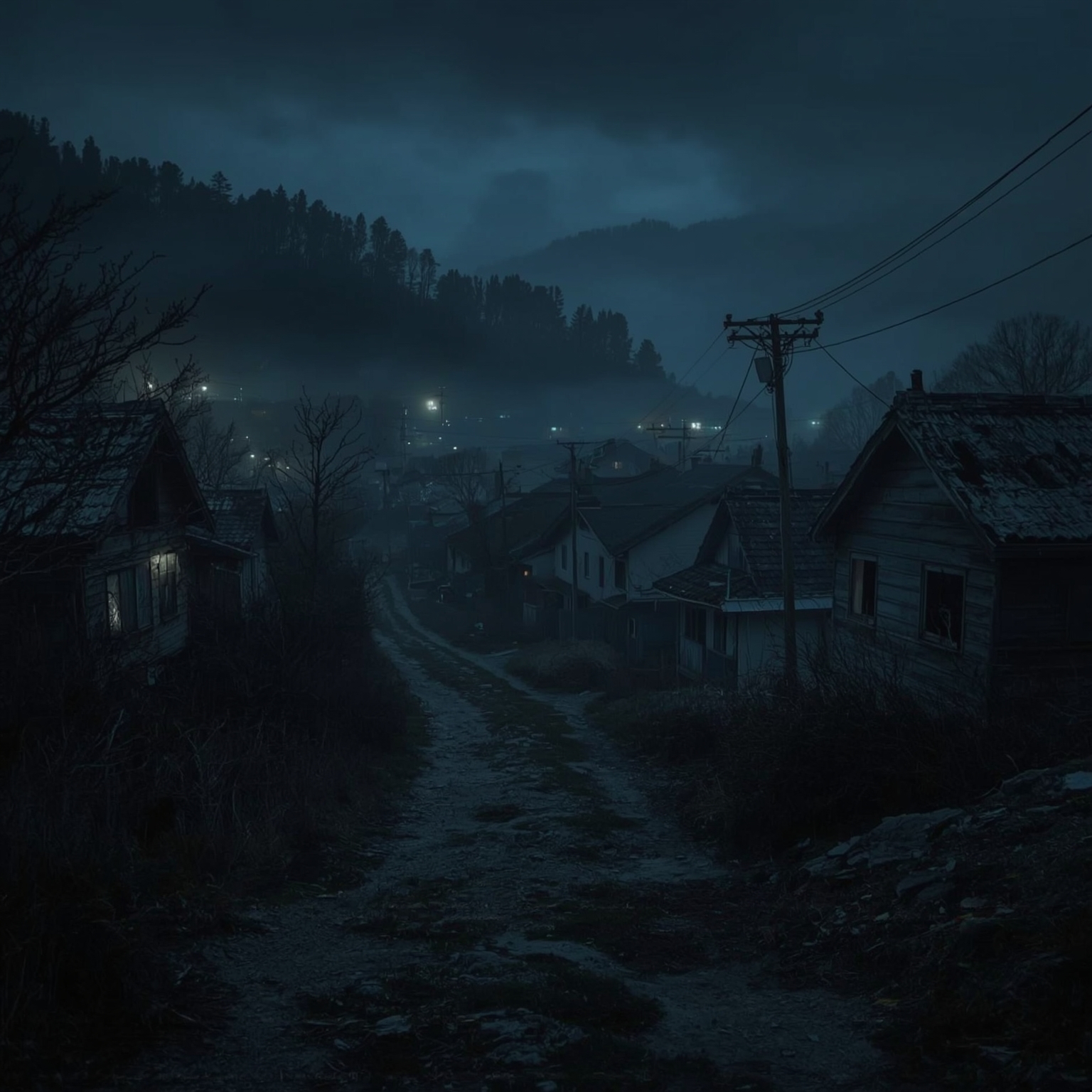
Conceived by the mangaka Mokumokuren and brought to animated life by CygamesPictures, *The Summer Hikaru Died* slipped almost stealthily into Netflix’s summer release lineup, overshadowed by the bombast of more traditional shōnen titles. Yet from its very opening sequence, it declares with quiet confidence that viewers are witnessing something singular. Its influences are broad but deeply rooted in Japan’s own horror lineage. The show draws from the unsettling spirit of *Higurashi: When They Cry*, the disquieting brilliance of Junji Ito’s ill-fated *Uzumaki* adaptation, the dread-laden subtlety of Shudder’s *Best Wishes to All*, and the melancholy atmosphere permeating *Silent Hill f* by Konami. Every frame feels steeped in a particular national iconography of menace: the sleepy rural town where ritualistic habits hide malignant secrets, the fog-draped forests, and the young protagonists unknowingly standing at the edge of cosmic ruin.
As its title foretells, the story begins with the death of a boy named Hikaru Indo (voiced by Shūichirō Umeda). But this death, far from serving as a narrative endpoint, instead marks the true beginning of the horror. His best friend, Yoshiki Tsujinaka (Chiaki Kobayashi), becomes ensnared in an agonizing emotional crisis when he realizes that the being sharing his home and conversation may not be Hikaru at all, but a cursed imitation wearing his friend’s familiar face. Yoshiki’s moral and emotional turmoil crystallizes into a terrible ultimatum: should he destroy the entity that defiles the memory of his friend, or surrender to the comfort of believing that Hikaru still lives within this monstrous vessel? Complicating matters further is Yoshiki’s unspoken love for Hikaru, which transforms his choice from a simple moral question into an existential reckoning. His decision—to preserve this facsimile of Hikaru out of selfish affection—transforms *The Summer Hikaru Died* into more than a horror narrative; it becomes a meditation on the fragility of love, the terror of grief, and the ethical quagmire of clinging to the dead.
The series’ emotional core is anchored in the fraught reciprocity between Yoshiki and the entity pretending to be Hikaru. Their relationship exists in a disquieting tension, at once tender and terrifying. The false Hikaru exhibits an obsessive protectiveness toward Yoshiki, while Yoshiki vacillates between love and dread—a dynamic that evokes the tragic absurdity of trying to domesticate a wild beast. You might believe the creature to love you; it may even try to learn your rules. Yet beneath its mimicry lies an irrepressible instinct for destruction. This uneasy bond redefines what intimacy means in the context of horror and exposes how affection itself can become a dangerous form of self-deception.
As the series unfolds, the wider community begins to unravel. Villagers die in mysterious circumstances, their fates intertwined with the spectral violence emanating from Hikaru’s presence. These deaths force Yoshiki into recurring cycles of decision: should he continue to shield this creature, or sacrifice it for the sake of others? Ultimately, *The Summer Hikaru Died* reveals itself as a love story disguised in the trappings of horror—a spiraling descent into the rawest corners of grief, repression, and queer desire. It interrogates how societal expectations and patriarchal constraints transform love into a source of shame and monstrosity. Crucially, the series never postures as so-called “elevated horror.” Instead, it embraces the disorderly, deeply human messiness that defines real emotion, locating terror not in metaphysical grandstanding but in ordinary acts of longing and denial.
Unlike many mystery-oriented anime that overcomplicate their narratives or treat their viewers like passive observers, *The Summer Hikaru Died* respects its audience’s intelligence. It avoids dragging out revelations or relying on contrived incompetence among its characters. The people inhabiting its world are perceptive, cautious, and entirely credible. When something feels wrong, they notice it; when they suspect a curse, they act decisively. This narrative precision accelerates the pacing and adds authenticity to their dilemmas. By sparing its viewers from redundant exposition and cheap gimmicks, the show allows unease to take root naturally within the storytelling itself.
Visually, *The Summer Hikaru Died* achieves a rare equilibrium between beauty and dread. Rather than confining its horror to overt shocks or manipulative camera tricks, the series nurtures a continual atmosphere of quiet terror—a visual murmur that never dissipates. Each weekly episode feels like a cinematic event, imbued with the production values of a feature film. The horror here resides not in sudden violence but in slow realizations: the panic attack that overtakes Yoshiki in a grocery aisle, the creeping sense that malevolent eyes are watching from the treeline, the disorienting instant when one perceives something subtly wrong within the sanctuary of home. These moments, understated yet piercing, invite the viewer to experience fear as a psychological texture rather than a performative gesture.
Equally crucial is the show’s aural landscape. Its soundtrack pulses with the ambient hum of cicadas and the gentle echo of piano notes, evoking the shimmer of summer days tinged with melancholy. Yet this fragile serenity is repeatedly violated by bursts of distorted sound—jarring intrusions that fracture the illusion of peace and summon the presence of unseen horrors. In doing so, the sound design transforms naturally recurring summer noise into an instrument of sustained tension, making the audience feel the intrusion of the supernatural as intimately as the characters do.
Unlike lesser works that treat ambient dread merely as preparation for a climactic jump scare, *The Summer Hikaru Died* integrates fear into every moment, ensuring that even its quietest sequences hum with latent anxiety. The horror functions like the changing of seasons—a gradual but irreversible slide from the golden haze of late summer into the brittle cold of autumn. This tonal duality, balancing beauty and decay, becomes the heartbeat of the entire production.
Director Ryohei Takeshita demonstrates an impressive sensitivity to rhythm. Knowing when to release tension, he imbues certain scenes with understated humor or exposes the endearing awkwardness of ordinary interaction, echoing the tonal balance achieved by filmmakers such as Jordan Peele or Zach Cregger. These passing moments of humanity heighten, rather than dilute, the surrounding dread. They remind viewers that genuine horror depends on identification—on recognizing something authentically human in the characters before watching it unravel. Takeshita’s creative flourishes—like brief live-action inserts of everyday textures or hyper-realistic still-life compositions of train windows and cooking ingredients—add layers of tactile artistry that oscillate between grotesque and serene, crafting an experience that feels immediate and lived.
In a landscape overcrowded by horror anime that mistake dark aesthetics for depth, *The Summer Hikaru Died* distinguishes itself through intelligence, restraint, and emotional precision. It avoids the trap of mere homage or nostalgia, instead carving a path toward a more psychologically rich form of animated horror. By weaving together grief, tenderness, and monstrosity, the series constructs a narrative that is profoundly unsettling yet deeply humane.
With its first season concluded and another already anticipated, *The Summer Hikaru Died* stands as essential viewing for anyone seeking to rediscover the emotional power of animation. It does not achieve terror by shouting but by whispering truths that cut deeper than screams—truths about love, loss, and the danger of wanting desperately to believe that the dead still smile back at us. Now streaming on Netflix, it remains a haunting reminder that anime, when brave enough to confront the full breadth of human vulnerability, can still astonish, disturb, and move its audience to silence.
Sourse: https://gizmodo.com/the-summer-hikaru-died-is-easily-the-best-horror-anime-in-ages-2000667306