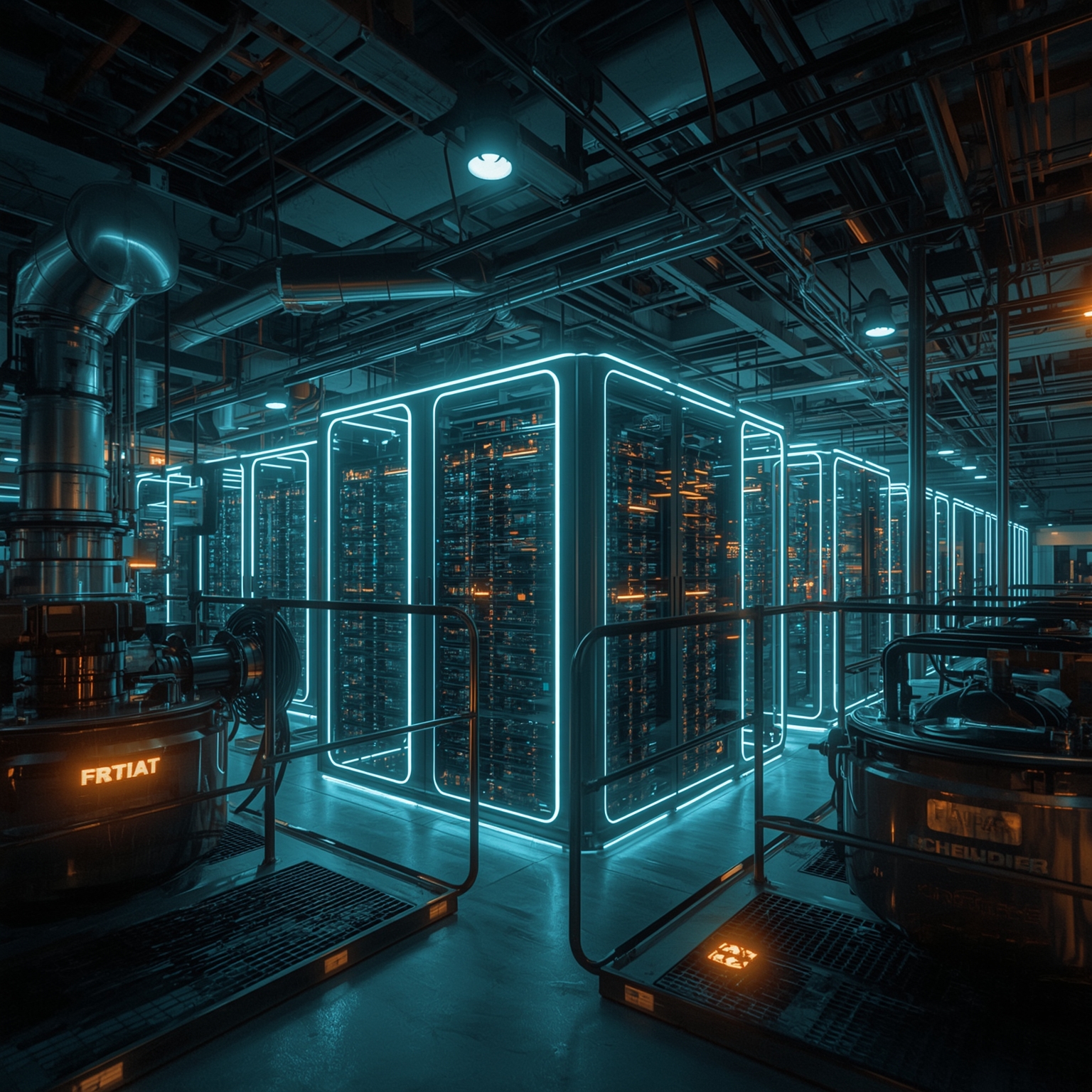
As leading technology conglomerates invest unprecedented amounts of capital in the race to construct robust artificial intelligence infrastructure, a remarkable economic ripple effect is radiating far beyond the semiconductor industry. While chip manufacturers have typically dominated discussions around AI growth, a recent report from Bank of America Global Research emphasizes that an increasingly diverse array of industries—from power management firms to construction-oriented manufacturers—are also experiencing a remarkable surge in commercial opportunities as a direct result of this intensified AI-related spending.
One of the central engines of this phenomenon is the explosive expansion of the global data center market. Valued at $406 billion last year, the sector is forecasted to more than double in size within just a few years, reaching approximately $939 billion by 2028. This unprecedented growth trajectory highlights not only the hunger for computational capacity powered by AI servers—which are projected to absorb up to 84% of all related investment by 2028—but also underscores how auxiliary industries supplying essential infrastructure are poised to reap significant rewards alongside traditional computer hardware providers.
Operating a data center requires far more than rows of servers. These critical facilities demand vast support systems to function reliably and at scale, ranging from highly specialized thermal management and sophisticated cooling technologies to robust electrical infrastructure and backup generators that guarantee uninterrupted energy supply. In fact, Bank of America anticipates that non-IT infrastructure spending for data centers will itself expand annually by roughly 19% throughout the next several years, ultimately ascending to $147 billion in 2028. Central to this rise are spending categories such as electrical distribution systems and advanced cooling frameworks, both indispensable for stabilizing internal conditions under the heat-intensive workloads characteristic of modern AI training models.
Within the sector of electrical equipment, the competitive landscape is notable for its concentration of market power in the hands of a few established leaders. At the forefront is Schneider Electric, a French multinational specializing in energy management, which commands a 21% market share. Schneider counts among its clients the largest technology players—including Google, Amazon, and Microsoft—and earlier this year, it advanced its position further by initiating a strategic partnership with AI chip leader Nvidia. Hot on its heels is Ohio-based Vertiv, which ranks as the second-largest provider of electrical infrastructure solutions for data centers. Vertiv has reported especially robust demand for its innovative liquid cooling systems—a technology increasingly favored by AI data centers due to its superior efficiency compared to conventional air cooling methods. Investors have taken notice: Vertiv’s stock value has soared by more than 50% over the past year.
The acceleration of investment in liquid cooling technology is particularly striking. Bank of America estimates that this category will grow at a staggering rate of 60% annually through 2028, surpassing the growth rate of every other segment within the broader data center supply chain, including the AI servers themselves. Although approximately 30 companies, ranging from large incumbents to nimble startups such as JetCool, are now offering over 100 different liquid cooling solutions, market incumbents like Vertiv are still well-positioned to maintain dominance. The report stresses that the inherently cautious tendencies of data center operators, who tend to prioritize reputation, reliability, and comprehensive service support over experimental offerings, will likely ensure that established players retain a decisive advantage even amidst a wave of innovation.
Another crucial component in the cost structure of data centers lies in power generation. Backup generators, which safeguard against disruption and downtime, represent an immense budgetary necessity. Within this arena, Caterpillar holds the commanding position, with Bank of America calculating the industrial titan’s market share at a formidable 42%. Right behind are Cummins, a company well known for its commercial and industrial generator sets, and Rolls-Royce—not the automaker but the long-established engineering group specializing in power systems—controlling 24% and 21% of the market respectively. Caterpillar’s prominence has translated into financial gains as well, with its stock price surpassing a record-breaking $444.85 earlier this week.
Historically, diesel generators have dominated the market, and indeed the principal suppliers—Caterpillar, Cummins, and Rolls-Royce—all maintain extensive portfolios in this area. However, the industry is beginning to experiment with alternative energy technologies. For instance, Crusoe, the developer behind the Stargate data center project, has entered into a contract to deploy close to one gigawatt of natural gas turbine generators supplied by GE Vernova at its site in Abilene, Texas. Such installations highlight the gradual diversification of energy sources as operators seek solutions that balance reliability with sustainability considerations.
In conclusion, the AI investment boom is ushering in a new era not only for leading technology brands but also for an expansive constellation of industrial sectors that provide the underlying infrastructure enabling this transformation. From electrical and thermal management systems to liquid cooling technologies and large-scale power generation, companies once considered peripheral to the digital revolution are becoming central actors in the unfolding narrative of technological progress. While AI servers remain the gravitational core drawing the majority of investment, industries surrounding energy, construction, and industrial equipment have rapidly emerged as indispensable anchors of growth in what is now evolving into a trillion-dollar global marketplace.
Sourse: https://www.businessinsider.com/rolls-royce-caterpillar-cash-in-on-ai-boom-data-centers-2025-9