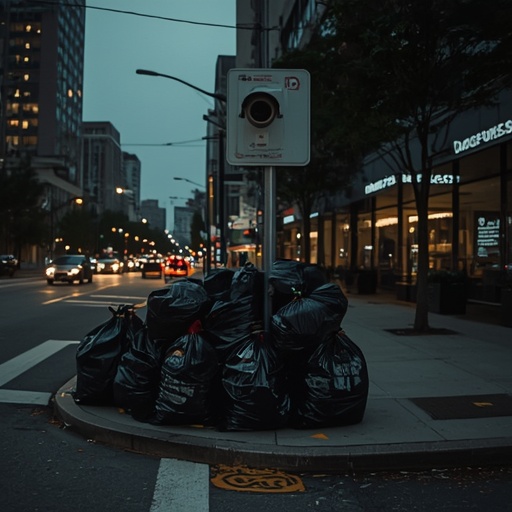
Across Dayton, Ohio, a subtle yet powerful grassroots movement is unfolding—one that pits everyday residents against the expanding reach of urban surveillance technology. What began as a few individuals voicing discomfort about newly installed license plate readers has evolved into a collective act of quiet defiance. From carefully placed trash bags that obscure camera lenses to handmade yard signs warning about privacy rights, citizens are finding creative ways to reclaim a sense of personal freedom in a world increasingly monitored by machines.
At the heart of this debate lies a deep tension between the promise of technological progress and the preservation of civil liberties. Flock Safety, the company behind these digital sentinels, promotes its system as a powerful deterrent against crime, claiming that constant observation helps law enforcement solve cases more efficiently. Yet for many Dayton locals, that same watchful eye represents something far more unsettling: the erosion of anonymity in public life and the normalization of perpetual oversight. To them, the cameras are not symbols of safety but reminders that the simple act of driving through one’s own neighborhood can now be quietly recorded, logged, and analyzed.
The protests—though peaceful and often improvised—speak to a broader anxiety felt well beyond Dayton. As cities nationwide adopt smart technologies to manage traffic, monitor streets, and deter criminal activity, the line between protection and intrusion continues to blur. Residents who object to the cameras are not necessarily rejecting innovation; rather, they are demanding transparency, accountability, and a public dialogue about how such tools should be governed. They question who controls the data, how long it is stored, and what safeguards exist to prevent misuse or unwarranted surveillance.
This movement also exposes the complexity of modern civic life. On one hand, public officials and law enforcement argue that these cameras can dramatically enhance safety, turning neighborhoods into interconnected networks of watchful guardians. On the other hand, privacy advocates warn that ubiquitous monitoring risks transforming communities into zones of suspicion, where ordinary behavior is constantly subject to digital scrutiny. The residents of Dayton, wielding nothing more than household items and principled determination, have become emblematic of a rising resistance—citizens insisting that technological advancement must never come at the expense of personal dignity.
In the end, the dispute over license plate readers extends far beyond the city’s borders. It forces society to confront a difficult question at the core of the digital era: how can we embrace innovation that genuinely protects us without surrendering the fundamental right to go about our lives unobserved? The trash-bag-covered cameras of Dayton have become an unlikely but powerful metaphor for this ongoing struggle—an image of a community determined to assert human agency amid the silent gaze of machines.
Sourse: https://www.businessinsider.com/cities-putting-trash-bags-over-flock-license-plate-readers-2026-6