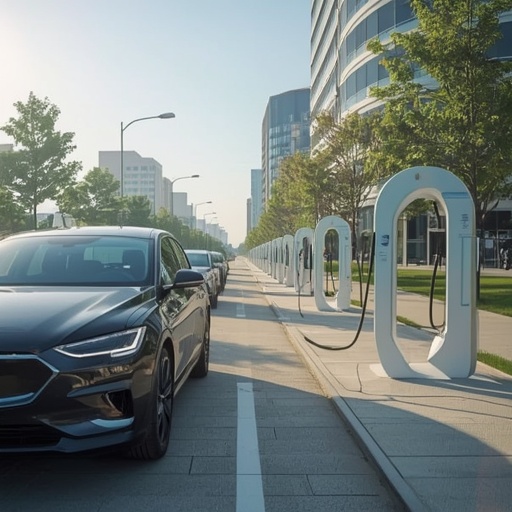
The resurgence of the U.S. electric vehicle (EV) market marks a pivotal moment in the nation’s transition toward sustainable transportation. After experiencing a period of stagnation, momentum has returned with remarkable vigor, driven primarily by economic pressures and environmental awareness. As gasoline prices escalate, consumers are increasingly compelled to reexamine their commuting habits and vehicle choices. The rising cost of fuel functions as a natural catalyst, nudging both urban and suburban drivers to explore the practicality and long-term savings associated with electric mobility.
Interestingly, this renewed enthusiasm for EVs is emerging even in the absence of strong federal incentives, suggesting that the market is maturing beyond external policy support. Rather than depending solely on government rebates or tax credits, many consumers are now making independent, economically motivated decisions. The decline in incentives has not halted growth; instead, it has revealed a more resilient, self-sustaining demand rooted in practicality and forward-looking values. People are beginning to factor in total cost of ownership rather than only the sticker price — recognizing that electric vehicles, while sometimes costly upfront, offer lower maintenance expenses and exceptional fuel efficiency over time.
The comeback also underscores how environmental consciousness blends seamlessly with economic rationality. Drivers are not merely acting out of ecological responsibility; they are responding to tangible market signals. Every dollar increase at the gas pump amplifies the appeal of electric alternatives. Moreover, technological advances — from broader charging networks to improved battery performance — have significantly reduced the logistical barriers that once deterred potential adopters. These advancements contribute to a driving experience that is comfortable, reliable, and increasingly accessible to mainstream consumers.
The narrative unfolding across U.S. highways and neighborhoods reveals more than a temporary reaction to volatile fuel costs. It reflects a cultural and industrial transformation — one where innovation and sustainability no longer compete, but rather reinforce each other. Electric vehicles symbolize an intersection between individual financial interests and collective environmental stewardship. The momentum gained in this period could very well define the trajectory of automotive evolution for the next decade.
In essence, the high cost of gasoline has reignited public and private interest in electrification, proving that necessity often accelerates change. While fiscal incentives once kick-started the movement, present conditions are propelling it forward through sheer market logic. The United States, once hesitant in embracing electric mobility at scale, is now witnessing an organic surge in demand — a testament to how innovation, economic pragmatism, and ecological responsibility can converge on the open road to create a cleaner and more efficient future for all.
Sourse: https://www.businessinsider.com/electric-vehicles-us-sales-rebound-gas-prices-tesla-2026-7