Westend61/Westend61 via Getty Images
Follow ZDNET:
Add us as a preferred source
on Google.
ZDNET’s key takeaways:
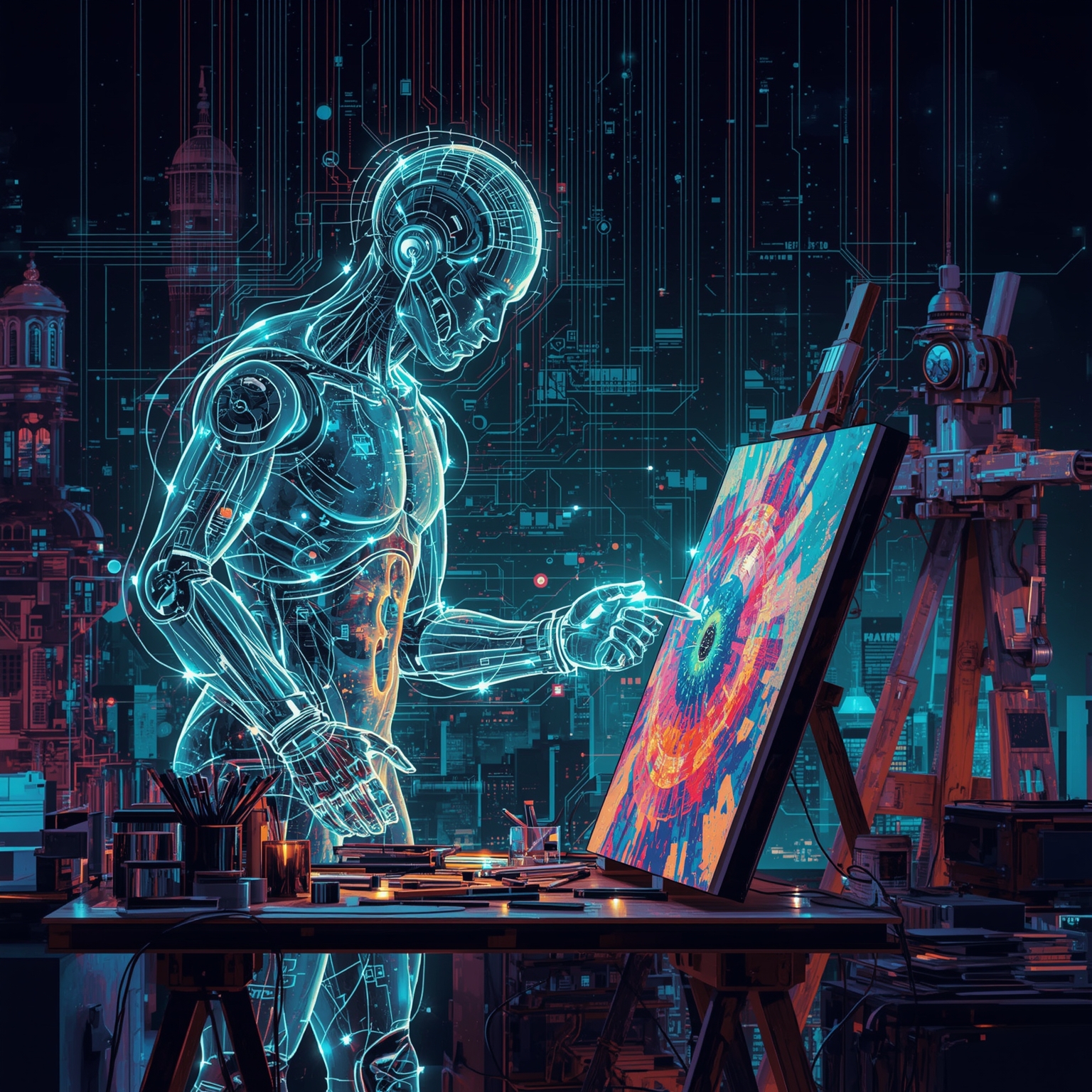
Artificial intelligence has quickly become a fixture in the daily practices of many designers. Increasingly, creative professionals find themselves experimenting with these systems as tools not only for efficiency but also, potentially, as collaborators in the creative process. While some enthusiastic users hope AI can evolve into a trusted creative partner, others remain concerned that its intervention may dilute the spontaneity, unpredictability, and happy accidents that often lead to groundbreaking work. Simultaneously, the companies building and distributing these tools are marketing AI as a universal solution for boosting productivity. Yet, despite its significant progress in tackling repetitive, mundane tasks, a noticeable gap remains between technical capability, measurable return on investment, and genuine acceptance by human users. A recent feature in *Fast Company* posed this question to nine working designers: if the technology operated in an ideal way, what abilities should AI have? Their answers shed light on how the next chapter of the AI boom may unfold.
### A looming content crisis
The past several years have witnessed an outpouring of generative AI technologies capable of producing humanlike text, photorealistic images, sophisticated music compositions, and striking video. These innovations suggest that we are still moving upward on an exponential growth curve, a trajectory that could bring either a future dominated by manipulated media and fabricated digital content or, conversely, one filled with extraordinary creative potential. The more realistic future is likely to be a paradoxical fusion of both extremes—an environment saturated with questionable deepfakes yet also enriched by tools that empower creative imagination.
At the same time, technology firms, pressing forward without pause, face profound intellectual property hurdles. As they ingest vast amounts of preexisting creative works to train their systems, many artists, photographers, writers, and musicians raise concerns not only about the unauthorized use of their work but also about the possibility that their very professions may be mechanized into obsolescence. These tools can generate quickly, cheaply, and at a magnitude that even the most relentless professionals cannot match, prompting anxiety about the security of entire creative industries.
### Work is transforming—not ending
Despite sensational headlines about machines replacing humans, society has not yet experienced an outright collapse of creative professions. Business leaders across multiple industries often describe AI less as a catastrophic replacement mechanism and more as an opportunity to empower employees, streamline operations, and eliminate inefficiencies. Some figures within technology sectors admit that the systems they are engineering have the theoretical capacity to replace large swaths of human jobs, perhaps even entire categories of them. Yet in practice, they more frequently present AI as a revolutionary aid—an augmentation that simplifies tasks and makes work environments more engaging and less tedious.
Thus, creative professionals are adopting a cautious approach. They explore how these tools can be woven into their process while resisting the temptation to surrender their artistic agency to a machine. The challenge lies in balancing enhancement with autonomy.
### AI as a creative partner
An important recurring theme in the designers’ responses, as reported by *Fast Company*, is the desire for AI to move beyond simple automation. Instead of merely expediting repetitive chores in the background, many wish the technology could act more like a genuine intellectual collaborator. For example, Sara Vienna, chief design officer at MetaLab, explained that while eliminating busywork remains attractive, what she truly imagines is an AI that functions as a “thought partner”—a system capable of understanding nuance and context well enough to be trusted in high-level creative decisions.
This aspiration already mirrors the way certain people interact with advanced conversational AI systems, such as ChatGPT, using them not simply for answers but as conceptual partners in brainstorming sessions. Developers, too, are attempting to embody this vision in new technologies. Luma AI markets its reasoning-based video generator, Ray3, as a tool for filmmakers to engage with as though it were a partner. Similarly, next-generation AI “agents” are explicitly being pitched as adaptive entities that can align themselves with the individuality of a person or the needs of an organization.
### The end of mundanity
Alongside the hope for creative insight, many professionals anticipate with relief the possibility that AI could eliminate monotonous tasks entirely. Several survey participants noted that work becomes most draining not during the high-concept stages of ideation but during long, repetitive stretches devoted to refining small details. Brian Collins, cofounder of the design firm Collins, quipped that no one’s ultimate ambition was to spend days painfully adjusting typography—what results, in his words, only in “carpal tunnel,” not creative fulfillment.
However, Giorgia Lupi, partner at Pentagram, emphasized a cautionary perspective: while outsourcing trivial chores may be appealing, overreliance on automation risks draining projects of the quirks and serendipitous detours that make design vibrant. What ultimately breathes life into creative language are the frustrations, revisions, and small interpersonal interactions along the way. Therefore, in her ideal scenario, AI would accelerate experimentation and reduce drudgery, but without erasing the accidental magic that emerges during the process.
### Humans in the loop
The unifying insight across all nine designers’ contributions is the conviction that AI should serve human ingenuity rather than replace it altogether. While few professionals would welcome machines usurping their livelihoods, what stands out is the absence of hostile resistance. Instead of denial, there is reluctant but tangible acceptance: AI is here, and it is firmly embedded in the future of creative work. Thus, today’s dialogue is less about exclusion and more about integration.
### Experimentation, open-mindedness, and individuality
Moreover, the varied answers to *Fast Company’s* inquiry illustrate the diversity of perspectives. AI in creative industries is not a one-size-fits-all phenomenon but, rather, a toolkit adaptable to the personality and workflow of each user. Attempts by corporate leaders to impose standardized AI adoption across entire teams may actually hinder success, since return on investment is often limited when human individuality is not accounted for. Instead, the consensus suggests that successful human–AI partnerships require three guiding principles: continuous experimentation, openness to possibility, and respect for individual working styles.
Of course, designers also allow themselves a dose of humor and wishful thinking. One remarked that AI would be more welcome if it could anticipate their real-world needs—such as bringing food when deadlines cause them to miss meals or reminding them to step outdoors for fresh air.
### An uncharted future
As with any emerging technology, the trajectory of AI remains uncertain and largely uncharted. Progress has unfolded through cumulative trial and error, without the benefit of a universally reliable roadmap. Historical parallels remind us that every communication breakthrough—from the personal radio to the internet—has brought both expanded freedoms and unforeseen liabilities. Radios, for instance, broadened access to entertainment but simultaneously allowed authoritarian regimes to broadcast propaganda at scale.
Similarly, AI stands at a polarizing threshold. To ensure these systems enhance society rather than diminish it, the public discourse must be guided not only by corporations seeking profit but by the actual communities whose work and identities are shaped by this era of generative technology. The final outcome rests in collective hands: whether AI becomes a servant of authentic human expression or a silencer that homogenizes our creative voices.
Sourse: https://www.zdnet.com/article/the-work-ai-should-really-be-doing-according-to-these-pros/