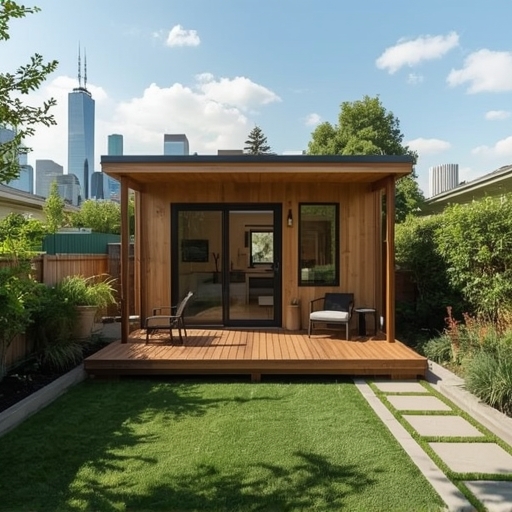
In a landmark decision that marks a progressive turn for New York City’s housing landscape, homeowners across the five boroughs are now permitted to construct backyard tiny homes—formally recognized as Accessory Dwelling Units (ADUs). This transformative development reflects the city’s ongoing effort to address the dual challenges of limited housing availability and the growing demand for flexible living arrangements.
Under this new initiative, the city has begun accepting official applications for ADU construction, giving property owners the opportunity to reimagine their existing land. A simple backyard, once relegated to storage sheds or patios, can now evolve into a sleek, self-contained residential space. For many, this represents not merely an architectural innovation, but a financial and social one as well. Homeowners can generate additional income through rentals, provide independent quarters for aging relatives, or create adaptable living environments for multigenerational families — all within the compact footprint of urban real estate.
The legalization of backyard ADUs also marks a significant cultural shift toward more sustainable and community-oriented models of city living. With limited open space and soaring property prices, micro-dwellings such as these offer a creative solution for urban density. Across other major cities, from Portland to Los Angeles, small secondary homes have already demonstrated their value in diversifying housing options while maintaining the cohesive fabric of neighborhoods. Now, New York joins that movement—where design meets necessity and urban innovation meets everyday life.
Imagine walking through a Brooklyn brownstone backyard to find a thoughtfully designed, energy-efficient tiny home nestled amid greenery, framed by the city skyline in the distance. These compact yet elegant structures embody the aesthetic and practical ideals of modern architecture: minimalism, sustainability, and a seamless integration of indoor comfort with outdoor tranquility.
For property owners, this policy opens a pathway not only toward architectural experimentation but also toward long-term wealth creation. A legally sanctioned ADU can increase property value, offer consistent rental yields, and enhance flexibility in an unpredictable housing market. For the city itself, it represents an incremental yet powerful step toward expanding housing capacity without encroaching on existing infrastructure.
Ultimately, this development redefines what it means to call New York home. By legitimizing backyard living spaces, the city encourages a more inclusive and imaginative urban environment—one where innovation arises not from expansion outward, but from creative reconfiguration within. The legalization of tiny homes is more than a policy change; it is a vision for a smarter, denser, and more compassionate metropolis designed for the evolving rhythms of contemporary life.
Sourse: https://www.businessinsider.com/new-york-city-homeowners-apply-build-backyard-tiny-home-adu-2025-12