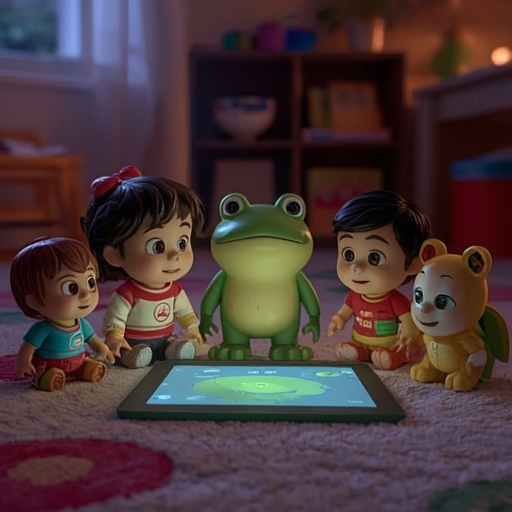
In the newest installment of Pixar’s beloved franchise, Toy Story 5 once again brings Woody, Buzz, and the rest of the gang into a fresh and thought‑provoking narrative — one that feels both timely and emotionally resonant. Yet, this time, their greatest rival isn’t another charismatic toy lurking in the shadows of Bonnie’s room. Instead, the antagonist takes a subtler, more modern form: technology itself. Lilypad, a whimsical yet slightly enigmatic frog‑themed tablet, enters the story not as an overtly evil force, but as a captivating device that quietly monopolizes Bonnie’s attention, creating unforeseen tension among her long‑cherished toys.
Pixar masterfully uses Lilypad as both a literal and symbolic character — a reflection of today’s digital culture, where screens often compete with the tangible, imaginative experiences of play. Through its sleek design, charming voice, and endless interactive content, the tablet becomes an alluring presence, pulling Bonnie into a world of instant stimulation and digital wonder. For Woody and his friends, this isn’t a battle of plastic versus circuitry but of timeless storytelling against the captivating pull of modern media.
The film’s premise makes a deft commentary on how technology can subtly intrude on childhood creativity and emotional connection. Viewers see the toys wrestle with questions of relevance and belonging — what happens when a child’s imagination no longer needs them because a glowing touchscreen can fulfill that same curiosity? Lilypad represents more than a mere gadget; it embodies a cultural shift in how children explore, learn, and dream.
True to Pixar’s tradition of emotional depth and layered meaning, Toy Story 5 explores not just rivalry but adaptation, resilience, and rediscovery. Woody’s journey toward understanding that love and imagination evolve with time mirrors every parent’s challenge in the digital age: learning to balance technological engagement with human warmth and creativity. The story’s conflict isn’t fueled by malice but by evolution — a natural, inevitable progression in which nostalgia must coexist with innovation.
Visually, the film promises the studio’s signature artistry: radiant colors, expressive textures, and storytelling through light. Lilypad’s bioluminescent glow contrasts the toys’ familiar, tactile forms, underscoring the thematic divide between physical play and digital allure. The result is a cinematic tableau that feels both playful and poignantly reflective, merging heartwarming friendship with societal commentary.
As Toy Story 5 invites audiences back into its world, it does so with a renewed sense of purpose — to remind us that imagination, though challenged by technology, remains boundless when fed by love, creativity, and connection. Lilypad may steal the spotlight, but the toys remind us that even in the age of screens, stories born from the heart still shine brightest.
Sourse: https://www.businessinsider.com/toy-story-5-trailer-new-villain-smart-tablet-screen-time-2026-2