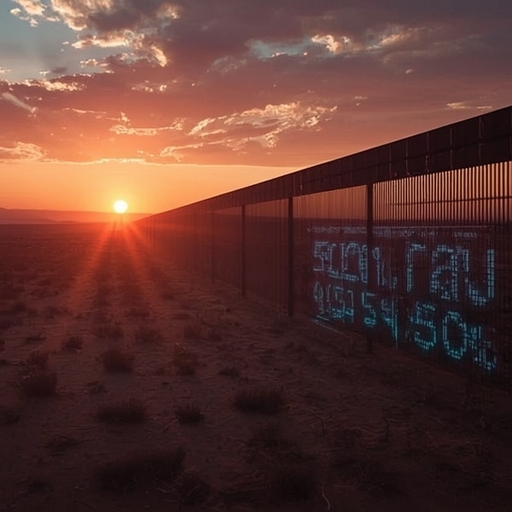
In the aftermath of former President Trump’s return to office, the Department of Homeland Security (DHS) has reportedly allocated an extraordinary sum—approximately thirty‑five billion dollars—toward initiatives that primarily reinforce the U.S. border infrastructure and expand defense‑related technological capacities. This monumental expenditure encompasses large‑scale contracts granted to corporations specializing in border wall construction, advanced surveillance systems, and deportation logistics—essentially redistributing substantial portions of public money to some of the nation’s leading defense and technology contractors.
The magnitude of this spending invites a series of pressing questions about governmental priorities, transparency, and fiscal accountability. Observers and policy analysts alike are asking whether these allocations genuinely enhance national security or whether they represent a continuation of costly political symbols with limited practical impact. For instance, the renewed emphasis on physical barriers—while politically potent—has prompted debate about their actual effectiveness in deterring illegal crossings or improving the management of immigration flows. Additionally, the increasing involvement of private contractors raises concerns over oversight, potential conflicts of interest, and the opacity surrounding contract bidding processes.
From a financial standpoint, directing thirty‑five billion dollars into concentrated projects warrants rigorous scrutiny regarding cost efficiency and long‑term sustainability. Critics argue that such concentrated investment could divert critical resources away from alternative security innovations—such as digital tracking systems, humanitarian visa infrastructure, or intelligence analysis—that might provide more adaptive and humane approaches to border management. On the other hand, proponents contend that supporting domestic defense technology firms not only strengthens national security but also stimulates job creation and technological advancement, thereby generating secondary economic benefits.
Beyond immediate fiscal considerations, this pattern of expenditure illuminates broader questions about American policy direction and the administration’s underlying philosophy toward immigration control, resource allocation, and global image management. If transparency remains elusive and oversight mechanisms inadequate, public trust in the stewardship of federal funds may continue to erode. As such, the call for enhanced accountability—through independent audits, legislative review, and open access to financial documentation—grows increasingly urgent among policymakers, watchdog organizations, and citizens demanding to know precisely how their tax dollars are being utilized.
Ultimately, the revelation of DHS’s forty‑digit‑level expenditure since Trump’s reinstatement stands as a pivotal moment to evaluate how the intersection of security imperatives, political narratives, and corporate profit motives shapes the future of U.S. border management. By dissecting the flow of public funds and questioning the balance between protection and prudence, the conversation transcends mere numbers—it becomes a critical inquiry into the values guiding national policy and the accountability structures that sustain American democracy.
Sourse: https://www.wsj.com/politics/policy/how-dhs-spent-35-billion-since-trump-retook-office-44a8f198?mod=pls_whats_news_us_business_f