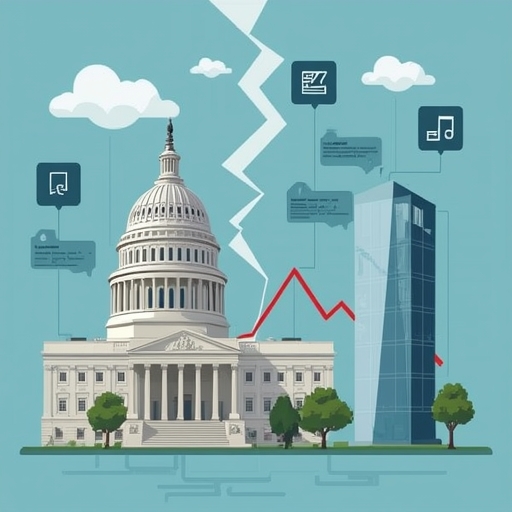
In a decisive and high-profile move, the United States Treasury Department has formally terminated all existing contractual relationships with a leading national consulting firm, Booz Allen Hamilton, following the widespread controversy arising from the unauthorized disclosure of former President Donald Trump’s tax returns. This termination marks a significant turning point in the government’s ongoing efforts to reinforce accountability, data protection, and ethical conduct within its network of private-sector partners.
The Treasury’s decision comes in direct response to the alarming data breach that exposed sensitive and confidential financial information belonging to one of the most scrutinized figures in modern American political history. Such an incident has swiftly rekindled concerns about the integrity of information management within government-affiliated firms and has emphasized the urgent need for heightened cybersecurity measures. The implications extend beyond a single client or agency relationship — they touch on fundamental issues of trust, transparency, and the preservation of public confidence in institutions tasked with safeguarding privileged data.
Market reaction to the Treasury Department’s announcement was immediate and intense. Booz Allen Hamilton’s stock suffered a pronounced and rapid decline, reflecting investor apprehension about the reputational and financial fallout that can result from breaches of confidentiality at this scale. The abrupt sell-off demonstrates how modern financial markets are extraordinarily sensitive to developments involving data integrity and corporate ethics. Within hours of the government’s statement, analysts and investors across multiple sectors began reevaluating the consulting industry’s exposure to regulatory scrutiny and potential litigation.
Beyond the financial markets, this move symbolizes a broader cultural shift within the federal contracting sphere — one that places an unambiguous emphasis on ethical responsibility, transparent data governance, and rigorous compliance with federal standards. Government agencies, long reliant on external consultants for strategic, technical, and analytical expertise, are now compelled to reconsider the extent to which third-party partnerships can simultaneously provide innovation and maintain uncompromising standards of privacy protection.
For consulting firms, this episode serves as both a cautionary tale and a call to action. In an era increasingly defined by digital interconnectivity, the safeguarding of sensitive information stands as a critical determinant of corporate credibility and long-term sustainability. The Treasury Department’s swift and unhesitating response reinforces that even the most prestigious and well-established institutions are not immune to the consequences of compromised trust. The lesson is stark but essential: ethical lapses or data vulnerabilities can dismantle years of carefully constructed professional reputation in mere moments.
As industry observers and policymakers continue to analyze the aftermath, this event will likely influence future federal procurement policies and contractual expectations. Companies seeking government partnerships must now demonstrate not only operational excellence but also verifiable commitments to cybersecurity resilience, transparent oversight, and integrity in handling privileged information. Ultimately, the Treasury’s decision underscores the evolving reality that in both public and private sectors, trust is no longer an abstract virtue — it is an indispensable asset that must be meticulously protected and actively sustained to ensure enduring institutional strength and legitimacy.
Sourse: https://www.businessinsider.com/treasury-department-cancel-contracts-booz-allen-hamilton-tax-return-leak-2026-1