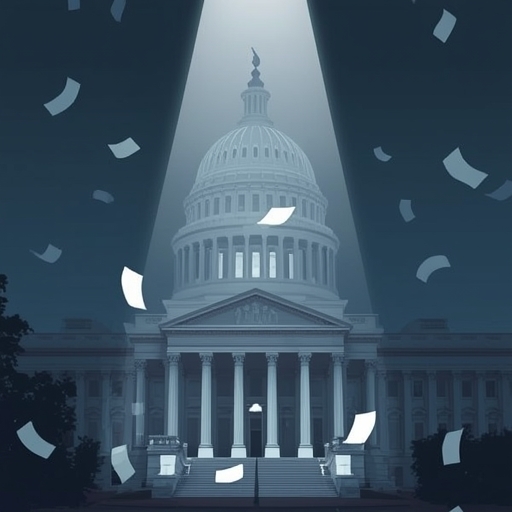
Former President Donald Trump has publicly weighed in on the Department of Justice’s ongoing investigation into the Federal Reserve’s reported renovation expenditures, declaring emphatically that the inquiry should proceed ‘to the end’ and uncover every detail necessary to ensure full accountability. His remarks have injected additional political energy into an already delicate situation, one that combines financial oversight, institutional accountability, and the ever-contentious intersection of governance and economics.
The Department of Justice’s investigation, which focuses on alleged irregularities in renovation costs associated with the Federal Reserve’s facilities, has already stirred considerable debate within both political and financial circles. By calling for the probe to continue without restriction, Trump signals support for deeper transparency within institutions that traditionally operate with significant independence. In practical terms, his statement could amplify existing tensions between regulatory agencies, political authorities, and financial gatekeepers who argue over the proper balance between autonomy and public accountability.
Observers note that such investigations seldom remain confined to questions of financial ethics alone. They often evolve into broader examinations of how public funds are used, who authorizes discretionary expenses, and whether the processes that govern such allocations meet acceptable standards of oversight. In this case, the combination of public scrutiny and political endorsement ensures that the matter will receive sustained attention from both policymakers and the media.
For business and economic analysts, this renewed focus underscores how easily monetary policy dynamics can become intertwined with political narratives. The Federal Reserve, long regarded as an independent authority, now finds itself at the center of discussions about transparency and the responsible stewardship of government resources. Whether the investigation ultimately uncovers significant misconduct or merely procedural inefficiencies, its outcome will likely influence public confidence in America’s financial institutions.
Trump’s appeal to ‘see it through to the end’ thus resonates as more than a simple comment on a specific investigation. It highlights a broader call for meticulous examination of institutional practices that shape economic policy. At a time when public trust in governmental entities often appears fragile, the clarion demand for exhaustive scrutiny carries symbolic weight—both as a political statement and as a reminder of the enduring expectation that even the most influential institutions remain subject to democratic accountability.
Sourse: https://www.businessinsider.com/trump-powell-fed-chair-probe-continue-2026-2