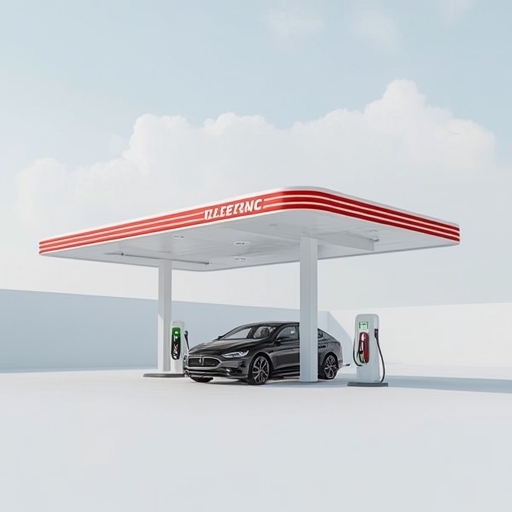
The recently announced iteration of the ‘Buy American’ policy represents a profound shift in the trajectory of the United States’ clean transportation ambitions, particularly regarding the national rollout of electric vehicle (EV) charging stations. While the core objective of the initiative—to encourage domestic manufacturing and strengthen U.S. industrial self-sufficiency—is undoubtedly aligned with longstanding economic and political priorities, its direct impact on the pragmatic pace of EV infrastructure deployment could prove to be both complex and far-reaching. By tightening the origin requirements for materials and components used in EV chargers, the new rule seeks to ensure that a greater proportion of project value remains within American borders. Yet this well-intentioned measure may paradoxically decelerate the very momentum required to expand sustainable transportation networks at the scale and speed demanded by climate imperatives.
In practical terms, the immediate consequence of enforcing stricter sourcing criteria is likely to be a slowdown in equipment procurement and construction timelines. Many of the technological components and raw materials central to high-quality EV charging systems—such as semiconductors, advanced metals, and specific battery-related parts—are currently manufactured through complex global supply chains that cannot be rapidly reconstituted domestically. As a result, suppliers and developers may encounter production bottlenecks, higher costs, and scheduling delays, all of which could impede the national objective of achieving a robust, coast-to-coast charging network within the next several years.
This tension exposes a broader policy dilemma: the need to reconcile support for national economic resilience with the urgency of environmental transformation. Advocates of the new regulation emphasize that a domestically anchored clean-tech industry can create skilled jobs, enhance energy security, and reduce dependence on geopolitical rivals for critical technologies. However, environmental analysts warn that imposing overly rigid constraints during the sector’s formative stage could undermine the progress needed to curb emissions from transportation—the largest source of U.S. greenhouse gases. In essence, the debate is not about whether to produce clean technologies in America, but rather how quickly the country can do so without compromising its sustainability goals.
The outcome of this policy pivot will depend largely on coordinated efforts among federal agencies, private manufacturers, and infrastructure developers. If supported by targeted incentives, such as grants for domestic manufacturing capacity and innovation in supply chain efficiency, the U.S. may ultimately achieve both industrial revitalization and environmental advancement. Conversely, if implementation proceeds without strategic flexibility, the policy risks queuing projects in regulatory limbo, delaying benefits to consumers and slowing the shift toward zero-emission mobility.
In summary, the new ‘Buy American’ requirement illuminates a fundamental crossroad for American climate policy: the balance between protecting domestic industry and sustaining the pace of ecological transition. The success of this endeavor will hinge on how effectively policymakers can synchronize these dual objectives, ensuring that economic patriotism reinforces—not restrains—the pursuit of a cleaner, more connected future for all.
Sourse: https://www.theverge.com/transportation/876703/trump-ev-charging-buy-american-nevi-funds