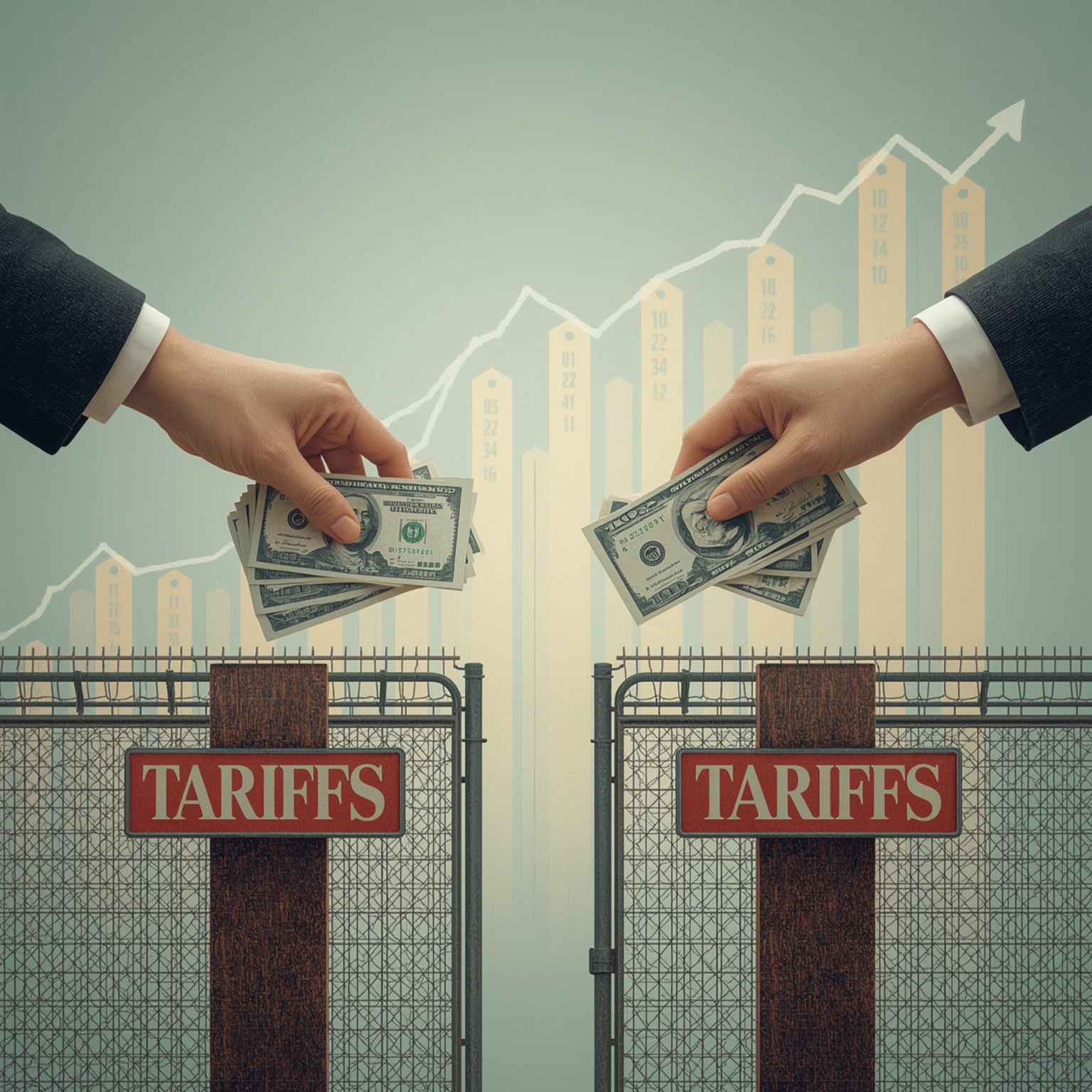
Most Americans would likely greet with enthusiasm the sudden appearance of an additional $2,000 in their personal bank accounts—particularly if such unexpected generosity came directly from the federal government. The notion of receiving no-strings-attached financial relief would undoubtedly appeal to citizens navigating an economy characterized by persistently high prices and financial uncertainty. Yet, as with many proposals that sound almost too enticing to be real, this idea may ultimately prove to be more illusion than reality.
On a Saturday statement shared through Truth Social, President Donald Trump declared that his administration intended to channel funds derived from tariff revenue into direct cash payments of $2,000 for all qualifying Americans, with exemptions for those classified as high-income earners. This, however, was far from the first instance in which Trump had introduced such a plan; during the preceding summer months, he had hinted at similar financial gestures in his campaign fundraising communications, promising potential direct payments to ordinary Americans as part of his economic messaging.
The idea itself harks back to the pandemic-era stimulus checks, when the federal government issued three rounds of direct payments totaling more than $800 billion to individuals who met the required eligibility thresholds. Those payments became a defining feature of economic relief policy during the COVID-19 crisis, offering many households temporary financial breathing room amid mass unemployment and business disruption. In spirit, Trump’s current tariff-funded initiative mirrors those efforts. Yet the resemblance also extends to its inherent risks: just as the pandemic-era checks provided short-term relief at the cost of long-term macroeconomic complications, a new distribution of so-called tariff dividends could generate temporary benefits that ultimately undermine economic stability for the average consumer.
By placing additional cash directly into the hands of households, the government would inevitably spark heightened consumer demand for goods and services. While this surge in consumption may appear positive, especially at first glance, it carries a well-documented consequence—heightened inflationary pressure. As demand outpaces supply, businesses are often compelled to raise prices. Furthermore, tariffs themselves tend to drive up costs even before consumer demand enters the equation. When companies face higher import expenses due to those trade levies, they frequently transfer the added burden to the end buyers, embedding price increases across a broad range of products—from electronics and automobiles to groceries and household essentials.
These dynamics could significantly complicate the Federal Reserve’s current monetary trajectory. The central bank has been cautiously working toward a gradual reduction of interest rates in an attempt to maintain a balance between growth and inflation. However, an artificial influx of consumer spending coupled with tariff-induced cost escalation could derail that delicate process, potentially forcing the Fed to pause rate cuts—or worse, to revert to rate hikes—if inflation reignites and remains persistently high. In such a scenario, the short-term financial gain provided by the $2,000 check could quickly evaporate, leaving consumers grappling with a higher cost of living, steeper mortgage and loan rates, and diminished purchasing power that neutralizes the intended economic relief.
This policy concept also emerges at a moment when American households continue to wrestle with an unrelenting surge in living expenses. From soaring grocery prices and escalating rental rates to the broader rise in everyday costs, the country’s working and middle classes have faced an economic strain unseen in decades. Trump’s victory over former President Joe Biden was largely built on promises to alleviate those very pressures—to lower prices and restore affordability for ordinary citizens. In this political context, tariffs and their associated revenue represent, for Trump, more than a fiscal mechanism; they are positioned as an all-encompassing solution intended to address varied national challenges simultaneously. According to his administration’s own arguments, the tariffs would not only yield funds for direct consumer payments or debt reduction but would also strengthen the United States’ leverage in trade negotiations with foreign competitors—a point actively under consideration by the Supreme Court, which is currently evaluating the legality of such sweeping tariffs.
Yet the fiscal implications of disbursing $2,000 checks to hundreds of millions of Americans would be substantial, potentially undermining the federal government’s capacity to tackle its mounting debt crisis. While the notion of instant economic relief resonates politically, its budgetary execution would demand resources on a scale that could strain national finances. Moreover, even if President Trump were entirely committed to realizing this vision, the plan’s practical implementation would hinge on congressional approval—a formidable challenge, given the deep partisan divisions in Washington. The federal government has now been mired in a shutdown lasting forty consecutive days, with no resolution in sight. During this time, hundreds of thousands of government employees have been compelled to forgo their paychecks, highlighting the broader dysfunction within the political system. In light of this ongoing stalemate, the prospect of Congress swiftly endorsing a sweeping financial disbursement seems remote at best.
All things considered, it may be unwise for Americans to pin their hopes on receiving a $2,000 windfall in the near future—if ever. While the promise of generous payments financed through tariffs carries immediate emotional and political appeal, economic realities suggest that such a plan could introduce as many problems as it purports to solve. The fantasy of fast relief, though momentarily attractive, might conceal a future of higher prices, intensified inflationary pressure, and delayed financial repercussions that most Americans can ill afford.
Sourse: https://www.businessinsider.com/trump-tariff-checks-inflation-cost-of-living-2025-11


