When I look back on my childhood, one moment irrevocably altered how I viewed school and safety. The tragic Columbine school shooting, though it took place far from my small elementary campus, sent shockwaves through the lives of students across the nation, including mine. Before that day, I had carried the innocent conviction that classrooms were universally safe spaces, sanctuaries devoted to curiosity and learning. But overnight, my naiveté was torn apart. I realized for the first time that danger was not an abstract concept confined to distant news reports—it could intrude, uninvited, into any ordinary classroom, disrupting the predictability of recess bells and spelling tests. That early fracture in my sense of security followed me through adolescence and quietly shaped the lens through which I would later view education as a parent.
As the years passed and I entered adulthood, that buried fear reemerged when I became a mother. Watching my daughter approach school age brought both nostalgia and a gnawing sense of unease. The world had changed drastically since my own childhood. What had once been unthinkable—lockdown drills, security guards at elementary schools, reinforced classroom doors—had turned into routine policy and procedure. Each parent I knew seemed to live with the same silent dread: that their phone might ring with news of an emergency at their child’s school. That anxiety grew heavier with every news headline. I did not want my life—or my daughter’s sense of normalcy—to be governed by constant vigilance.
Alongside that fear, a deeper concern began to surface. I worried that even if schools succeeded at keeping children physically safe, they too often neglected other vital aspects of a child’s development. I wanted my daughter to grow not only in intellect but also in emotional intelligence, self-awareness, mindfulness, and spiritual grounding. I wanted her to understand the value of self-care, compassion, and learning at her own pace—principles that often get swept aside in a traditional, test-driven system. After wrestling with my concerns, homeschooling emerged as the only path that truly felt aligned with the kind of upbringing I envisioned for her.
But making that decision was not met with applause or easy understanding. In truth, I doubted myself almost as much as others doubted me. All summer long, family members, friends, and even strangers approached my curious five-year-old with the same well-meaning question: “Are you excited to start school soon?” Their smiles brightened with expectation—until she innocently replied that she would be staying home with me as her teacher. Their expressions would falter; polite surprise would give way to uneasy silence, followed inevitably by a flood of questions aimed squarely at me. “Why on earth would you do that?” some asked with genuine confusion. “Don’t you want a break?” others added with a half-joking tone. A few cut deeper: “You’re not even a real teacher.”
At first, I laughed these comments off, but deep down their skepticism began to linger. I started internalizing their judgments, questioning whether I was equipped for the role I had chosen. Soon, I found myself frantically trying to meet impossible standards of perfection that no one had actually imposed but me. I obsessed over every decision—agonizing over the ideal curriculum, the most effective teaching methods, and unfamiliar names like Charlotte Mason, whose philosophies veteran homeschoolers seemed to revere as gospel. My uncertainty translated into rigidity. Instead of embracing the organic nature of home learning, I clung to strict plans and relentless schedules, believing discipline would validate my choice. It did quite the opposite. My daughter and I both felt drained, our days heavy with pressure rather than joy.
There were moments I nearly gave up. The temptation to enroll her in a traditional school—to exchange the sound of laughter and lessons in our dining room for a few quiet hours alone—became overwhelmingly appealing. In those moments, I berated myself for making life harder than it needed to be, for taking on a new role just when motherhood already demanded so much. Yet something in me resisted. I had made this decision with intention, and I knew quitting at the first sign of struggle would betray that purpose.
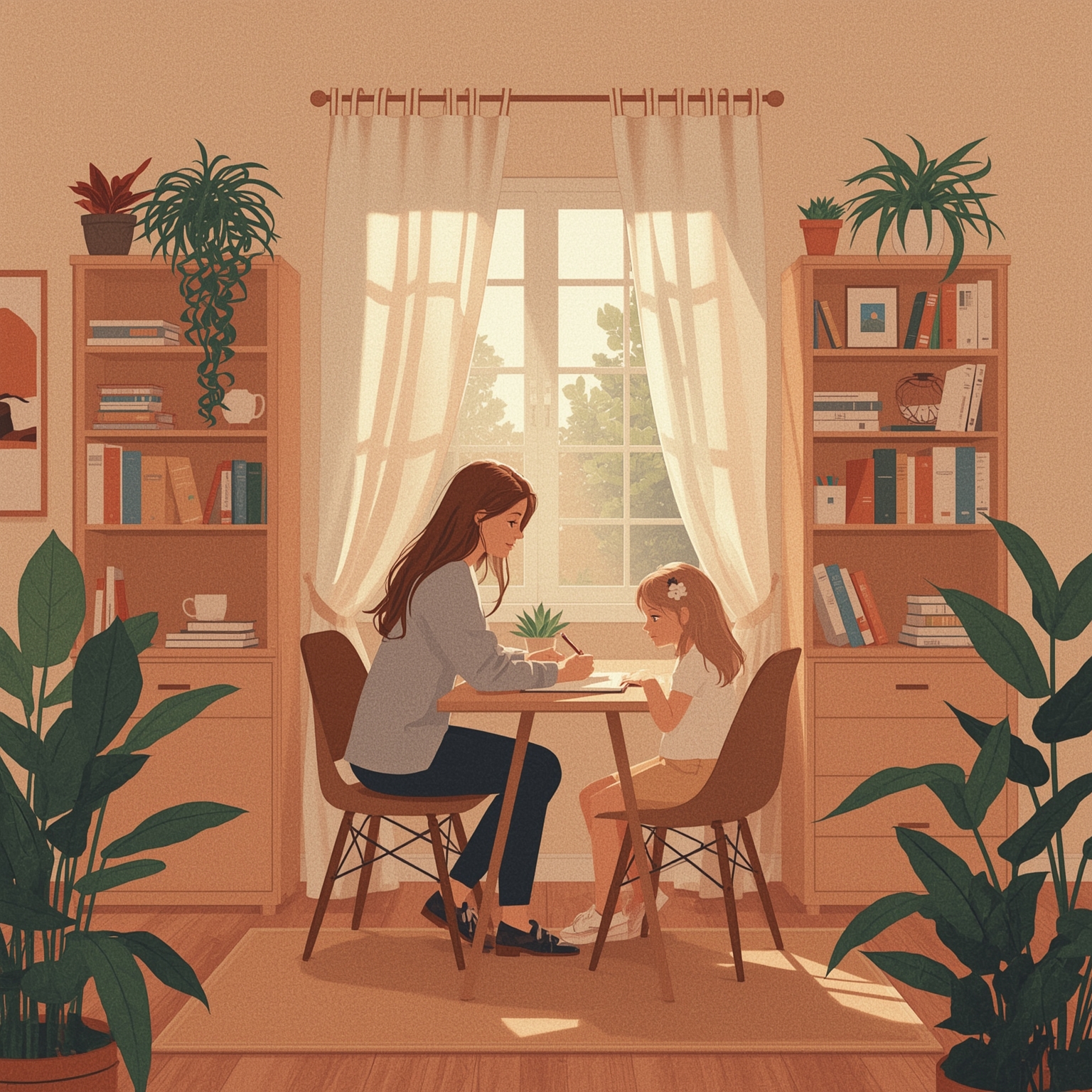
So I persisted. I slowed down, began to research thoughtfully, and sought a healthy balance between structure and spontaneity. I selected one formal curriculum—nothing extravagant, just a strong foundation to complement the rich, natural learning that already infused our daily lives. Together, we incorporated lessons into household routines, chores, readings, and small adventures. As I began trusting the process instead of micromanaging it, something shifted. My daughter thrived. Her curiosity flourished when freed from rigid timetables; she absorbed new ideas with delight rather than hesitation. Witnessing her eagerness affirmed that I did not need to imitate a traditional teacher’s methods—I simply needed to be the kind of mother who nurtures learning from every corner of life.
Over time, the insecurities that once overshadowed me faded. I stopped trying to prove to others that I could teach, and instead embraced teaching as an extension of motherhood itself: guiding with patience, exploring with wonder, and fostering growth in spirit as well as intellect. The home we had shaped together became a place where learning unfolded through intention, creativity, and freedom—qualities I once feared would be sacrificed outside the walls of a school. Though I had faced doubts, both my own and those of my loved ones, I now stand at peace with the path we chose. Homeschooling has not only granted my daughter a deeper love of learning but has also allowed me to redefine what success and safety truly mean within our family. In that realization, I found the reassurance I had been seeking from the very beginning.
Sourse: https://www.businessinsider.com/homeschooled-my-daughter-despite-family-warning-2025-10


