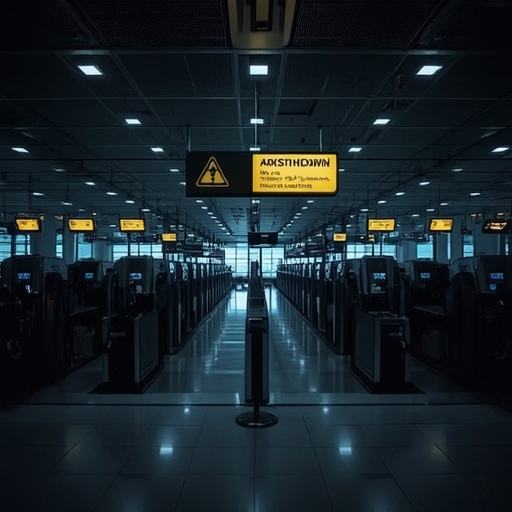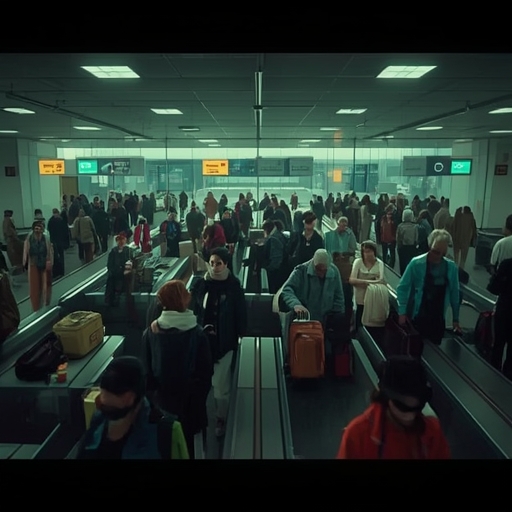
Amid the ongoing government shutdown, the United States is witnessing a significant strain on its aviation infrastructure, as Transportation Security Administration (TSA) staffing shortages increasingly disrupt daily operations at major airports. Recent data indicates that more than one-fifth of TSA personnel at some of the nation’s busiest transportation hubs — including Hartsfield-Jackson Atlanta International Airport, John F. Kennedy International Airport in New York, and Houston Hobby Airport — have called in absent.
This situation has quickly evolved from an operational inconvenience into a systemic challenge, with its consequences extending beyond minor scheduling disruptions to directly affecting national mobility, efficiency, and economic stability. Travelers passing through affected airports are encountering unusually long security lines, extended wait times, and a general slowdown in the screening processes that ensure aviation safety. Families and business travelers alike now find themselves compelled to adjust itineraries, arrive earlier than usual, and prepare for unpredictability that was once a rarity—perhaps signaling a new norm in domestic and international travel.
From an organizational perspective, these absences highlight a deeper, more intricate connection between workforce morale, federal employment structures, and the country’s critical infrastructure. TSA agents, whose work is essential for both passenger safety and the smooth coordination of the nation’s airports, operate within an environment that demands extensive coordination, patience, and adherence to security protocols. When this workforce experiences instability due to furloughs, delayed compensation, or reduced morale, the repercussions rapidly ripple outward, affecting millions of passengers and the airlines that depend upon on-time turnarounds and efficient operations.
Moreover, leaders in both the aviation and government sectors are being reminded of how interdependent these systems truly are. A shortage in transportation security professionals doesn’t just cause delays—it underlines the fragile balance that sustains public confidence in national infrastructure. Airlines must allocate additional customer service resources to manage traveler frustrations; airport authorities must reorganize operational priorities to minimize bottlenecks; and federal agencies face pressure to address public concern regarding safety oversight under constrained conditions.
For passengers navigating this turbulent environment, proactive preparation has become essential. Arriving significantly ahead of departure times, monitoring flight and security updates closely, and anticipating longer processing queues can mitigate the impact of these delays. Businesses reliant on air travel for logistics, executive mobility, or client engagement are also being urged to adjust scheduling expectations to accommodate shifting transit conditions.
Ultimately, the TSA staffing crisis amid the government shutdown serves as both a logistical warning and a leadership case study. It compels policymakers and industry executives alike to acknowledge that operational resilience within public infrastructure depends not only on technology and funding but also on the wellbeing and stability of the human workforce that keeps these systems functional. The episode underscores how even a temporary disruption in personnel availability can cascade through the complex networks of modern travel, influencing sectors far beyond the terminal gates. As the situation continues to evolve, it remains clear that restoring staffing stability will be critical to protecting the efficiency, security, and global reputation of the U.S. aviation system.
Sourse: https://www.businessinsider.com/these-5-airports-most-tsa-staff-calling-out-long-lines-2026-3