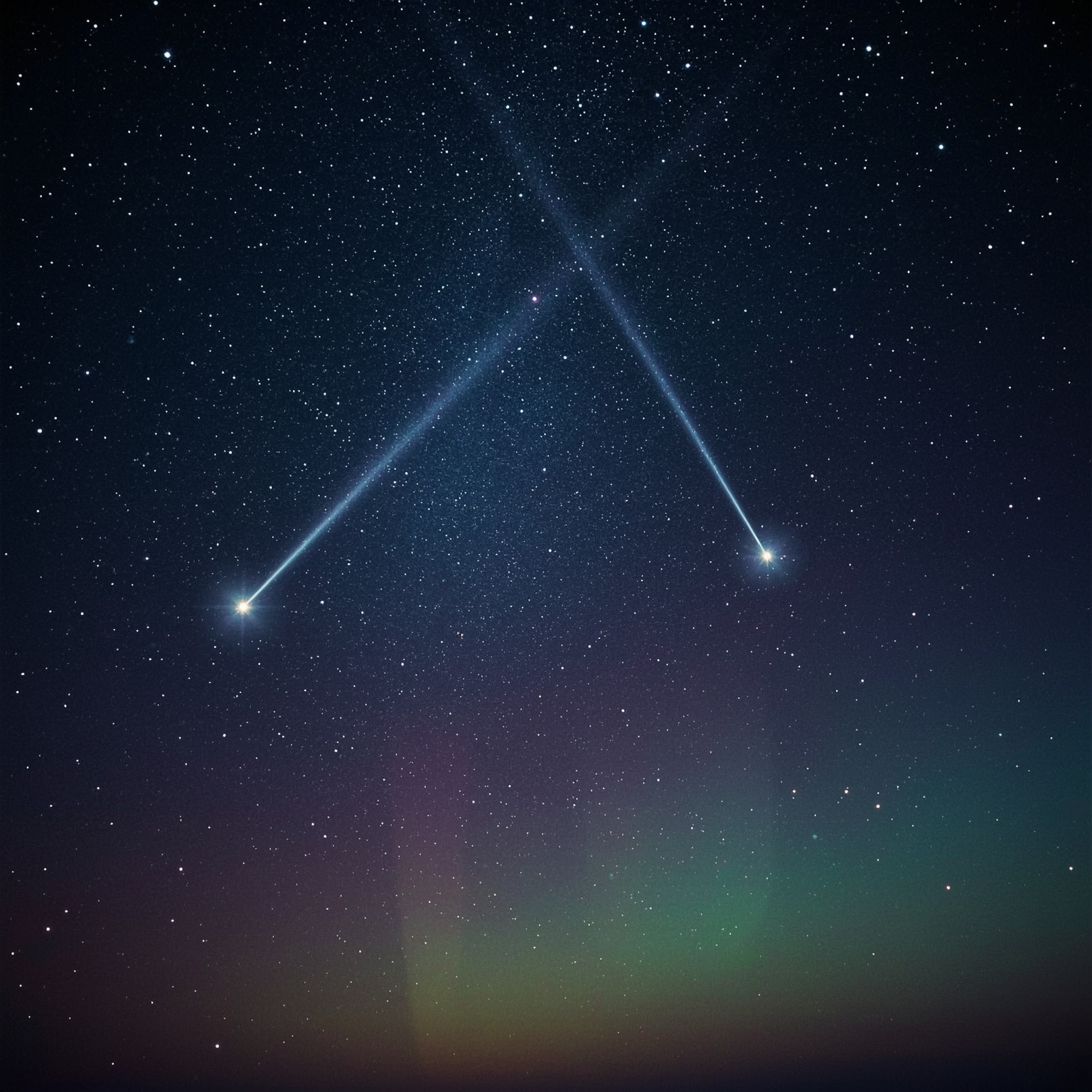
Skywatchers and astronomy enthusiasts alike have reason to celebrate this month, as the heavens are preparing to unveil a rare visual spectacle of remarkable beauty. Not one, but two dazzling comets are poised to grace Earth’s night skies, inviting observers across the globe to witness a cosmic performance that only nature can orchestrate. These visitors from the outer reaches of our solar system—known as C/2025 R2 (SWAN) and C/2025 A6 (Lemmon)—were both discovered in 2025 and are now making their way inward, approaching our planet for a fleeting rendezvous that is sure to captivate anyone who turns their gaze upward.
Both SWAN and Lemmon are anticipated to reach their closest approaches to Earth in the month of October, their visibility gradually improving as they journey toward our corner of the cosmos. According to current astronomical predictions, Comet SWAN will pass nearest to our planet on October 19, followed closely by Comet Lemmon on October 21. Around these dates, their icy surfaces—reflecting sunlight as they travel—may shine brightly enough to be seen without the aid of telescopes, offering a rare opportunity to behold these frozen travelers with the naked eye.
The story of these two comets is as fascinating as their impending appearance. Comet Lemmon, named after the Mt. Lemmon SkyCenter observatory situated high in Arizona’s Santa Catalina Mountains, was first detected in January of 2025. Astronomers using the facility’s advanced telescopic instruments observed the object streaking toward the inner solar system at extraordinary speeds, moving as fast as 130,000 miles per hour (209,000 kilometers per hour)—a reminder of the tremendous kinetic energy defining celestial motion. Months later, in September, Comet SWAN entered the scene through an equally intriguing discovery. Amateur astronomer Vladimir Bezugly identified SWAN in image data captured by NASA’s SOHO spacecraft, utilizing the onboard SWAN instrument that tracks solar wind interactions. As the comet emerged from the Sun’s glare, it surprised astronomers by brightening dramatically, signaling increased activity as solar radiation heated its icy nucleus.
When SWAN reaches its point of closest approach, it will pass at a distance of approximately 24 million miles (39 million kilometers) from Earth—roughly one quarter of the span separating our planet from the Sun. Current measurements, reported by EarthSky, indicate that SWAN’s brightness magnitude hovers near 5.9, a level that could make it faintly visible without binoculars under optimal conditions. For now, this comet can be found traversing the southern skies, gradually shifting northward as its orbital path evolves, according to NASA observations.
Following closely behind, Comet Lemmon will make its own remarkable approach just days later. Its orbit will carry it to roughly half the distance between the Sun and Earth before looping around the Sun on November 8, an event that will mark the start of its next long journey around our star. As Lemmon continues inward, it will grow progressively more luminous, its brightness peaking between October 31 and November 1, when EarthSky forecasts it may remain easily visible—and perhaps even outshine its initial predictions.
For those hoping to glimpse these transient wonders, timing and location will be critical. Comet SWAN presents the best viewing prospects for observers in the Southern Hemisphere. After crossing into the constellation Libra on September 28, it is expected to glide across Scorpius by October 10. Around October 9–10, EarthSky notes that SWAN will appear close to Beta Librae, Libra’s brightest star—a reliable reference point for skywatchers. However, observers should be aware of the comet’s challenging position: it will remain relatively low on the horizon and close to the setting Sun, meaning visibility will depend heavily on clear skies and unobstructed western views. To maximize the chance of sighting it, enthusiasts are advised to look toward the west shortly after sunset, when the sky begins to darken enough to reveal faint celestial objects.
Conditions will be more favorable for those eager to observe Comet Lemmon. This object will be positioned more advantageously for the Northern Hemisphere, glowing near the constellation of the Big Dipper through much of October. To find it, early risers should direct their gaze toward the eastern horizon just before dawn, when the comet is expected to appear against the faint glow of early morning light. As the month progresses, visibility should improve significantly. On October 16, Lemmon’s path will carry it close to Cor Caroli, a striking binary star system anchored within the northern constellation Canes Venatici—a pairing expected to create a particularly photogenic celestial tableau. Around this same period, the comet could reach brightness levels sufficient for unaided viewing, allowing observers to appreciate its diffuse tail and slightly greenish hue without any optical assistance.
Together, SWAN and Lemmon promise an enchanting display—two icy ambassadors from the distant fringes of the solar system, each following its ancient orbit yet converging upon Earth’s sky in a brief, luminous coincidence. Their visit serves as a reminder of the dynamic nature of the cosmos: ever changing, perpetually in motion, and always offering new wonders for those patient enough to look up and marvel.
Sourse: https://gizmodo.com/two-newly-discovered-comets-will-streak-across-the-skies-this-month-heres-how-to-see-them-2000667444