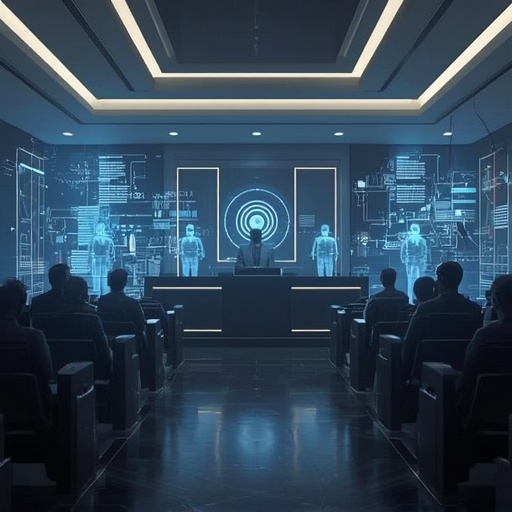
In a decisive demonstration of strategic innovation, the United States Army has introduced a pioneering self-contained Pacific command—a formation that represents a bold reconfiguration of traditional military structure. This new command harmoniously integrates the realms of cyber operations, space capabilities, electronic warfare, and precision fires into a single, cohesive unit. Its creation reflects an acute understanding of the evolving nature of modern conflict, in which superiority depends not only on manpower and hardware but also on the synchronized application of digital, spatial, and electromagnetic power.
By bringing together these advanced operational domains under one unified command, the Army is essentially preparing for the complex and fluid challenges of multi-domain warfare. Modern conflicts are rarely fought along fixed lines; instead, they extend across virtual networks, orbital trajectories, and information environments. The Pacific region—an area defined by its vast distances, emerging technological rivalries, and rapidly shifting geopolitical dynamics—demands a command ready to act with precision, agility, and autonomy.
This self-contained entity functions almost as a microcosm of a future force: capable of coordinating cyber offensives, countering space-based threats, executing precision strikes, and conducting electronic warfare operations without external dependencies. Such autonomy ensures rapid decision-making and seamlessly aligned responses, vital in environments where milliseconds and data integrity can determine mission success.
Beyond its immediate operational implications, the creation of this Pacific command signals a philosophical and organizational shift within the Army. It acknowledges that future warfare will hinge on the convergence of technologies and domains that were once treated as separate. The new command therefore acts as both a combat-ready formation and an innovation laboratory—testing doctrines, refining interoperability, and pushing the boundaries of what integrated warfare can achieve.
In essence, this groundbreaking step reflects the Army’s commitment to modernization and its readiness to confront emerging threats with foresight and creativity. By investing in unity across cyber, space, and electronic warfare disciplines, the United States Army sets a precedent for how modern forces will operate in the decades ahead: as adaptive, multi-faceted systems capable of mastering both the tangible and intangible dimensions of battle. #DefenseStrategy #ArmyInnovation #MultiDomainOperations #Leadership #Technology #PacificDefense
Sourse: https://www.businessinsider.com/us-army-new-pacific-command-built-for-a-complex-fight-2026-6