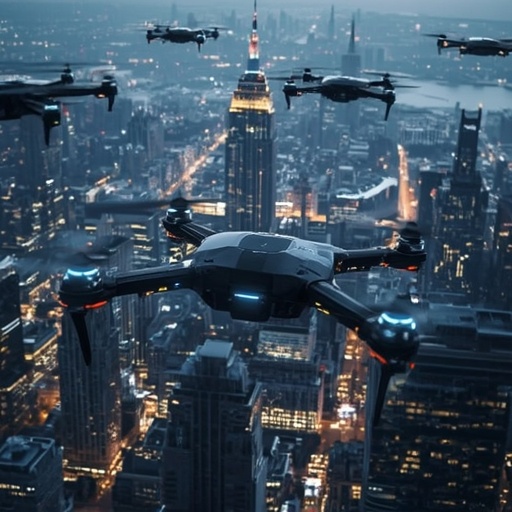
The United States government appears to be taking significant steps toward deepening its engagement with the rapidly advancing drone industry by exploring a series of potential funding arrangements and strategic partnerships with American drone manufacturers. This initiative, currently under internal administration discussions, has the potential to provide substantial financial and institutional support to domestic companies specializing in unmanned aerial technologies. By doing so, it could serve as a catalyst for a new phase of technological innovation, industrial growth, and defense modernization, strengthening the country’s leadership position in both civilian and military applications of drone technology.
If successfully implemented, these funding partnerships could accelerate advancements across multiple fronts — from the research and development of next-generation drone systems to the scaling of production infrastructure capable of meeting both national defense requirements and emerging commercial markets. Such a policy move suggests a deliberate governmental effort to bolster domestic technological sovereignty, reducing reliance on foreign supply chains and reinforcing the nation’s capacity to innovate independently within a highly competitive global landscape.
Beyond the immediate financial implications, this potential collaboration represents a broader strategic alignment between public institutions and private enterprises, reflecting a growing recognition that sustainable innovation in the defense technology sector requires cooperation between government-backed initiatives and agile industry players. The burgeoning drone ecosystem stands at the intersection of aerospace engineering, software development, artificial intelligence, and defense logistics—areas that, when effectively integrated, can deliver transformative outcomes for security operations, infrastructure maintenance, and environmental monitoring.
For the U.S. drone industry, such an infusion of governmental interest and resources may bring both remarkable opportunities and complex challenges. On one hand, increased investment could accelerate the introduction of advanced autonomous flight capabilities, improved sensor systems, and more efficient manufacturing processes. On the other hand, heightened regulatory scrutiny and ethical debates surrounding surveillance, privacy, and militarization may arise in parallel, prompting new discussions about accountability and governance in this rapidly evolving field.
Ultimately, this emerging dialogue between the U.S. administration and domestic drone companies may mark the beginning of a more structured era of public-private partnership in the field of defense innovation. The outcome of these talks could redefine not only the trajectory of the drone sector itself but also the broader contours of national policy on technology development, competitiveness, and security for years to come.
Sourse: https://www.wsj.com/politics/national-security/ttrump-us-drone-company-funding-cadef1f7?mod=pls_whats_news_us_business_f