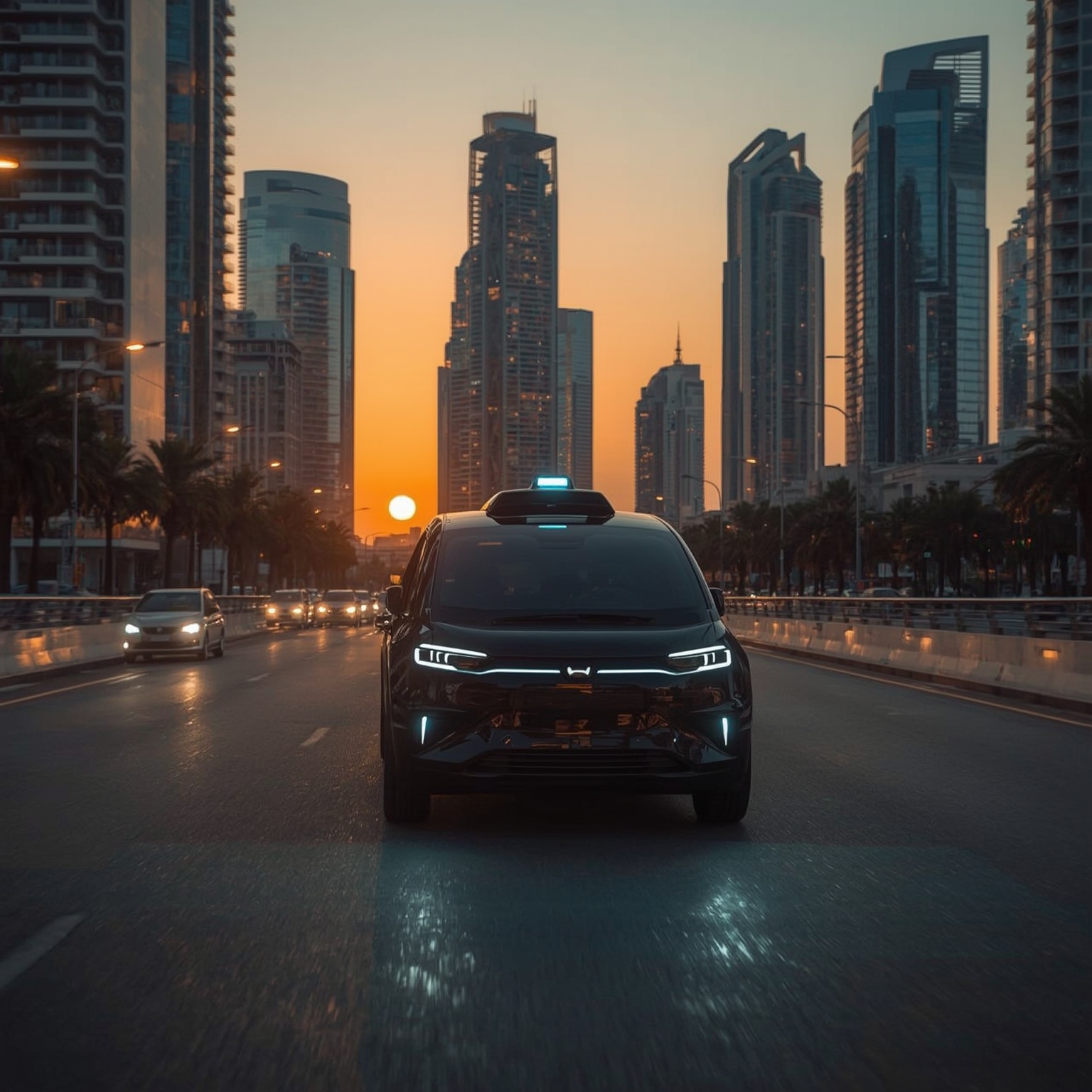
One year after inaugurating a commercial robotaxi initiative in Abu Dhabi, the Chinese autonomous vehicle pioneer WeRide, in strategic partnership with Uber, has reached a landmark achievement: their joint service can now be accurately described as fully driverless. This transformation signifies that vehicles operating under this program will function without any human safety operators occupying the driver’s seat — a feat that embodies the culmination of years of technological innovation and rigorous testing. According to statements released by both companies, the upgraded service will now be accessible to the general public, initially focusing on the scenic and tourism-oriented district of Yas Island. This area, renowned internationally as the home of the Abu Dhabi Grand Prix Formula 1 circuit, provides an ideal environment for demonstrating the safety, reliability, and sophistication of autonomous driving technology in dynamic real-world conditions.
In terms of design and operational flow, Abu Dhabi’s robotaxi system will mirror the structure of Uber’s collaboration with Waymo in the U.S. city of Austin. Passengers using the Uber application in Abu Dhabi who select either the Uber Comfort or UberX categories might find themselves matched with a WeRide autonomous vehicle. Those seeking a higher probability of experiencing a purely self-driving ride will also notice a dedicated “Autonomous” option integrated directly into the app’s interface, allowing them to actively choose this innovative mode of travel. In addition, Uber and WeRide are coordinating operations with local fleet management partner Tawasul, ensuring that logistical oversight and maintenance align with regional standards and customer service expectations.
This significant launch closely follows a pivotal regulatory milestone: just a month earlier, WeRide became one of the first companies to secure a federal permit from authorities in the United Arab Emirates authorizing fully autonomous commercial robotaxi operations on public roads. Such governmental approval plays a crucial role in legitimizing and scaling this disruptive technology, enabling both companies to broaden their geographic reach. As part of their near-term strategy, WeRide and Uber have confirmed intentions to gradually extend their driverless service beyond Yas Island to additional sectors of Abu Dhabi, ultimately encompassing the city’s central districts.
Sarfraz Maredia, Uber’s Head of Autonomous Mobility and Delivery, characterized the announcement as a historical inflection point in global transportation. In his words, the fully autonomous deployment in Abu Dhabi represents the first large-scale driverless vehicle rollout beyond the borders of the United States and China — a symbolic expansion of the autonomous revolution into new international markets. Indeed, this initiative is part of Uber’s broader effort to embed automation deeply into its mobility network. Over the past two years, Uber has deliberately cultivated partnerships with no fewer than twenty autonomous vehicle technology companies across the United States, Europe, and the Middle East, reflecting its strategy to evolve from a traditional ride-hailing firm into a global transportation technology platform.
These joint ventures now extend well beyond robotaxis. Uber’s ever-expanding network of alliances covers almost every conceivable application of self-driving systems, including autonomous freight delivery, last-mile logistics, and trucking operations. In 2024 alone, Uber announced multiple high-profile collaborations: with May Mobility, a cutting-edge autonomous shuttle company based in Ann Arbor, Michigan; with automotive giant Volkswagen; and with several distinguished Chinese enterprises such as Momenta, Pony.ai, and Baidu. More recently, the company revealed a plan to develop a premium robotaxi offering utilizing Lucid Gravity SUVs integrated with self-driving technology developed by San Francisco-based startup Nuro. Through these ventures, the partnership ecosystem that Uber has carefully assembled is beginning to yield tangible results — transformations that are transitioning from prototypes and pilot programs into daily commercial reality.
Concrete examples of these efforts coming to fruition include Uber’s earlier robotaxi deployment with Waymo in Austin. Building upon that success, Uber has now made its official entrance into the Middle Eastern autonomous transportation sector through its collaboration with WeRide in Abu Dhabi. The companies have also signaled that additional expansions are imminent, with Dubai expected to join the list of cities adopting this mode of transport in the near future. Uber’s chief executive officer, Dara Khosrowshahi, reinforced this trajectory in the company’s third-quarter earnings report, forecasting that autonomous vehicle services will be operational within the Uber network in at least ten distinct cities worldwide by the close of 2026.
Looking ahead, Uber and WeRide have articulated a joint vision that encompasses up to fifteen urban markets across the Middle East and Europe. This ambitious rollout is intended to eventually scale to thousands of robotaxis, representing a profound transformation in how citizens experience mobility in modern urban ecosystems. For WeRide, which currently deploys over 150 autonomous vehicles in the region, achieving such scale would constitute a major leap forward — not merely in terms of fleet size, but also as evidence of growing public confidence in fully autonomous technology. Together, Uber and WeRide’s progress in Abu Dhabi stands as a striking demonstration of how global collaboration, regulatory support, and technological maturity are converging to usher in a new era of safe, convenient, and sustainable driverless transportation.
Sourse: https://techcrunch.com/2025/11/25/uber-and-werides-robotaxi-service-in-abu-dhabi-is-officially-driverless/