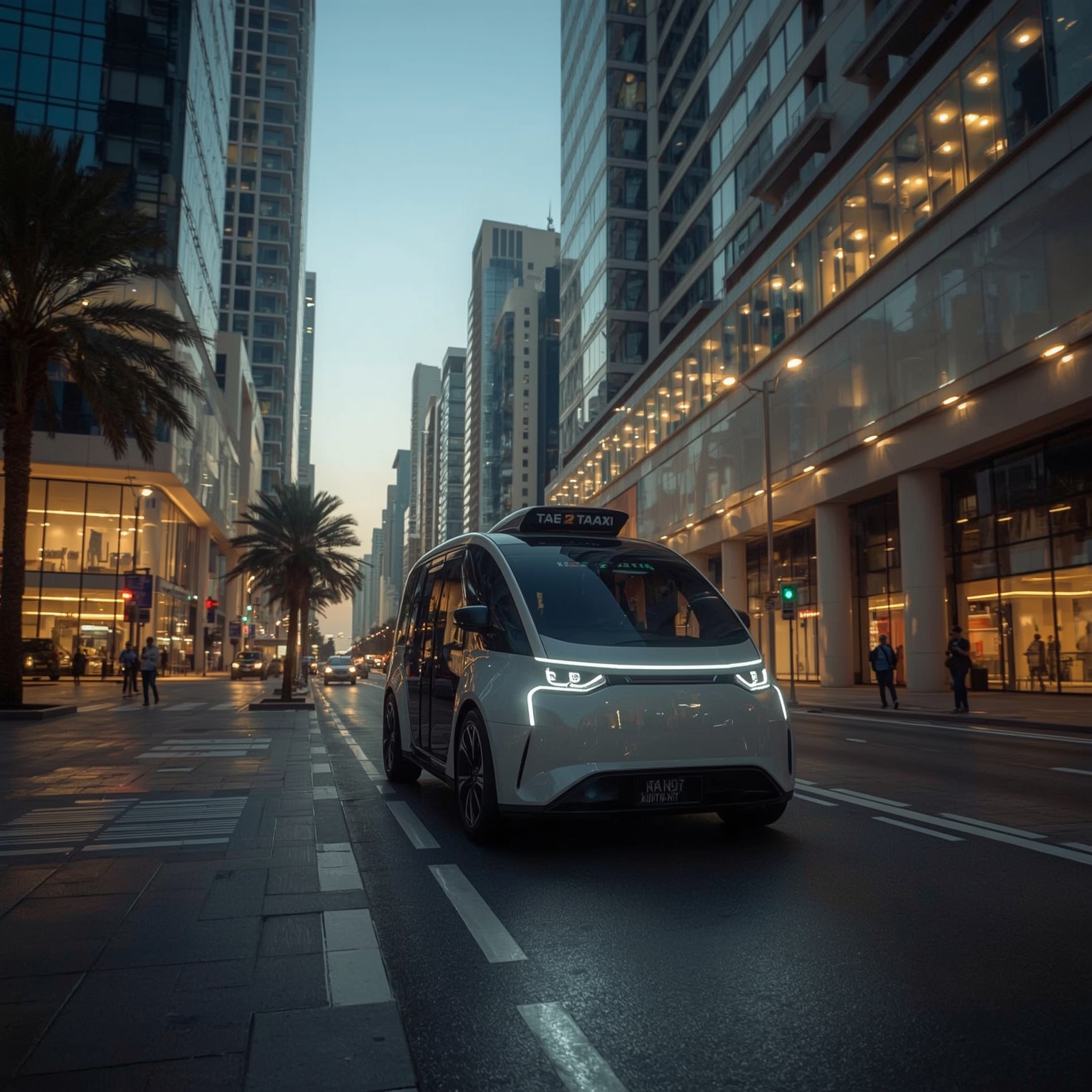
In a remarkable demonstration of technological progress and urban innovation, Uber and its autonomous driving collaborator WeRide have achieved a groundbreaking milestone on Abu Dhabi Island: the complete transition of their robotaxi fleet to fully driverless operation. This advancement signifies far more than a mere update in transportation services—it stands as powerful evidence of how rapidly autonomous mobility is evolving and how seamlessly such innovation can be woven into the urban fabric of a modern metropolis.
Over the course of an entire year, WeRide’s autonomous vehicles underwent meticulous testing and refinement under the supervision of safety operators. These tests were intended to ensure that every conceivable operational challenge—ranging from complex traffic interactions to variations in environmental conditions—was thoroughly addressed before public deployment. The outcome of these extensive trials has been a clear affirmation of both the reliability of WeRide’s self-driving systems and the readiness of Abu Dhabi Island’s infrastructure to accommodate next-generation transport technologies.
The service now spans a zone of approximately twelve square miles, delivering an unprecedented glimpse into what the future of mobility may look like in smart cities around the world. Within this controlled yet urban environment, residents and visitors alike are now able to request fully autonomous rides, witnessing firsthand how artificial intelligence, sensor integration, and advanced navigation technologies collaborate invisibly to create safe and efficient journeys. What was once confined to theoretical prototypes and pilot programs has now become a tangible everyday reality.
This transition represents not only a technical milestone but also an important cultural and logistical one. It demonstrates that the vision of autonomous transport—long discussed in the realms of innovation and technology—is beginning to take a firm and practical shape. By removing the human driver entirely, Uber and WeRide are pushing the boundaries of what city mobility can mean: increased efficiency, reduced congestion, and potentially lower environmental impact due to optimized routing and energy management.
Furthermore, this achievement underscores Abu Dhabi’s positioning as a hub for cutting-edge experimentation in sustainable and intelligent urban planning. The introduction of driverless robotaxis is perfectly aligned with the city’s broader initiatives to create smarter, cleaner, and more connected infrastructures that enhance quality of life while addressing 21st-century transportation challenges. It reflects a broader global ambition—to reimagine cities not merely as spaces to commute through, but as dynamic ecosystems where innovation and sustainability intertwine harmoniously.
This event is therefore much more than a local news story; it is a defining chapter in the worldwide progression of autonomous vehicle technology. With safety proven through exhaustive testing and performance optimized through state-of-the-art engineering, Uber and WeRide’s partnership is setting an inspiring precedent for how other metropolitan areas may integrate autonomous fleets into their own transportation ecosystems. The future of driverless travel, once a captivating concept confined to science fiction, is unmistakably unfolding here and now on Abu Dhabi Island.
Sourse: https://www.bloomberg.com/news/articles/2025-11-26/uber-weride-robotaxis-go-fully-driverless-in-parts-of-abu-dhabi