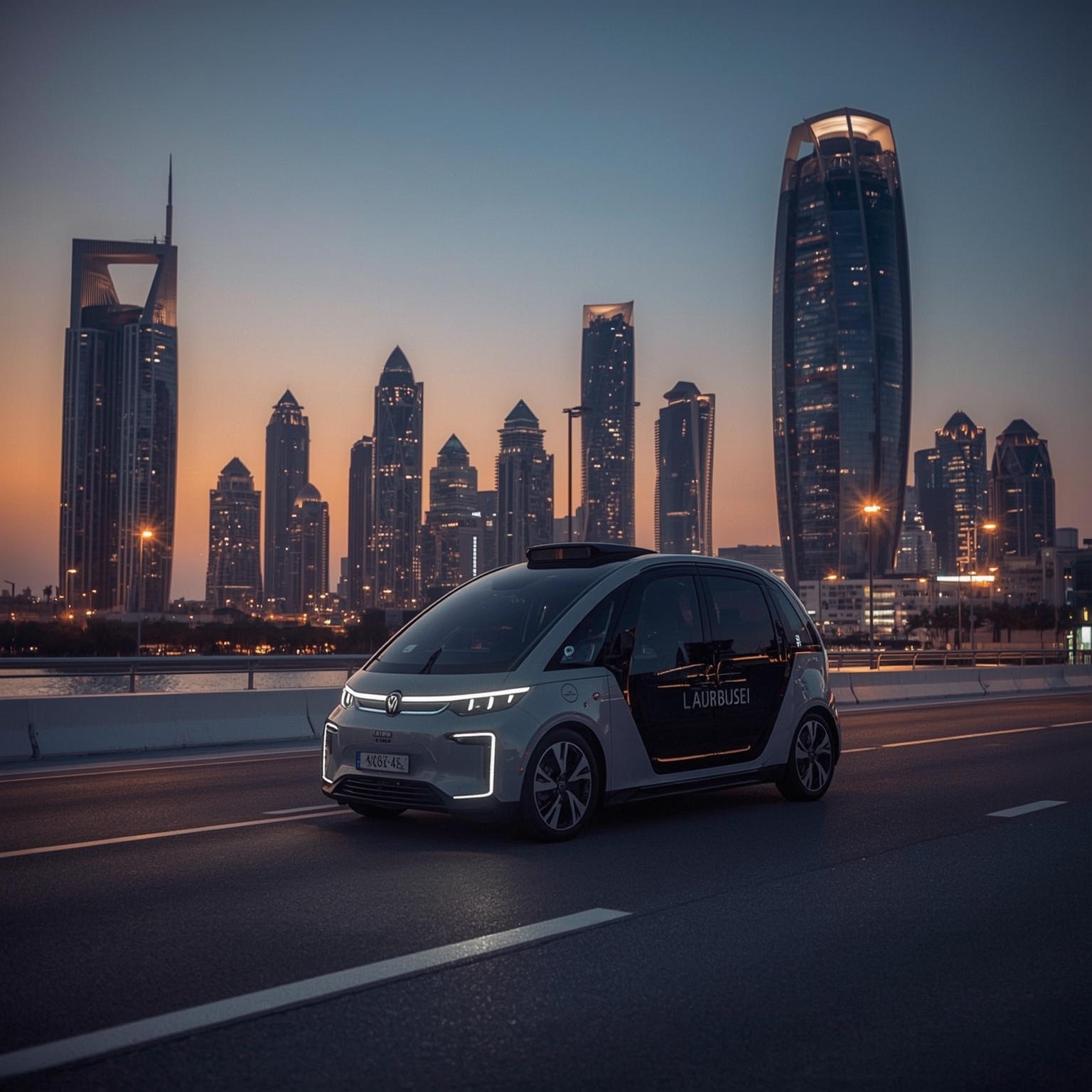
Uber and WeRide have entered a new chapter in their pursuit of advanced mobility by officially deploying a fleet of fully autonomous vehicles as part of Uber’s growing robotaxi service in the United Arab Emirates. In practical terms, this means that residents and visitors in Abu Dhabi who use the Uber app to request either an UberX or Uber Comfort may now find themselves matched with a WeRide vehicle that operates entirely without human intervention—provided their selected route falls within the designated operational area of the service. This shift marks a significant evolution from prior testing phases and represents a bold step toward widespread, driverless mobility within one of the region’s most technologically progressive cities.
The collaboration between Uber and China-based autonomous driving specialist WeRide began in earnest back in December 2024, when the companies jointly introduced their robotaxi service featuring trained safety drivers behind the wheel to oversee system performance and intervene if necessary. At that stage, the two partners shared their ambition to remove those drivers in the near future, once regulatory clearances and real-world data validated the technology’s readiness for unsupervised operation. That foresight has now materialized, underscoring both firms’ confidence in the maturity of their self-driving systems and their commitment to ushering in a more efficient, automated transportation era.
In this initial rollout phase, the completely driverless WeRide vehicles are restricted to specific areas covering roughly twelve square miles of Yas Island—a renowned leisure and tourism hub in Abu Dhabi known for landmarks such as theme parks, upscale hotels, and entertainment venues. The limited service zone allows for meticulous monitoring of performance and rider experience before broader deployment. Uber and WeRide have affirmed that they intend to expand the operational boundary of their fully autonomous fleet progressively, scaling the service over time as infrastructure, regulations, and public acceptance align. For customers eager to experience this next-generation transport firsthand, selecting the “Autonomous” option within the Uber app increases the likelihood of being paired with a driverless vehicle during the booking process.
The vehicles facilitating this service are WeRide’s proprietary GXR models, sophisticated electric vans equipped with an array of over twenty advanced sensors and high-resolution cameras. These components work in unison to deliver precise environmental awareness, enabling the vehicle to interpret traffic conditions, navigate complex road networks, and ensure passenger safety under diverse scenarios. Each GXR provides comfortable seating for up to five passengers, combining ergonomic design with cutting-edge artificial intelligence capabilities. The GXR originates from Geely’s Farizon SuperVan platform, which has already been deployed by WeRide for similar robotaxi services in Beijing, thus grounding the Abu Dhabi pilot in proven technology.
Operational logistics mirror Uber’s model in other regions where it partners with technology providers. Much like its collaboration with Waymo in parts of the United States, Uber oversees the daily management and coordination of WeRide’s robotaxi fleet within the UAE. This partnership involves working closely with Tawasul Transport, a local taxi operator, to manage crucial functions such as vehicle cleaning, preventive maintenance, mechanical inspections, charging operations for electric vehicles, and overall depot management. Meanwhile, WeRide retains responsibility for ongoing vehicle testing, fine-tuning of autonomous algorithms, and precise calibration of its sensor arrays to maintain accuracy and reliability.
Beyond the UAE, Uber and WeRide have revealed ambitious expansion plans that extend well beyond the Middle East. Over the next five years, the partnership intends to introduce similar autonomous services in as many as fifteen additional global cities, including several key metropolitan centers across Europe. This planned rollout aligns with Uber’s broader mission to position itself as a comprehensive platform that unites autonomous transportation and delivery solutions under one digital ecosystem. In recent years, Uber has intensified its collaborations with multiple autonomous vehicle developers, consolidating its image as a hub for robot-driven mobility and logistics of every variety—though, notably, its partnerships currently exclude Tesla.
This milestone not only underscores the accelerating pace of innovation within the autonomous driving sector but also demonstrates how international collaboration and public-private partnerships can translate futuristic concepts into tangible everyday experiences. For passengers in Abu Dhabi, stepping into a WeRide vehicle through Uber is no longer a glimpse into tomorrow—it is a reality happening today, on the streets of Yas Island and soon beyond its borders.
Sourse: https://www.theverge.com/news/828685/uber-weride-robotaxi-fully-driverless-uae