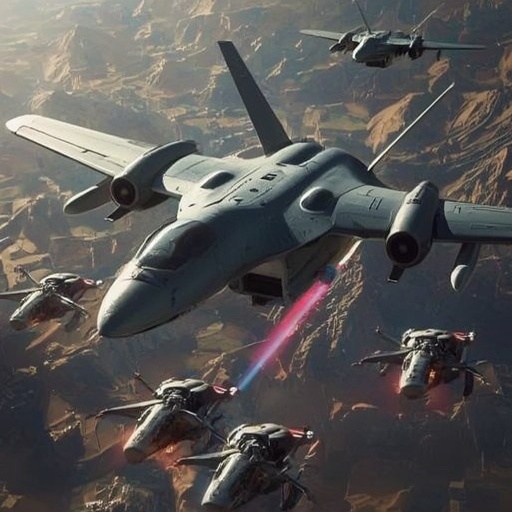
In recent years, Ukraine has emerged as a leading innovator in the use of unmanned aerial systems on the battlefield, and one of its most striking breakthroughs lies in the development of so‑called “mothership” drones. These advanced aerial platforms are not ordinary aircraft; they serve as large carrier vehicles designed to transport, launch, and coordinate fleets of smaller offensive drones with remarkable efficiency and precision. This strategic evolution is reshaping both the tactical landscape and the technological imagination of modern warfare.
Traditionally, small drones have been limited by their battery capacity, payload constraints, and relatively short operational ranges. By integrating these diminutive aircraft into a larger, longer‑range “mother” system, Ukraine’s engineers have found a way to amplify capabilities without dramatically increasing cost or risk. The mothership operates as an airborne command hub—an intelligent, mobile launching pad—from which swarms of smaller drones can detach mid‑flight, each programmed to pursue specific reconnaissance or strike objectives. This configuration allows coordinated assaults over greater distances, increases survivability through dispersion, and introduces a level of unpredictability that confounds opposing defenses.
To visualize the process, imagine a heavily modified fixed‑wing aircraft or multi‑rotor platform gliding high above the combat zone. From its undercarriage or internal bays, lightweight drones deploy silently and autonomously scatter to their individual targets. Some may focus on electronic surveillance, others on precision strikes against high‑value assets. The mothership then either returns to base for reloading or remains aloft as a relay node, continuously feeding intelligence and communication signals to the smaller units. By combining endurance, mobility, and digital coordination, this system effectively multiplies the operational radius of each drone and extends the reach of Ukrainian forces deep into contested zones.
The strategic implications of this technology are profound. Not only does it enable long‑range operations without revealing the originating base, but it also allows simultaneous multi‑vector attacks that can overwhelm traditional air defenses. In an era where agility and adaptability often outweigh brute force, the emergence of mothership‑based drone networks demonstrates how innovation can transform limitations into advantages. The approach requires mastery of aerodynamics, artificial intelligence, and networked control systems, showcasing a synthesis of science and battlefield pragmatism.
Beyond the military context, this innovation also highlights a broader truth about twenty‑first‑century defense: the frontiers of warfare are increasingly defined by creativity in technology rather than sheer firepower. Ukraine’s engineers, working under immense pressure, are reimagining air combat through systems that blend autonomy, communication, and modular design. Their work provides a vivid example of how necessity fuels invention and how unconventional thinking can rebalance power in asymmetric conflicts.
Ultimately, the concept of the “mothership drone” represents more than a tactical advantage—it signifies a new doctrine of aerial synergy, where one intelligent vessel empowers many smaller agents. As these systems continue to evolve, they herald a future in which warfare depends not on massive fleets or hardware alone, but on the integration of data, robotics, and innovation. Ukraine’s skies have become a proving ground for this transformation, hinting at the dawn of a new technological era in global defense strategy.
Sourse: https://www.businessinsider.com/ukraines-drone-war-entering-mothership-era-2026-7