During an operation intended to locate and identify hidden caches of enemy weaponry, a Ukrainian drone pilot embarked on what initially appeared to be a mission of strategic significance. The pilot, employing the precision and responsiveness of an advanced fiber‑optic drone system, guided his unmanned aerial vehicle across a desolate stretch of countryside marred by the traces of continuing conflict. Every movement of the aircraft and every flicker of its camera feed was charged with expectation — the anticipation of uncovering a potential store of military resources or tactical materiel concealed beneath the landscape’s deceptive quiet.
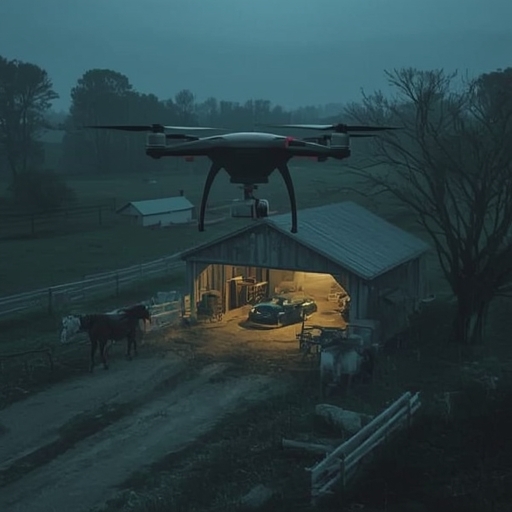
Yet what awaited discovery stood in poignant contrast to the mission’s martial intent. Instead of crates of ammunition or camouflaged supplies, the real‑time footage on the pilot’s screen slowly revealed an assortment of long‑abandoned automobiles, their shells mottled by rust and partially reclaimed by weeds. Nearby stood two horses — calm, unmoving, and oddly dignified amid their surroundings — as though serving as living reminders of an older, simpler rhythm of life that persisted in spite of turmoil. The scene was an unexpectedly peaceful tableau set against the backdrop of war’s machinery.
This quiet revelation underscored the paradoxes inherent in modern warfare and technological surveillance. Drones have become instruments of extraordinary precision: they are capable of detecting heat signatures, evaluating terrain, and locating minute evidence of hostile activity. However, they also serve, almost unwittingly, as instruments of truth — unmasking not only danger but also traces of forgotten normalcy. The pilot’s discovery of horses and vehicles from an earlier era might have initially seemed anticlimactic, yet it illuminated something more enduring than a military finding: the resilience of ordinary life, suspended but not erased by conflict.
To the observer, this episode encapsulated a kind of moral lesson cloaked within the language of technology. It revealed how innovation, often conceived for tactical advantage, can unexpectedly reconnect humanity to its own fragility and to moments of quiet grace. In the midst of danger, surrounded by uncertainty and ruin, the blurred images of livestock and decaying metal became symbols of continuity — a muted assurance that even where destruction reigns, fragments of peace and memory tenaciously survive.
Thus, what began as a routine reconnaissance flight transformed into a meditation on perception and perspective. The drone, originally a tool of war, briefly became a witness to serenity, bridging the distance between human curiosity and the enduring pulse of life that war can obscure but never fully extinguish.
Sourse: https://www.businessinsider.com/ukraine-drone-pilot-horses-cars-russian-warehouse-hidden-fiber-optic-2026-2