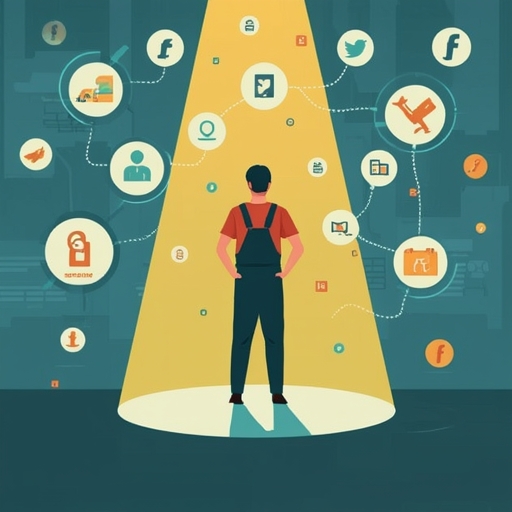
This as-told-to essay draws upon an in-depth conversation with Tiffany Ng, a 24-year-old writer whose work bridges the intersection of technology and contemporary culture. Based in New York City, Ng publishes a personal newsletter called *Cyber Celibate*, where she explores complex questions about our digital lives and relationships with connectivity. The following narrative has been carefully edited for clarity and concision while preserving the integrity of her reflections.
Ng begins her account by admitting something that resonates with nearly everyone living in today’s hyperconnected world: she found herself uncomfortably attached to her smartphone. The constant proximity of her device, the habitual impulses to check notifications, and the sense of low-level anxiety produced by perpetual availability had become defining features of her daily life. Recognizing how entangled she was with her digital tools inspired her to launch a personal experiment she poetically titled *Cyber Celibate*. The concept was framed around a symbolic “vow of digital chastity”—a deliberate renunciation of certain forms of technological indulgence. It was not about rejecting modern conveniences outright but rather about reimagining a healthier, more conscious relationship with them. Her intention was to observe what would happen when she temporarily abstained from specific technologies: What could be learned from the intentional absence? Could restraint cultivate more purposeful interactions with digital devices instead of mindless consumption?
As an initial step, Ng began by physically distancing herself from her phone. She realized that charging her phone overnight in the living room—rather than keeping it on her bedside table—had a dramatic effect on her habits. Without the device within arm’s reach, she stopped scrolling in those vulnerable moments right before falling asleep and immediately upon waking. This small but powerful modification prompted her to ask, almost playfully, what the “most extreme” version of this separation might look like.
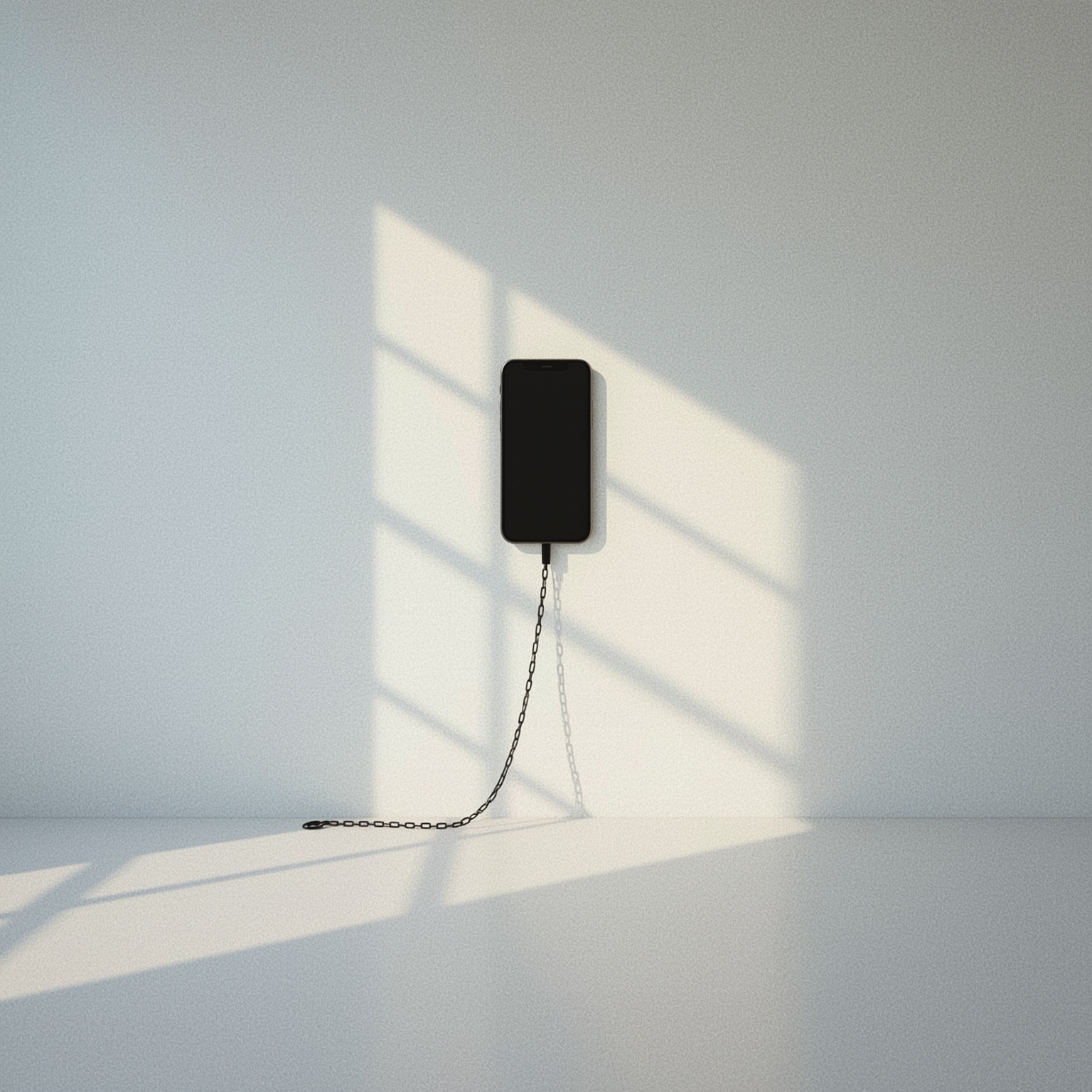
Driven by curiosity, she devised a striking experiment: she would physically chain her phone to a wall, restricting her ability to interact with it freely. Her reasoning was simple yet psychologically astute. If every act of reaching for her phone were made physically uncomfortable, perhaps she could condition herself—almost Pavlovian in approach—to reduce her compulsive checking. For one full week, she followed through with this peculiar plan. Using an old belt, she tethered her phone against a wall in her apartment. To intensify the discomfort of the experience, she placed an intentionally awkward, unsupportive bench before it, ensuring that prolonged use felt inconvenient. All settings and apps on the phone remained unchanged, but she imposed additional scarcity by allowing only a single full charge at the beginning of the week. She would not recharge it again. This created a tangible sense of limitation—an echo of the finite energy we often ignore in our constant digital access.
Although she jokes about not wanting to sound melodramatic, Ng describes the final days of this challenge as a genuine reentry into real life, as though a fog had lifted and her awareness had been recalibrated toward the physical world. The first twenty-four hours were undoubtedly uneasy. The habitual pull toward digital stimulus made her fidgety and restless. She became acutely aware of how dependent she was on her phone—for information, direction, and even a basic sense of orientation. Having to ask strangers for the time or for directions felt both nostalgic and humbling, a return to pre-smartphone modes of human interaction. Yet once those adjustments set in, she began to feel unexpectedly liberated.
When her phone was within reach—while working, writing, or simply existing in familiar spaces—she had an almost involuntary reflex to grab it, to check the time, or to scroll aimlessly. Moving her phone physically out of her orbit, sometimes leaving it miles away, interrupted that reflex entirely. Surprisingly, she did not experience the phantom vibrations or compulsive anxiety that many might predict. Instead, she found her mind unusually clear. The phrase “out of sight, out of mind” took on a literal meaning. Once deprived of the constant proximity of her phone, she realized how much mental space the device had been occupying. Her phone battery, lasting four days on a single charge because of minimal use, symbolized both her success and restraint. Even after it ran out of power, she could navigate her social and professional life with her laptop, which served as a work tool rather than a source of habitual distraction.
More than anything, the project transformed her sense of intentionality. Using the phone became a conscious act rather than an automatic reflex. This new awareness directly tied back to the motivation behind *Cyber Celibate*: she wanted to understand why she so often picked up her phone without a real reason. By reintroducing friction into the process, she reclaimed her autonomy over attention. Simultaneously, she discovered that being physically separated from her devices made it easier to stay present in ordinary moments. Standing on a train platform without a screen to occupy her eyes, she noticed details of her environment that had always been there yet had escaped her attention—the architecture surrounding her local station, the subtle variations in air quality and scent between neighborhoods, even social nuances like how commuters dressed differently depending on the train line. These observations, mundane yet profound, revealed just how disconnected she had been from the real-world textures of her city.
Her experiment also illuminated the hollowness of endless scrolling. Initially, when she finally allowed herself time with her phone, she anticipated waves of excitement, as if she were returning to something deeply pleasurable. Yet within moments of reacquainting herself with her feed, she encountered an anticlimactic emptiness. The endless stream of curated images and algorithmic content produced far less satisfaction than the anticipation had promised. The so-called reward of the digital ritual quickly dissolved into a sense of repetition and superficiality. She likened the sensation to scratching around an itch rather than directly addressing it—a strangely compelling but ultimately unsatisfying loop of false gratification. Over time, this pattern stripped away the mystical, almost religious aura that she once associated with her phone.
Since completing the week-long experiment, Ng has integrated modified versions of it into her daily life. She continues to store her phone in separate rooms, intentionally placing physical distance between herself and the device. Sometimes, when meeting friends at a nearby park, she forgoes bringing it altogether, rediscovering the possibility of stepping outside with only her keys and wallet in hand. What was once a near-instinctive checklist—“phone, keys, wallet”—has evolved into a more liberated ritual.
Reflecting on her generation’s relationship with technology, Ng recognizes that those born in the digital native era occupy a distinct cultural position. While they never experienced the dial-up era’s strict limitations—when using the internet meant tying up the home phone line—they nonetheless harbor a certain nostalgia for that slowness. These older technologies, with their constraints and rituals, seem almost romantic in hindsight precisely because they imposed boundaries on connectivity. Ng interprets the modern movement toward “neo-Luddism” not as a wholesale rejection of technology but as an exploration of balance, creativity, and self-determination. It is about finding personal frameworks that make technology serve the individual rather than dominate them. For her, being a neo-Luddite means not abandoning the iPhone or cutting ties with friends but rather reclaiming intentionality—choosing mindful communication over compulsive connection. Through *Cyber Celibate,* she continues to refine what it means to coexist with technology while preserving a sense of solitude, clarity, and human presence in an increasingly digital age.
Sourse: https://www.businessinsider.com/gen-z-chained-phone-to-wall-experiment-technology-addiction-2025-10