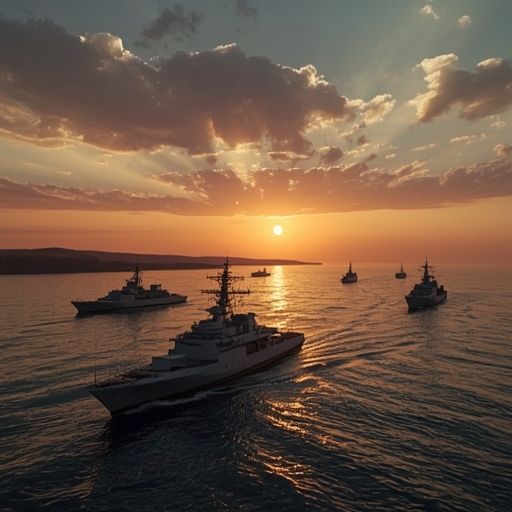
In a renewed demonstration of strategic recalibration, the United States Navy has intensified its naval presence in the Middle East, a region long recognized as one of the most geopolitically sensitive and volatile on the planet. By redeploying several warships that were previously stationed in the Caribbean, the Pentagon is sending a nuanced but unmistakable message about its evolving global defense priorities. This calculated redistribution of maritime power illustrates how shifting alliances, economic dependencies, and emerging security threats continue to redefine U.S. military focus across the world’s oceans.
The decision to transfer vessels from the relatively tranquil waters of the Caribbean to the far more complex operational theater of the Middle East underscores a strategic reprioritization rooted in both deterrence and readiness. The move highlights Washington’s recognition of the region’s persistent volatility — from ongoing geopolitical rivalries and territorial disputes to energy security concerns that directly influence the broader world economy. It is a maneuver that reflects not only an operational adjustment but also an anticipatory stance, positioning the U.S. Navy to respond swiftly to crises that could emerge amid growing uncertainties.
Observers note that this naval repositioning comes at a time when global maritime dynamics are becoming increasingly contested, as rival powers seek to expand their own influence in crucial sea lanes and chokepoints. By enhancing its Middle Eastern fleet, the U.S. strengthens its ability to project force, safeguard shipping routes, and collaborate more effectively with allies to maintain regional stability. Conversely, the reduction in Caribbean deployments represents a practical reallocation of limited but highly capable assets toward theaters where strategic demand is escalating.
In effect, the shift exemplifies the adaptive nature of modern military strategy — one that requires continuous reassessment of geopolitical landscapes, resource distribution, and threat perception. For defense analysts, this realignment is both a reflection of ongoing challenges and a preview of the complex maritime balance that will shape global security architecture in the years to come.
As questions arise about the long-term implications of this move, one thing is clear: the United States remains keenly aware that maintaining a credible and visible naval posture in the Middle East is central to preserving not just regional equilibrium, but also the broader framework of international maritime order upon which global trade and stability depend.
Sourse: https://www.businessinsider.com/us-navy-gathering-warships-middle-east-buildup-2026-2