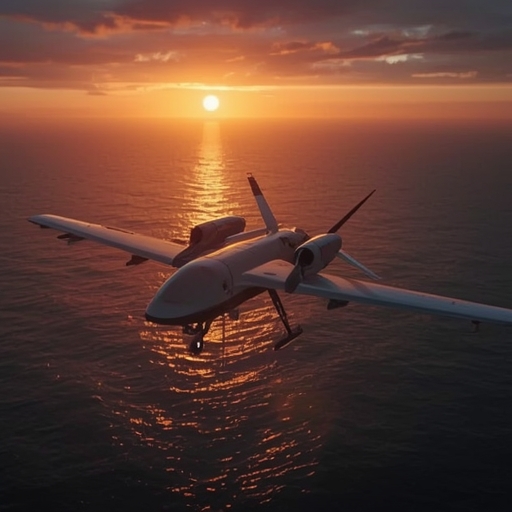
The United States Navy has reported the loss of one of its most advanced and expensive unmanned aerial vehicles — the MQ-4C Triton, a $240 million long-range surveillance drone — during operations associated with the ongoing conflict involving Iran. Although no human casualties or injuries were recorded, the disappearance or destruction of this high-value asset underscores the considerable risks, both financial and technological, that accompany modern military operations in volatile regions.
The MQ-4C Triton represents the cutting edge of naval reconnaissance technology. Developed by Northrop Grumman, this unmanned platform is designed for persistent surveillance across vast maritime territories, equipped with sophisticated radar systems, high-resolution imaging equipment, and long-endurance capabilities that allow it to operate thousands of miles from base without direct human control. Its purpose is to provide real-time intelligence, reconnaissance, and situational awareness to naval command structures — an essential function in modern naval strategy where information dominance often determines tactical advantage.
The fact that such a highly advanced aircraft was lost without immediate clarity on the cause invites deeper reflection. While official investigations continue, potential factors could range from technical malfunction to external interference or environmental challenges. Regardless of the reason, the event reminds observers of how complex and fragile the integration of cutting-edge technology can be when placed in demanding operational conditions. Even with rigorous testing and engineering precision, risks persist, especially when sophisticated systems interact with unpredictable real-world variables such as weather, communications stability, or adversarial countermeasures.
Beyond the operational implications, the economic dimension of this loss is striking. At a unit cost approaching a quarter of a billion dollars, each Triton represents a significant investment from U.S. defense budgets — encompassing not only material resources and engineering labor but years of research and development. The loss therefore carries strategic and fiscal weight, underscoring the immense financial commitments required to maintain global surveillance networks and technological superiority.
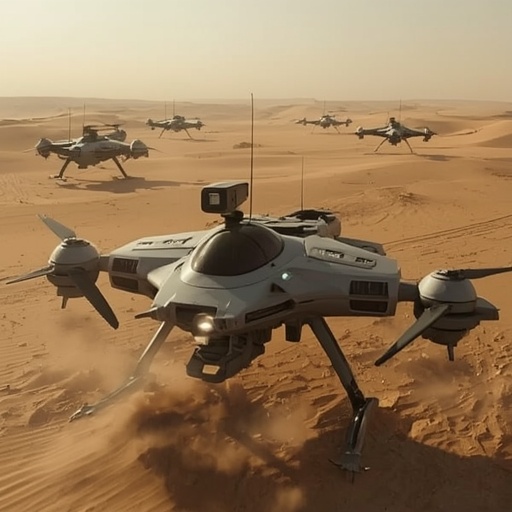
Nonetheless, the incident also highlights how far unmanned aerial systems have evolved in reshaping both surveillance and warfare. Unlike crewed aircraft, drones such as the Triton minimize risks to human life while expanding the military’s capacity to operate in distant or hazardous zones. They epitomize the shift toward automation, networked intelligence, and data-driven decision-making that defines the 21st-century defense landscape. Yet as this event demonstrates, such advancements come with trade-offs — especially in areas of reliability, cybersecurity, and global accountability.
As investigations proceed, defense analysts and policymakers are expected to scrutinize the incident’s technical and strategic implications. Future measures will likely focus on enhancing system resilience, improving redundancy in communications and control networks, and developing faster recovery protocols for critical assets operating in contested environments.
Ultimately, the loss of the MQ-4C Triton serves as a sobering reminder that even the most sophisticated technologies remain vulnerable. It reaffirms the dual need for innovation and prudence — ensuring that progress in unmanned aviation continues to advance alongside transparency, safety, and robust operational oversight.
#USNavy #DefenseTechnology #Aerospace #Surveillance #MilitaryInnovation
Sourse: https://www.businessinsider.com/us-navy-lost-mq-4c-spy-drone-iran-war-2026-4