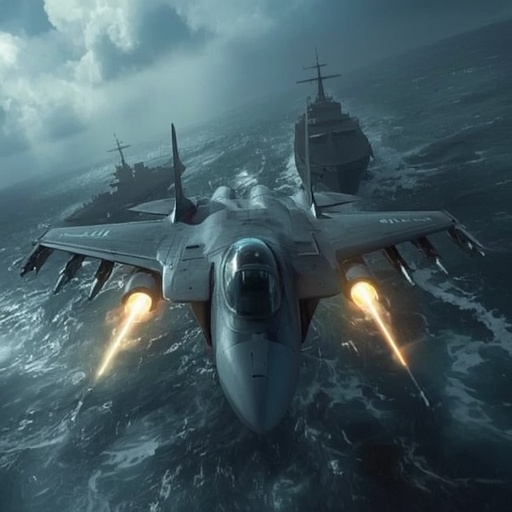
In a strategic demonstration of unrivaled precision and technological dominance, the United States Navy executed a sophisticated strike operation in the Gulf region. A highly maneuverable F/A‑18 Super Hornet, one of the fleet’s premier carrier-based multirole fighters, successfully disabled two Iranian vessels attempting to breach a maritime blockade. These ships, identified as blockade runners, were reportedly engaged in efforts to defy the ongoing restrictions around Iranian ports. With extraordinary accuracy, the aircraft deployed precision-guided munitions that struck each vessel’s smokestack, crippling their propulsion systems without causing catastrophic destruction.
This incident represents far more than a simple act of defense; it serves as a case study in the evolving nature of modern naval engagements, where advanced sensors, command-and-control systems, and pilot expertise converge to produce near-surgical outcomes. The Super Hornet’s capacity to combine reconnaissance, targeting, and strike capabilities within a single mission profile exemplifies the sophistication of contemporary U.S. naval aviation strategy. Such precision not only minimizes collateral damage but also serves a critical geopolitical function—signaling both restraint and readiness in equal measure.
The disruption of these blockade runners also underscores the ongoing volatility surrounding Iran’s maritime trade routes and port access. For months, the blockade has symbolized the mounting tension between national sovereignty and international enforcement measures aimed at stabilizing the region. Each encounter at sea now carries implications that reach far beyond the immediate tactical confrontation, influencing diplomatic negotiations, military posturing, and global economic flows dependent on secure shipping corridors.
By targeting the vessels’ key mechanical structures rather than annihilating them entirely, the U.S. Navy conveyed a calculated message: control of the seas depends not solely on overwhelming firepower, but on mastery of precision, timing, and discipline. This operation reinforces the Super Hornet’s reputation as a decisive instrument of power projection and deterrence. Meanwhile, it highlights the delicate balance military forces must sustain—a balance between safeguarding maritime order and averting uncontrolled escalation.
As the blockades persist and strategic rivalries intensify, the event adds another compelling chapter to the complex history of modern naval security operations. It reveals how technological prowess, strategic foresight, and measured execution continue to define the contours of twenty‑first‑century conflict and diplomacy at sea.
Sourse: https://www.businessinsider.com/us-navy-fighter-jet-shot-smokestacks-iran-blockade-runners-2026-5


