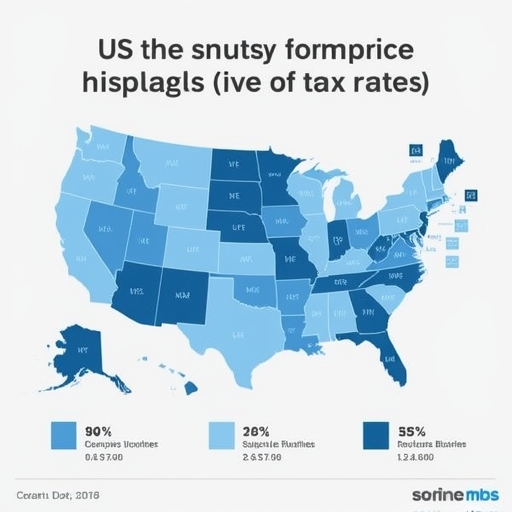
Across the United States, the amount of income residents are able to keep after paying state and local taxes can differ dramatically from one state to another. A recent in-depth analysis by WalletHub offers a comprehensive comparison of these financial burdens, ranking all fifty states based on the share of personal income that citizens contribute to their state and local governments. This exhaustive evaluation not only reveals which states allow their residents to retain a greater portion of their earnings but also sheds light on broader economic trends, cost-of-living differences, and the distinct fiscal philosophies that define regional economies.
In examining these findings, it becomes evident that certain states maintain relatively modest tax requirements, thereby enabling individuals to preserve more of their wages for discretionary spending, investment, or saving. Conversely, other states impose a heavier tax load, directing a larger share of household earnings toward public services such as education, transportation infrastructure, health care, and social programs. These variations in taxation policy often reflect the differing priorities and economic models pursued by each state government — some emphasizing low taxation to attract businesses and residents, while others focus on generating sufficient revenue to fund comprehensive public services and community initiatives.
The ranking underscores the complex balance between tax rates and quality of life. While a lower tax burden may initially appear advantageous, it can also correspond with a reduced level of government-funded amenities and public investments. On the other hand, states with higher taxation levels often channel these funds into projects intended to enhance overall welfare, improve local economies, and maintain robust public infrastructure. As a result, the WalletHub data provides citizens, policymakers, and businesses alike with meaningful insight into how each state allocates and derives its fiscal resources.
For individuals evaluating their current residence or considering relocation, such an analysis offers valuable perspective on how far their income might go after taxes. The study serves as an important reminder that tax burdens are not merely abstract numbers but tangible factors influencing personal budgets, economic opportunity, and lifestyle. Ultimately, by quantifying how much of one’s paycheck remains in hand versus how much supports the collective functions of state and local governance, this ranking paints a nuanced portrait of economic diversity across America — a portrait that continues to shape the lives and financial realities of millions of residents.
Sourse: https://www.businessinsider.com/us-states-ranked-by-income-paid-in-taxes-2026-4